


Your Complete Guide to Choosing the Perfect Residential Solar Energy Kit
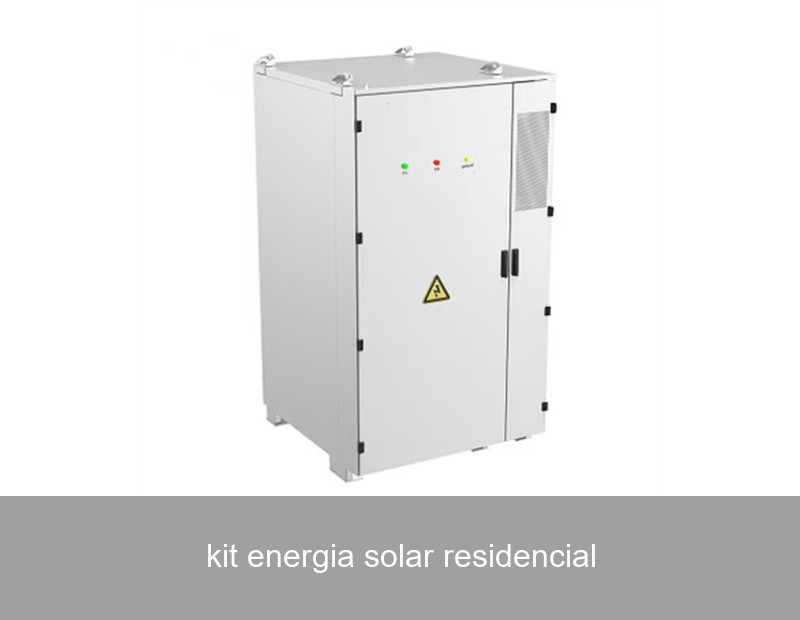
Have you ever looked at your electricity bill and wondered, "What if I could generate my own clean power right here at home?" You're not alone. Across Europe and the United States, homeowners are increasingly turning to residential solar energy kits as a powerful solution for energy independence, cost savings, and reducing their carbon footprint. But with so many options on the market, how do you choose the right system for your home? This guide will demystify the process, helping you understand what makes a great kit energia solar residencial and how to ensure it delivers on its promise for decades to come.
Table of Contents
- What is a Residential Solar Energy Kit?
- Key Components of a High-Performance Solar Kit
- The Real Savings: Data and Payback
- A Real-World Case Study: The Smith Family in Texas
- Beyond Panels: The Critical Role of the Inverter and Battery
- The Highjoule Solution: Intelligent, Integrated Energy Systems
- How to Choose the Right Kit for Your Home
What is a Residential Solar Energy Kit?
A residential solar energy kit is a packaged system that includes all the core hardware needed to capture sunlight and convert it into usable electricity for your home. Think of it as the engine of your personal power plant. A basic kit typically includes solar panels, mounting equipment, and an inverter. However, the most advanced and valuable kits today are integrated systems that seamlessly include energy storage, which is the key to true energy resilience and maximizing self-consumption.

This shift from simple solar panel sets to comprehensive energy management systems represents the evolution of home solar. It's no longer just about generating power when the sun shines; it's about storing it for when you need it most—at night, during peak rate hours, or even during a grid outage.
Key Components of a High-Performance Solar Kit
Not all kits are created equal. Understanding the components is crucial to making a smart investment.
- Solar Panels (PV Modules): These are the most visible part. Look for panels with high efficiency (over 21%) and a strong performance warranty (often 25+ years).
- Inverter(s): The brain of the operation. It converts the direct current (DC) from the panels into the alternating current (AC) your home uses. Microinverters (one per panel) or string inverters with power optimizers offer better performance, especially on roofs with shading.
- Mounting System: This secures the panels to your roof or ground. A quality racking system is durable, corrosion-resistant, and designed to protect your roof's integrity.
- Energy Storage System (Battery): This is the game-changer. A battery, like a lithium-ion phosphate (LFP) battery, stores excess solar energy. It provides backup power and allows you to use more of your own solar generation.
- Energy Management System (EMS): The intelligent software that orchestrates everything. It decides when to charge the battery, power the home, or export to the grid, optimizing for cost and comfort.
The Real Savings: Data and Payback
Let's talk numbers. The financial appeal of a kit energia solar residencial is undeniable. According to the U.S. Department of Energy, the average solar panel system pays for itself in 5 to 10 years through electricity bill savings. With the addition of storage, homeowners can further shield themselves from rising utility rates and take advantage of time-of-use billing structures.
In Europe, where energy prices have seen significant volatility, the calculus is even more compelling. A well-designed system with storage can increase a household's energy self-sufficiency from around 30-40% (solar only) to 60-80% or more. This isn't just about saving money; it's about price predictability and security.
A Real-World Case Study: The Smith Family in Texas
Consider the experience of the Smith family in Austin, Texas. In 2022, facing an unreliable grid and soaring summer cooling costs, they installed a 10.2 kW solar array coupled with a 13.5 kWh battery storage system.
| Metric | Before Installation | After Installation |
|---|---|---|
| Average Monthly Bill (Summer) | $280 | $18 (grid connection fee) |
| Grid Dependency During Peak Sun Hours | 100% | 0% |
| Estimated Annual Savings | - | $3,100+ |
| System Payback Period | - | Estimated 7 years |
During a widespread grid outage in July 2023, while their neighbors were without power for 8 hours, the Smith's home continued to run essential loads—refrigeration, lights, and internet—seamlessly from their battery, charged by the day's sun. This case highlights the dual benefit: economic resilience and energy resilience.
Beyond Panels: The Critical Role of the Inverter and Battery
Many first-time buyers focus solely on the panels, but the inverter and battery are where true innovation happens. The inverter's efficiency determines how much of your harvested sunlight actually becomes usable power. Meanwhile, the battery's chemistry, depth of discharge, and cycle life dictate its longevity and value.
Lithium Iron Phosphate (LFP) batteries have become the preferred choice for residential storage due to their superior safety profile, longer lifespan (often 6,000+ cycles), and excellent thermal stability. When evaluating a residential solar energy kit, insist on knowing the details of the storage technology included.

The Highjoule Solution: Intelligent, Integrated Energy Systems
This is where Highjoule's expertise transforms a simple kit into a home energy ecosystem. Since 2005, we have specialized in advanced, intelligent Battery Energy Storage Systems (BESS). For the residential market, our approach is to provide not just components, but a fully integrated and optimized solution.
Our Highjoule HomePower System is designed as the ultimate kit energia solar residencial. It features:
- High-Density LFP Batteries: Safe, long-lasting storage with a compact footprint.
- Hybrid Inverter with AI-Driven Energy Management: Our proprietary system doesn't just react; it learns your household patterns and weather forecasts to optimize energy flow 24/7. It can automatically switch to backup power in milliseconds during an outage.
- Scalable Design: Start with what you need and easily add more battery capacity as your family's needs grow or you add an electric vehicle.
- Grid Services Ready: In some markets, our systems can participate in utility virtual power plant (VPP) programs, potentially generating additional income by supporting grid stability.
We partner with leading solar panel manufacturers to deliver a single, warranty-backed package. Our service includes detailed remote monitoring, proactive diagnostics, and support across Europe and the U.S., ensuring your investment is protected.
How to Choose the Right Kit for Your Home
Ready to start your journey? Follow this logical step-by-step approach:
- Audit Your Energy Use: Review 12 months of utility bills. Your average daily kWh consumption is the starting point for system sizing. The International Renewable Energy Agency (IRENA) provides excellent resources on understanding solar potential globally.
- Define Your Primary Goal: Is it maximum bill savings, backup power for outages, or reducing your carbon footprint? Your goal will weight the importance of storage size versus solar array size.
- Get a Professional Site Assessment: Roof condition, orientation, shading, and local climate are critical. A reputable installer will use satellite imagery and software like Aurora to model production.
- Evaluate System Integrators, Not Just Equipment: Choose a provider like Highjoule that offers an integrated system with smart software. Compatibility between components is non-negotiable for performance and safety.
- Understand Financing and Incentives: In the U.S., explore the federal Investment Tax Credit (ITC). In Europe, research country-specific subsidies like Italy's Superbonus 110% or Germany's Bundesförderung für Effiziente Gebäude (BEG). These can dramatically reduce net cost.

The journey to energy independence is one of the most impactful decisions a modern homeowner can make. It's a step towards financial predictability, environmental stewardship, and personal resilience. As you contemplate your own residential solar energy kit, what energy challenge for your household would solving first bring you the greatest peace of mind?
 Inquiry
 Online Chat