


Maximizing Solar Potential: How Partners Like Unique Sun Power LLP & Sunora Solar Deliver True Energy Independence
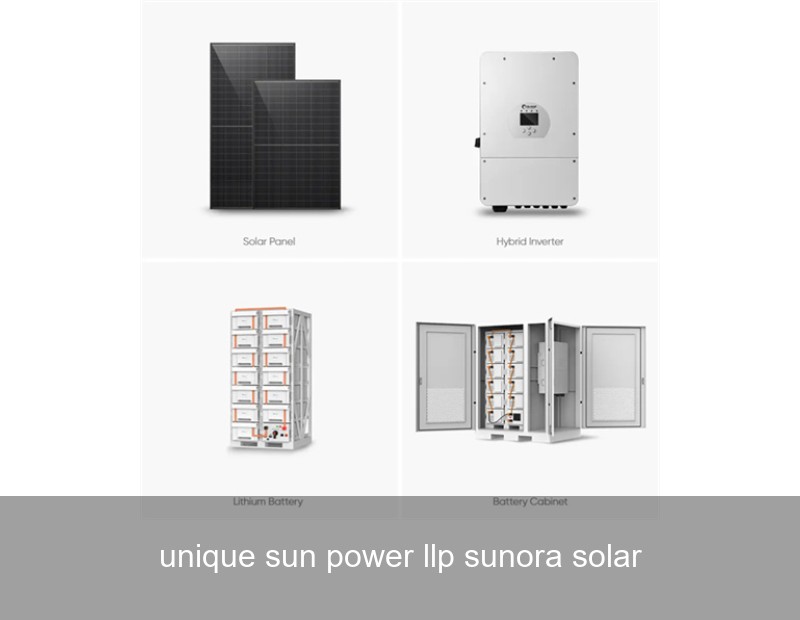
If you're exploring solar solutions for your home or business, you've likely encountered dedicated local installers like Unique Sun Power LLP and their offerings such as Sunora Solar. These companies are the backbone of the renewable energy transition, bringing clean power directly to communities. But here's a question we often hear: "My solar panels produce energy during the day, but what about at night, or on cloudy days?" This is where the modern solar story evolves from simply generating power to intelligently managing it. True energy independence isn't just about capture; it's about control. And that's a challenge forward-thinking solar integrators are solving with advanced technology.
The Phenomenon: Why "Just Panels" Isn't Enough Anymore
For years, the solar industry's primary focus was on the efficiency and cost of photovoltaic (PV) panels. The goal was to maximize kilowatt-hours (kWh) from the sun. This created a phenomenon known as the "duck curve" – a deep dip in net grid demand during sunny afternoons when solar floods the network, followed by a steep ramp-up in demand as the sun sets. This imbalance creates grid instability and often means the excess solar energy you produce midday is sold back to the grid at a low rate, only for you to buy it back at a higher price in the evening.

Source: National Renewable Energy Laboratory (NREL) - Illustrating the grid's "duck curve" challenge.
For solar partners like Unique Sun Power LLP, this presents both a challenge and an opportunity. Their customers with Sunora Solar systems want to maximize their self-consumption and resilience, not just their generation. The modern solar customer asks, "How can I use my sun power, on my terms?"
The Data: The Critical Gap Between Solar Generation and Consumption
Let's look at the numbers. According to the U.S. Department of Energy's Solar Futures Study, solar could provide up to 40% of the nation's electricity by 2035. However, the study also emphasizes the need for "flexibility" – primarily storage – to integrate these high levels of variable generation. For a typical residential user, self-consumption of solar power without storage often ranges from 30% to 50%. This means 50-70% of the clean energy produced is exported to the grid, often during low-price periods.
| Scenario | Solar Self-Consumption | Grid Dependence at Night | Bill Savings Potential |
|---|---|---|---|
| Solar Only (No Storage) | ~30-50% | ~100% | 40-60% |
| Solar + Advanced Storage | ~80-95% | Minimal to 0%* | 80-100%* |
*With proper sizing and intelligent energy management. Complete grid independence (off-grid) requires specific system design.
This data gap highlights the immense value add that installers can provide by integrating storage solutions. It transforms their offering from a one-time installation into a comprehensive energy independence package.
The Case Study: A Real-World Application in Commercial Solar
Consider a mid-sized dairy processing plant in Germany, a market with strong solar adoption but volatile energy prices. The facility had a 250 kW rooftop solar array (similar in scale to what a Unique Sun Power LLP might install for an industrial client). Their challenge was high, consistent energy demand for refrigeration, which ran 24/7, misaligning with solar production peaks.
By integrating a 500 kWh Highjoule Cobalt-Ion Battery Energy Storage System (BESS) with advanced energy management software, the facility achieved:
- Increased Self-Consumption: Solar self-consumption rose from 35% to over 90%.
- Demand Charge Reduction: The BESS discharged during short periods of peak grid demand, slashing monthly "demand charges" by 28%.
- Backup Power: Critical refrigeration units were secured with seamless backup power during two grid outages in winter 2023.
- ROI: The combined savings from increased self-consumption and demand charge management projected a system payback period of under 7 years.
This case, mirrored by the International Energy Agency's findings on storage value, shows how solar becomes a controllable asset, not just a generator. It's this level of solution that elevates a solar installation company's value proposition.
The Solution: Intelligent Energy Storage for True Solar Independence
So, how do solar integrators bridge this gap? The answer lies in intelligent battery storage systems. Think of storage not just as a battery, but as the brain of your solar energy ecosystem. It makes decisions in milliseconds: store excess solar, discharge during peak rates, provide backup during outages, and even participate in grid services (where available).
For partners in the field, choosing the right storage technology is key. Lithium Iron Phosphate (LFP) chemistry, for instance, is renowned for its long cycle life and safety—crucial for residential and commercial applications. The system's intelligence, its ability to integrate seamlessly with various inverters, and its scalability define the ultimate customer experience.
Highjoule's Role: Powering Partnerships Like Yours
This is where a company like Highjoule becomes a pivotal partner for solar integrators. Since 2005, Highjoule has been at the forefront of advanced energy storage, providing the technology that allows installers to deliver complete energy solutions. For a company dedicated to delivering unique sun power, pairing Highjoule's storage with their solar expertise creates an unbeatable offering.
Highjoule's product suite is designed for this synergy:
- Residential ESS: Scalable, wall-mounted systems like the Highjoule HOMe Series that integrate effortlessly with new or existing solar arrays, allowing homeowners to store their Sunora Solar energy for use anytime.
- Commercial & Industrial (C&I) BESS: Modular, high-capacity systems that enable businesses to manage demand charges, ensure power quality, and build resilience. These systems are the perfect complement to large-scale commercial solar installations.
- Microgrid Controllers: For community or off-grid projects, Highjoule's intelligence software can manage a mix of solar, storage, and generators as a single, reliable system.

Source: Unsplash - A modern home energy storage system, enabling true solar self-consumption.
By providing robust, reliable, and intelligent storage, Highjoule empowers solar partners to guarantee their clients true energy independence, turning the promise of solar into a 24/7 reality.
The Future Outlook for Solar Integrators
The landscape for solar energy is shifting from a focus on pure generation to integrated energy management. With policies like tax credits for standalone storage in the U.S. and the push for energy sovereignty in Europe, the economic case for storage is stronger than ever. Solar installers who embrace this holistic approach position themselves as essential energy consultants, not just equipment installers.
They can offer time-of-use rate optimization, virtual power plant (VPP) participation for additional revenue streams, and unwavering backup power—features that are becoming standard expectations for energy-conscious consumers and businesses.
As you consider your own energy journey, whether you're a homeowner, a business owner, or a solar professional, the pivotal question has changed. It's no longer just "How many panels do I need?" but "How will I harness and control every bit of the clean energy I produce?" What is the first step you could take to move from passive generation to active energy management for your property?
 Inquiry
 Online Chat