


Your Complete Guide to a 150 kWh per Month Off-Grid Solar Energy Kit
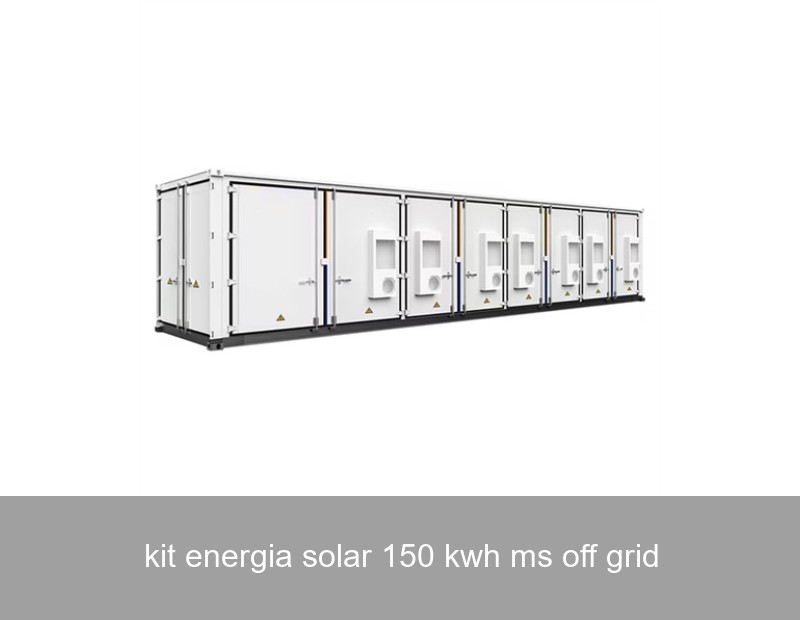
Dreaming of true energy independence? For many homes and small businesses, a monthly consumption of around 150 kWh represents a sweet spot for going completely off-grid. This isn't about minor backup power; it's about designing a self-sufficient solar energy kit capable of reliably generating, storing, and managing 150 kWh per month, completely disconnected from the utility grid. This guide will walk you through the components, sizing, real-world considerations, and smart technology needed to make your off-grid vision a robust reality.
Table of Contents
- What Does 150 kWh Per Month Really Mean?
- Core Components of a 150 kWh/Month Off-Grid Solar Kit
- Beyond the Basics: The Role of Smart Energy Management
- A Real-World Case Study: Off-Grid Living in Colorado, USA
- Highjoule Solutions for Reliable Off-Grid Power
- Making the Decision: Is an Off-Grid Kit Right for You?
What Does 150 kWh Per Month Really Mean?
Let's put that number in perspective. The average U.S. residential customer uses about 899 kWh per month. A 150 kWh monthly usage is significantly lower, indicative of an energy-efficient lifestyle or a small business operation. It translates to roughly 5 kWh per day. To visualize, 5 kWh could run a medium-sized refrigerator (1-2 kWh/day), LED lighting (0.5 kWh/day), a laptop (0.2 kWh/day), a water pump, and occasional use of a microwave or small kitchen appliance. Careful load management is the cornerstone of a successful off-grid system at this scale.
Core Components of a 150 kWh/Month Off-Grid Solar Kit
An effective off-grid system is more than just panels and a battery. It's a synchronized ecosystem. Here are the non-negotiable parts:
- Solar Panels (PV Array): Your primary fuel source. They convert sunlight into direct current (DC) electricity.
- Charge Controller: The guardian of your batteries. It regulates the voltage and current from the panels to safely charge the battery bank, preventing overcharging.
- Battery Energy Storage System (BESS): The heart of your off-grid system. This is where your solar energy is stored for use at night or during cloudy days. For 150 kWh/month, you need a substantial bank, typically lithium-ion for its depth of discharge, lifespan, and efficiency.
- Inverter: The translator. It converts the DC electricity from your batteries into the alternating current (AC) that powers your standard household appliances.
- Backup Generator (Optional but Recommended): A weather-proofing asset. During extended periods of poor sunlight, a small generator can recharge your batteries and ensure continuity.

Image: A typical off-grid solar installation. Source: Unsplash
Sizing Your System: From Energy Audit to Component Specs
Getting the sizing wrong is the most common pitfall. Let's break it down using our 150 kWh/month (5 kWh/day) target.
Step 1: Daily Energy Needs & Peak Load: First, list every appliance, its wattage, and daily usage hours. The sum gives you your daily watt-hour need. Crucially, also calculate your peak simultaneous load (e.g., starting a water pump while the refrigerator is running) to size your inverter correctly.
Step 2: Solar Array Sizing: You must account for local sunlight (peak sun hours). The formula is: Daily Energy Need ÷ Peak Sun Hours ÷ System Efficiency (0.8) = Array Size in kW. For 5 kWh/day in a location with 4 peak sun hours: 5 kWh ÷ 4 h ÷ 0.8 = ~1.56 kW. We'd round up to a 1.8 kW to 2 kW solar array to cover inefficiencies and future needs.
Step 3: Battery Bank Sizing: This determines your "days of autonomy" (how long you can run without sun). For 3 days of autonomy and using a lithium battery with 90% usable depth of discharge (DoD): (Daily Energy Need x Days of Autonomy) ÷ (Battery Voltage x Usable DoD) = Battery Capacity in Ah. For a 48V system: (5000 Wh x 3) ÷ (48V x 0.9) = ~347 Ah. You'd look for a 48V lithium battery bank with roughly 350Ah capacity.
| Component | Key Consideration | Example Specification |
|---|---|---|
| Solar Panels | Total DC Power, Panel Efficiency | 1.8 kW - 2.0 kW |
| Battery Storage | Usable Capacity, Chemistry, Cycle Life | 48V / 350Ah Lithium (≈16.8 kWh usable) |
| Inverter | Continuous Power Rating, Surge Capacity | 48V / 3-5 kW Pure Sine Wave |
| Charge Controller | Maximum Input Voltage & Current | MPPT, 60A+ for 48V system |
Beyond the Basics: The Role of Smart Energy Management
Modern off-grid living isn't about deprivation; it's about intelligence. A basic kit will keep the lights on, but a smart system optimizes every watt. This is where advanced energy management systems (EMS) come in. Think of an EMS as the brain of your operation. It can:
- Prioritize loads, shedding non-essential ones when battery levels are low.
- Automatically start/stop a backup generator based on state of charge.
- Provide remote monitoring and control via a smartphone app.
- Integrate weather forecasts to predict solar yield and pre-emptively manage energy use.
This level of control is what transforms a collection of components into a resilient, user-friendly power plant.
A Real-World Case Study: Off-Grid Living in Colorado, USA
Let's look at a practical example. The Miller family built a 900 sq ft off-grid cabin in the Rocky Mountains. Their goal was a monthly usage under 150 kWh. They conducted a rigorous energy audit, opting for a propane refrigerator and cooktop to minimize electrical loads. Their system comprises:
- Solar Array: 2.2 kW (slightly oversized for winter conditions).
- Storage: A 14.4 kWh lithium iron phosphate (LFP) battery bank.
- Inverter/Charger: A 48V/3.6 kW all-in-one unit with a built-in MPPT charge controller.
- Backup: A small 2.2 kW propane generator for extended snowstorms.
After 18 months of operation, their data is telling. They average 138 kWh per month, with a winter low of 110 kWh (more generator use) and a summer high of 160 kWh (with extra power for tools). The EMS automatically switches the water heater to generator power when the battery is below 30%, ensuring they always have water. "The peace of mind the smart system gives us is invaluable," says John Miller. "We're not just living off-grid; we're living smartly off-grid."
Highjoule Solutions for Reliable Off-Grid Power
Designing and integrating these components reliably is where expertise matters. At Highjoule, with nearly two decades of experience in advanced energy storage, we understand that an off-grid system's performance hinges on the synergy between its parts. Our Highjoule Hive Off-Grid Series is engineered specifically for scenarios like a 150 kWh/month requirement.
This isn't a mere collection of parts; it's a pre-engineered solution. The Hive system features our high-cycle life LFP battery cabinets, scalable from 10 kWh to over 30 kWh, paired seamlessly with hybrid inverters that integrate MPPT charging, AC coupling, and generator control into a single unit. The Highjoule Neuron EMS platform provides the intelligent layer, offering real-time monitoring, predictive energy budgeting, and remote diagnostics. For homeowners and businesses across Europe and North America, this integrated approach eliminates compatibility guesswork and delivers a system focused on durability, safety, and simplicity of use.

Image: A modern lithium-ion battery storage system. Source: Unsplash
Making the Decision: Is an Off-Grid Kit Right for You?
Choosing to go off-grid is a significant commitment. It requires upfront investment, a mindset geared towards energy awareness, and a willingness to perform basic maintenance. The rewards, however—absolute energy independence, immunity from rising utility rates, and a dramatically reduced carbon footprint—are profound. It's crucial to consult with professionals who can perform a detailed site assessment, model solar irradiation for your exact location, and design a system with a realistic safety margin.
So, as you contemplate your 150 kWh/month off-grid solar kit, ask yourself this: Are you looking for just a set of equipment, or are you seeking a guarantee of resilience? What specific energy need in your life is driving you to consider complete energy independence today?
 Inquiry
 Online Chat