


Understanding Solar Panel Production: From Sunlight to Sustainable Power
Have you ever watched sunlight stream through your window and wondered, "How exactly does that light become electricity powering my home?" The process of solar panel production—the conversion of sunlight into usable electrical energy—is a fascinating dance of physics, engineering, and smart technology. It's more than just panels on a roof; it's the cornerstone of a resilient, clean energy future. For homeowners and businesses across Europe and the US, grasping this process is the first step to unlocking true energy independence and maximizing return on investment. And that's where the story gets even more powerful, because what you do with that energy determines its ultimate value.
Table of Contents
The Core Phenomenon: It Starts with a Photon
At its heart, solar panel production relies on the photovoltaic (PV) effect. When photons from sunlight strike the semiconductor material (typically silicon) in a solar cell, they transfer energy to electrons, knocking them loose. An internal electric field within the cell then forces these freed electrons to flow in a specific direction, creating a direct current (DC). A single cell doesn't produce much power, so they are connected and encapsulated to form a panel or module. But here's a crucial point many miss: the DC electricity generated here is not yet ready to power your appliances or feed back to the grid.
This raw DC output must be converted to alternating current (AC) by an inverter. The efficiency of this entire chain—from photon impact to inverter output—determines your system's true yield. Factors like panel temperature, shading, and the angle of incidence all play a role. For instance, a panel operating at 45°C can see its efficiency drop significantly compared to its rated capacity at 25°C (NREL, 2023).

Image Source: Unsplash - Close-up of solar cell technology.
The Data: Not All Production is Consumed in Real-Time
This leads us to a pivotal data insight. Studies of residential solar systems in climates similar to Germany and California show a common pattern: often only 30-50% of the electricity produced by a solar panel system is consumed directly at the moment it's generated. The surplus either goes unused or is exported to the grid, frequently at a lower financial compensation rate. This mismatch between production and consumption is the single biggest limiter of a solar investment's value.
Beyond the Panel: The Critical Role of Energy Storage
Think of your solar panels as a highly efficient, but intermittent, factory. It works brilliantly when the sun shines. But what about the evening, during peak demand charges for businesses, or on cloudy days? This is where the modern concept of solar panel production evolves. True modern energy systems don't just produce; they capture, manage, and optimize.
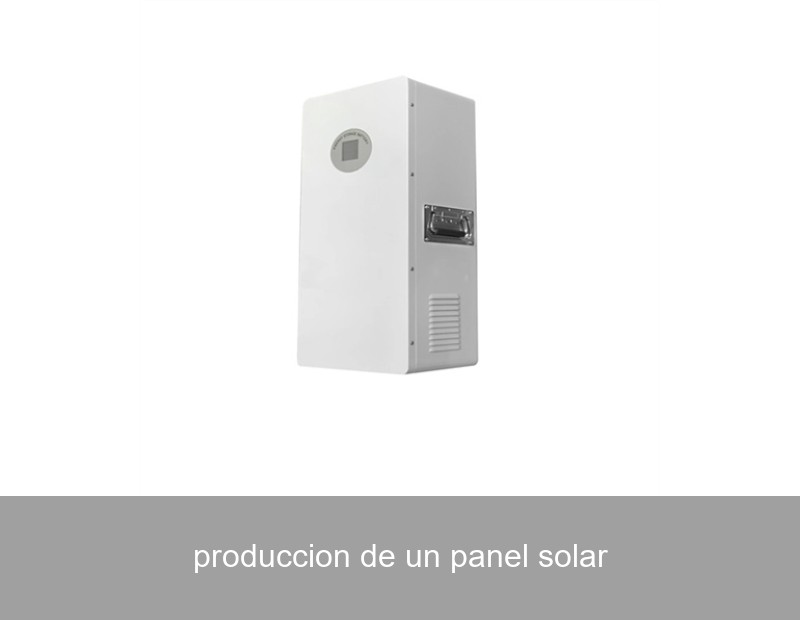
This is precisely the challenge Highjoule was founded to solve in 2005. As a global provider of advanced energy storage systems, we see solar panels as the first—and vital—link in a chain. Our intelligent battery energy storage systems (BESS) are designed to be the perfect complement. They capture the surplus DC or AC energy (depending on the system configuration) that your panels produce, store it with high efficiency, and release it precisely when you need it most. This transforms a one-dimensional production setup into a resilient, 24/7 power asset.
Highjoule's Integration: Making Every Watt Work
For our residential, commercial, and microgrid clients, we integrate our Highjoule Hive and Highjoule Matrix series storage solutions. These systems do more than just store energy; they provide intelligent energy management. Our platform can:
- Prioritize self-consumption, drastically reducing reliance on the grid.
- Provide backup power during outages, a key concern in both US and European markets.
- Enable time-of-use optimization, automatically discharging during high-rate periods to slash electricity bills.
- Offer scalable solutions, allowing businesses to start with a core system and expand as their needs grow.
By pairing Highjoule storage with your solar array, you're not just producing energy; you're gaining control over its entire lifecycle.
A Real-World Case Study: From Theory to Practice
Let's look at a concrete example from a commercial client in Southern Spain—a region with excellent solar resources comparable to parts of California. A mid-sized winery installed a 100 kW rooftop solar array. Initially, they faced the classic mismatch: maximum solar panel production occurred during daylight operations, but significant energy demand from refrigeration and lighting extended late into the night.
| Metric | Before Highjoule BESS | After Highjoule BESS Installation |
|---|---|---|
| Self-Consumption of Solar Production | ~35% | ~85% |
| Grid Energy Import at Peak Rates | High | Reduced by over 70% |
| ROI Timeline for Solar Investment | Estimated 9 years | Projected under 6 years |
The winery integrated a Highjoule Matrix 120 kWh storage system. The system stores excess daytime production and releases it during the evening peak and night. This not only increased their self-consumption dramatically but also provided critical backup power to protect their refrigeration units, preventing spoilage during a grid outage. The project demonstrates that the value of solar panel production is multiplied when coupled with intelligent storage.

Image Source: Unsplash - Commercial solar installation on a winery.
Maximizing Your Solar Production: Key Insights
To truly benefit from your solar investment, consider these insights that go beyond just installing panels:
1. Think in Systems, Not Just Components
Your panels, inverter, and storage should be designed to work in harmony. DC-coupled storage systems, like some in Highjoule's portfolio, can be more efficient for new installations as they store the DC electricity directly before inversion losses.
2. Software is as Important as Hardware
The brain of your system is its energy management software. It should learn your consumption patterns, adapt to weather forecasts, and respond to grid signals (where available) to optimize economics. Highjoule's proprietary Adaptive Core platform does exactly this.
3. Plan for Resilience
With increasing grid volatility, the ability to island your home or business is a powerful feature. Ensure your storage system is capable of forming a microgrid, keeping essential loads running during extended outages.
The Future of Solar Production & Your Next Step
The technology behind solar panel production continues to advance, with perovskite cells and bifacial panels promising higher efficiencies. However, the parallel revolution in battery technology—driving down costs and increasing cycle life—is what will make solar-powered energy independence the default, not the exception. The journey from a photon to a powered home is no longer complete at the inverter; it culminates in the intelligent control and release of stored, clean energy.
So, as you evaluate your path to solar, we leave you with this question to consider: Is your goal simply to produce green energy, or is it to achieve true energy autonomy and financial optimization from your solar investment? The answer will define the system you need. We invite you to explore how Highjoule's intelligent storage solutions can be the key to unlocking the full potential of every kilowatt-hour your panels produce.
 Inquiry
 Online Chat