


Solar Lithium Kits for Off-Grid Homes: Your Complete Energy Independence Guide
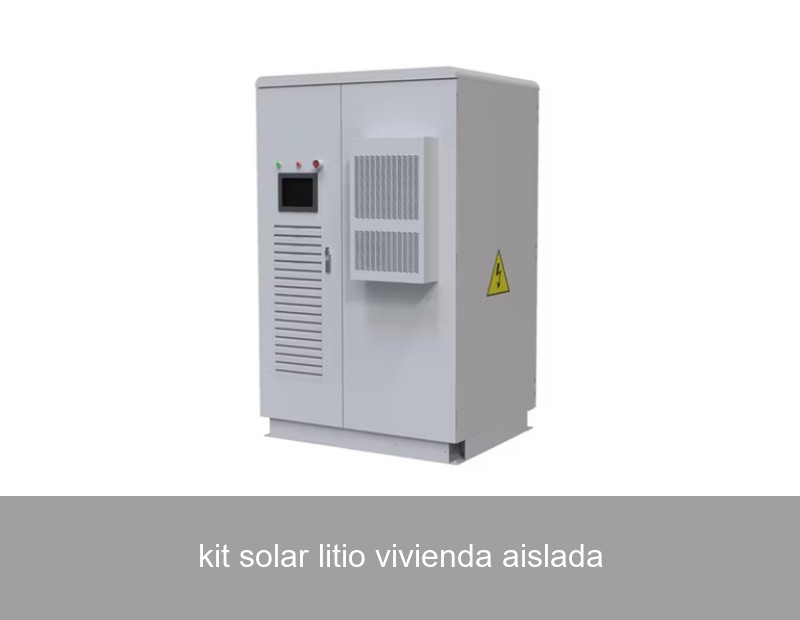
Imagine waking up in your remote mountain cabin or countryside retreat, completely disconnected from the public utility grid, yet with all the modern comforts—powered silently by the sun. This is the reality made possible by solar lithium kits for off-grid homes (kit solar litio vivienda aislada). For homeowners in remote areas of Europe and the US, achieving reliable energy independence is no longer a distant dream but a practical, cost-effective solution. This comprehensive guide will walk you through everything you need to know, from the core technology to real-world applications and how companies like Highjoule are pioneering intelligent systems for sustainable living.
Table of Contents
- What is a Solar Lithium Kit for an Off-Grid Home?
- Why Lithium-Ion? The Game-Changer for Off-Grid Storage
- Key Components of a Reliable Off-Grid Solar Kit
- Real-World Case Study: Powering a Pyrenees Homestead
- Choosing the Right System: Capacity, Climate, and Intelligence
- Highjoule's Role: Beyond the Kit to Integrated Energy Management
- Future Trends and Smart Integration
What is a Solar Lithium Kit for an Off-Grid Home?
A solar lithium kit for an off-grid home is a packaged solution designed to generate, store, and manage electricity autonomously. Unlike grid-tied systems that supplement utility power, these kits are the sole power source. The core innovation lies in using lithium-ion (Li-ion) battery technology as the storage heart, replacing older, less efficient lead-acid batteries. A typical kit integrates solar panels, a Li-ion battery bank, a charge controller, an inverter, and often a monitoring system. It's a self-contained power plant on your property, turning abundant sunlight into a dependable 24/7 energy supply for your isolated residence.
Why Lithium-Ion? The Game-Changer for Off-Grid Storage
Let's be honest: the success of a modern off-grid home hinges on the battery. Here's where lithium-ion technology creates a paradigm shift.
- Higher Depth of Discharge (DoD): You can safely use 90% or more of a lithium battery's capacity without harming it. Lead-acid batteries often limit you to 50% DoD, meaning you need to install twice the capacity for the same usable energy.
- Longer Lifespan: Quality Li-ion batteries offer 3,000 to 6,000 cycles or more, lasting 10-15 years. This is 3-4 times longer than lead-acid under similar use, drastically reducing long-term replacement costs.
- Faster Charging & Higher Efficiency: They accept solar charge faster, especially during short winter days, and have round-trip efficiency above 95%, meaning less solar energy is wasted as heat.
- Compact Size and Weight: For the same storage capacity, a Li-ion system is significantly smaller and lighter, simplifying installation in homes with space constraints.
Consider this data from the National Renewable Energy Laboratory (NREL): The levelized cost of storage for lithium-ion has fallen by over 80% since 2010, making it the economically superior choice for new installations. This isn't just a minor upgrade; it's the foundation for a truly reliable off-grid life.
Key Components of a Reliable Off-Grid Solar Kit
Understanding the pieces of the puzzle helps you appreciate the system's synergy.
| Component | Role | Key Consideration for Off-Grid |
|---|---|---|
| Solar Panels | Convert sunlight to DC electricity. | High-efficiency panels are crucial for limited roof space. Must withstand local weather (snow, wind). |
| Lithium-Ion Battery Bank | Stores excess energy for use at night or on cloudy days. | Capacity (kWh) must match your "autonomy" needs (days without sun). Battery Management System (BMS) safety is critical. |
| Solar Charge Controller | Regulates voltage/current from panels to safely charge batteries. | MPPT (Maximum Power Point Tracking) type is essential for maximizing harvest in suboptimal conditions. |
| Inverter | Converts stored DC battery power to AC for household appliances. | Must be a pure sine wave inverter for sensitive electronics. Power rating (kW) must handle simultaneous loads. |
| Monitoring System | Provides real-time data on production, consumption, and battery health. | Remote monitoring via smartphone app is a game-changer for peace of mind in remote locations. |

As you can see, it's not just about buying parts; it's about intelligent integration. This is where specialized providers add immense value.
Real-World Case Study: Powering a Pyrenees Homestead
Let's move from theory to practice. Consider the Martin family homestead in the French Pyrenees, 5 km from the nearest grid connection. Their goal: year-round living powered by renewables.
The Challenge: Harsh winters with reduced sunlight, powering a well pump, refrigeration, communications, and general household loads. A lead-acid system would have required a massive, cold-sensitive battery room.
The Solution: A tailored 12 kW solar array paired with a 25 kWh lithium iron phosphate (LFP) battery system. LFP is a supremely stable and long-lasting subtype of lithium-ion chemistry, ideal for stationary storage. The system included a robust inverter capable of starting the well pump's motor and a smart controller that prioritizes loads and manages generator backup for extreme weather events.
- Energy Independence: The system provides 98% of annual energy needs, with a small propane generator for the deepest winter weeks.
- Financials: The upfront cost was higher than a lead-acid alternative, but the 15-year lifespan projection and near-zero maintenance created a 30% lower total cost of ownership over the system's life.
- Performance: Even with a week of heavy snow and cloud cover, the battery's high DoD allowed the family to draw on 22 kWh of usable energy without damaging the cells, keeping essential systems running.
This case mirrors countless experiences across rural America and Europe, proving that with the right technology, off-grid living is both comfortable and sustainable.
Choosing the Right System: Capacity, Climate, and Intelligence
How do you size a system? It starts with an honest audit of your daily energy consumption (in kWh) and your "critical autonomy" period—how many cloudy days you need to weather. A home in sunny Arizona will need a different battery size than one in frequently overcast Scotland for the same load. Furthermore, modern systems aren't dumb boxes; they are intelligent energy managers. The best systems can learn your consumption patterns, integrate backup sources like a wind turbine or generator seamlessly, and allow you to control loads remotely to conserve energy when needed.

Highjoule's Role: Beyond the Kit to Integrated Energy Management
This is where Highjoule's expertise transforms a standard kit into a resilient energy ecosystem. Founded in 2005, Highjoule designs solar lithium kits for off-grid homes with a focus on intelligence and durability. Our EverLast Home ESS series, for instance, uses premium LFP chemistry and features an integrated AI-powered energy management system.
What does this mean for you? Our system doesn't just store energy; it optimizes it. It can predict weather patterns based on local data, pre-charge the battery before a storm, suggest the most efficient times to run high-load appliances, and provide granular diagnostics through a user-friendly app. For complex setups like microgrids serving multiple buildings on a remote estate, Highjoule's platform enables seamless control and prioritization. We provide the peace of mind that comes from knowing your power is managed by cutting-edge technology backed by nearly two decades of industry experience.
Future Trends and Smart Integration
The future of off-grid living is even more interconnected. We're seeing the rise of hybrid systems that can integrate a grid connection if it ever becomes available, allowing you to sell excess power. Vehicle-to-Home (V2H) technology, where your electric vehicle's battery can act as a backup for your home, is on the horizon. Furthermore, as noted by the International Energy Agency (IEA), innovation in battery materials continues to push the boundaries of safety, cycle life, and performance in extreme temperatures. Choosing a system from a forward-thinking provider ensures your investment is future-ready.
So, as you contemplate the journey to energy self-sufficiency with a solar lithium kit for your off-grid home, what specific challenge about your location or energy needs feels most critical to address first in your planning process?
 Inquiry
 Online Chat