


Unlocking Grid Resilience: A Deep Dive into the Gootu 6.2 MW Energy Storage Cabinet
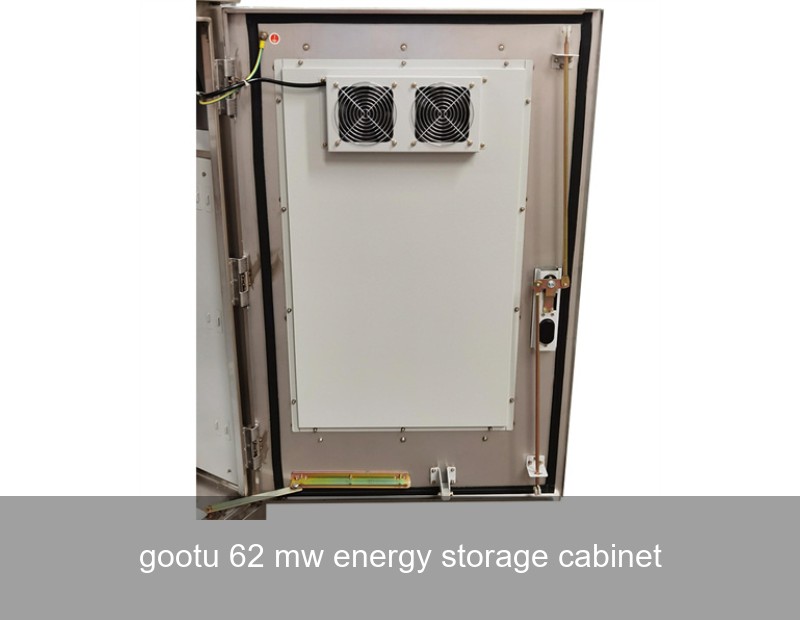
If you're managing a large commercial facility, an industrial plant, or a renewable energy project, you've likely heard the term "megawatt-scale storage." But what does it really look like on the ground? Enter the Gootu 6.2 MW energy storage cabinet – a powerhouse unit designed not just to store energy, but to actively stabilize grids, unlock revenue, and future-proof power infrastructure. This isn't a futuristic concept; it's a deployable solution solving real energy challenges today. As a global leader in advanced energy storage, Highjoule has been at the forefront of engineering these robust systems since 2005, turning the promise of large-scale storage into a reliable, intelligent asset.
What is a 6.2 MW Energy Storage Cabinet?
Let's break down the name. "6.2 MW" refers to the power rating – its ability to instantaneously discharge 6.2 megawatts of electricity, enough to power thousands of homes or a mid-sized factory at full tilt. The "energy storage cabinet" terminology is key; this isn't a sprawling warehouse of batteries. Modern systems like Highjoule's Gootu platform integrate power conversion, battery modules, thermal management, and safety systems into a standardized, containerized cabinet. Think of it as a self-contained power plant module that charges when energy is cheap or abundant (from the grid or onsite solar/wind) and discharges precisely when it's most needed and valuable.
The Grid Strain Phenomenon: Why We Need This Scale
The energy landscape is undergoing a seismic shift. The rapid adoption of intermittent renewables like solar and wind, coupled with increasing electrification of transport and heat, is creating new strains on aging grid infrastructure. We see two main phenomena: volatility (sudden drops in solar production at dusk, known as the "duck curve") and congestion (transmission lines unable to handle peak loads). Traditional grids, built for one-way, predictable power flow, struggle to adapt. This is where utility-scale storage cabinets step in, acting as a shock absorber and a strategic reserve. They provide the grid services – like frequency regulation and voltage support – that were once the sole domain of fossil-fuel power plants, but with millisecond response times and zero emissions.

Image Source: Unsplash - Visualizing the scale of modern renewable energy and grid infrastructure.
The Data: Power Behind the Numbers
To understand the impact of a 6.2 MW unit, let's contextualize it with data. According to the U.S. Department of Energy, the U.S. alone needs to deploy hundreds of gigawatts of storage to achieve a decarbonized grid by 2035. A single 6.2 MW/12.4 MWh system (assuming a 2-hour duration) can:
- Displace the need for a 6.2 MW peaker plant, which typically runs on natural gas and is a major source of emissions during high-demand periods.
- Store enough energy from a mid-sized solar farm to power approximately 4,000 average U.S. homes for two hours during peak evening demand.
- Provide frequency regulation services to balance grid supply and demand across a region, responding to fluctuations in under a second.
The scale is deliberate – it aligns perfectly with the capacity needs of commercial & industrial (C&I) sites, community-scale solar-plus-storage projects, and direct utility grid-support applications.
A Real-World Case: Grid Support in California, USA
California's CAISO grid is a leading example of both renewable penetration and grid challenges. In 2022, a utility-scale storage project utilizing multiple 6+ MW cabinet systems was deployed in San Diego County to address local reliability needs. The system's primary function is to provide "resource adequacy" – essentially, a guaranteed capacity during the most stressed grid hours, typically 4-9 PM.
| Metric | Data |
|---|---|
| Project Scale | 40 MW / 160 MWh (aggregated from multiple cabinet units) |
| Key Technology | Lithium-Ion Phosphate (LFP) battery cabinets, ~6.5 MW per unit |
| Primary Service | Resource Adequacy & Peak Shaving |
| Reported Impact | Helped avoid rolling blackouts during extreme heat events in September 2022, while also participating in daily energy arbitrage. |
This case, documented by the California Public Utilities Commission, illustrates the dual value: ensuring grid stability while creating an economic return. The modular cabinet-based design allowed for rapid deployment and seamless integration with the local substation.
The Highjoule Gootu 6.2 MW Solution: Engineered for Impact
At Highjoule, we've engineered our Gootu 6.2 MW energy storage cabinet based on precisely these market demands. Our cabinet is more than just an assembly of components; it's a pre-integrated, tested, and optimized system built for safety, longevity, and maximum ROI.
- Ultra-Safe LFP Chemistry: We utilize Lithium Iron Phosphate batteries, renowned for their thermal and chemical stability, significantly reducing fire risk compared to other chemistries.
- Advanced Thermal Management: A proprietary liquid cooling system ensures every cell operates within its ideal temperature range, extending cycle life by up to 30% compared to air-cooled systems, especially critical in demanding daily cycling applications.
- Grid-Forming Inverter Ready: The system is designed to work with advanced inverters that can "form" a grid, a crucial feature for maintaining stability in microgrids or grids with high renewable penetration.
- Modular & Scalable Design: Need more than 6.2 MW? Multiple Gootu cabinets can be paralleled seamlessly to create 50, 100, or even 200 MW systems, providing a future-proof growth path for our clients.
This design philosophy ensures that when you invest in a Highjoule system, you're investing in a resilient asset built for a 20-year lifespan.

Image Source: Unsplash - Professional maintenance of large-scale energy storage systems.
Beyond the Battery: The Intelligent Hardware & Software Edge
Hardware is only half the story. The true intelligence of the Gootu cabinet lies in its integration with Highjoule's Energy Management System (EMS). This AI-driven platform continuously analyzes weather data, electricity prices (like day-ahead and real-time markets in Europe and the U.S.), facility load patterns, and grid signals. It autonomously decides the most profitable and beneficial times to charge or discharge, switching between revenue streams – such as arbitrage, frequency response, and peak shaving – without manual intervention. For a C&I customer, this might mean automatically reducing demand charges by discharging during the facility's monthly peak. For a utility client, it means bidding capacity into the ancillary services market.
Key Applications for Commercial & Industrial Giants
- Demand Charge Management: For factories, data centers, or large retailers, utility bills often include "demand charges" based on the highest 15-minute power draw in a month. A 6.2 MW cabinet can strategically discharge to shave these peaks, leading to savings of 20-40% on this portion of the bill.
- Solar Smoothing & Time-Shift: For a 10-20 MW solar farm, a co-located Gootu system can store excess midday generation and release it in the evening, creating a more predictable and valuable power output profile.
- Backup Power & Microgrids: While not its primary design for multi-day outages, the system can provide critical backup power for hours, allowing for orderly shutdowns or continuity of essential operations. It's a cornerstone for industrial microgrids.
- Grid Services Provider: Aggregators or asset owners can use these cabinets to participate in lucrative grid service markets, generating a steady revenue stream by selling frequency regulation or capacity to the grid operator.
The Future Outlook: Where Does Large-Scale Storage Go From Here?
The trajectory is clear. As noted by the International Energy Agency, global energy storage capacity is set to multiply exponentially this decade. The next evolution for cabinets like the Gootu 6.2 MW will involve even deeper grid integration, possibly through standardized "grid code" compliance across regions, and the exploration of longer-duration storage technologies for multi-day resilience. The role of AI in optimizing across multiple value streams will only become more sophisticated.
Is your organization evaluating how a megawatt-scale energy storage asset could transform your energy costs, contribute to sustainability goals, and add a new layer of resilience to your operations? What specific energy challenge – be it demand charges, renewable integration, or backup power strategy – is the most pressing for your site today?
 Inquiry
 Online Chat