


Understanding the Price of Solar Panels for Home: Your Investment in Energy Freedom
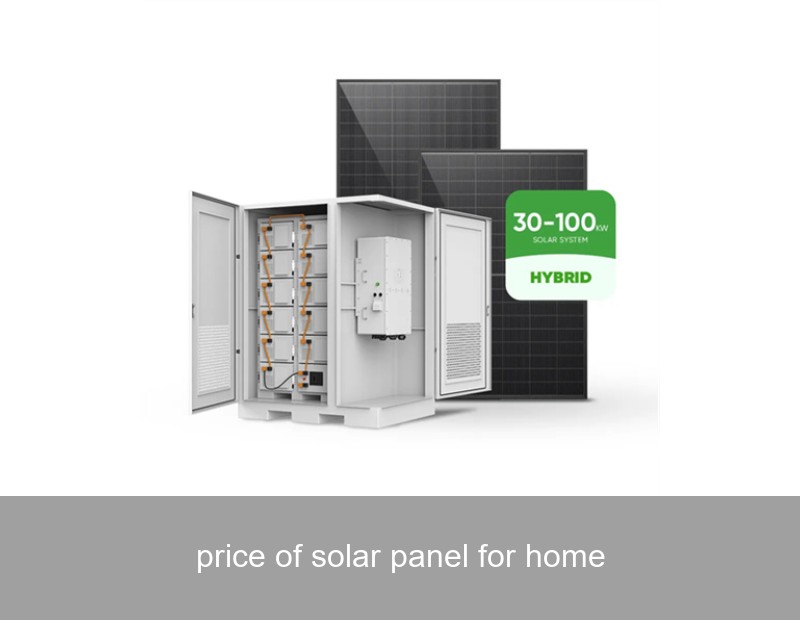
So, you're thinking about solar panels for your home. It's a smart move. But the first question that pops up is almost always: "What's the real price of solar panels for my home, and is it worth it?" It's not just about the sticker price on a few shiny panels. It's about understanding the total investment, the incredible long-term savings, and the technology that makes it all work seamlessly. Let's demystify the costs and explore how a modern solar energy system, especially when paired with smart storage, transforms your home's power and your wallet.
Table of Contents
Breaking Down the "Price" of a Home Solar System
When we talk about the price of solar panels for home, we're really discussing the cost of a complete photovoltaic (PV) system. Think of it like buying a car—you don't just pay for the engine. Your total investment includes several key components:
- Solar Panels (Modules): The most visible part, converting sunlight into electricity.
- Inverters: The brain of the system, converting the DC electricity from panels into usable AC electricity for your home.
- Mounting System & Hardware: The secure framework that attaches panels to your roof or ground.
- Electrical Components & Wiring: Safely connecting the system to your home's electrical panel.
- Permitting & Installation Labor: Professional expertise to ensure a safe, code-compliant, and efficient setup.
According to data from the National Renewable Energy Laboratory (NREL), the average cost of a residential solar system in the U.S. has dropped by more than 60% over the last decade. Today, the average gross price for a typical 6-kW system can range between $18,000 and $25,000 before incentives. But the net price, after applying federal tax credits and local rebates, can be significantly lower.
Key Factors Influencing Your Solar Panel Quote
Why does the price vary so much from one home to another? Several factors are at play:
| Factor | Impact on Price & System |
|---|---|
| System Size (kW) | Larger systems to offset high energy use cost more upfront but deliver greater long-term savings. |
| Panel Efficiency & Type | High-efficiency panels (like monocrystalline) cost more per panel but may require fewer panels, ideal for limited roof space. |
| Roof Characteristics | Complex roofs (multiple angles, skylights) increase installation time and cost compared to simple, south-facing roofs. |
| Local Market & Installer | Labor costs, permit fees, and installer competition vary by region. Always get multiple quotes. |
| Incentives & Financing | The 30% federal tax credit in the U.S. is a major cost reducer. State and utility rebates can lower the price further. |
The Game Changer: Adding Battery Storage to the Equation
This is where the conversation gets exciting. A solar-only system is great for reducing daytime bills, but what happens when the sun sets, or during a grid outage? This is where integrating a battery energy storage system (BESS) transforms your solar investment from a cost-saver to a true energy independence solution.
Adding storage increases the initial price of your system but unlocks immense value:
- Energy Independence: Store excess solar energy produced during the day and use it at night, drastically reducing reliance on the grid.
- Backup Power: Keep your lights on and essentials running during power outages.
- Maximizing Savings: In areas with time-of-use rates, store cheap solar energy to avoid buying expensive grid power during peak hours.
This integrated approach is precisely where Highjoule excels. As a leader in advanced energy storage since 2005, we don't just sell batteries; we provide intelligent, integrated power solutions. Our Highjoule HomePower series is designed specifically for residential use, featuring sleek, scalable lithium-ion battery units that pair seamlessly with any solar inverter. Our smart energy management system learns your usage patterns, automatically optimizing when to store solar energy, power your home, or export to the grid—maximizing your financial return and comfort.

Image Source: Unsplash (Representative image of a modern solar-powered home)
Real-World Impact: A Case Study from California
Let's move beyond theory and look at real numbers. Consider the Johnson family in Sacramento, California—a region with high electricity rates and frequent grid stability issues, especially during wildfire season.
The Challenge: High monthly electricity bills averaging $220, no backup power, and anxiety over public safety power shutoffs.
The Solution: In 2023, they installed a 7.2 kW solar array paired with a Highjoule HomePower 10 battery system (10 kWh usable capacity).
- Total System Price (before incentives): ~$32,000 (solar + storage)
- Federal Tax Credit (30%): -$9,600
- Net System Cost: ~$22,400
- Estimated Annual Savings: Their solar system covers 95% of their annual usage, reducing their annual electricity cost from ~$2,640 to nearly $0 for grid energy. The battery allows them to avoid peak rates (which can exceed $0.50/kWh) and provides full home backup for over 24 hours.
- Payback Period: Estimated at 8-9 years, after which they will have virtually free electricity for the remaining 15+ years of the system's life.
More than the numbers, the Johnsons gained peace of mind. During a planned two-day outage, their home ran normally on solar and stored battery power. This case illustrates that the true "price" of solar panels for a home is better understood as a value equation that includes savings, security, and sustainability.
Looking Beyond Initial Cost: Value and Resilience
Focusing solely on the upfront price of solar panels for your home is like judging a book by its cover. The long-term value is in the pages. A high-quality, professionally installed system with integrated storage is a durable asset that:
- Locks in Energy Costs: Protects you from rising utility rates for decades.
- Increases Property Value: Studies, like one from the U.S. Department of Energy, show homes with solar sell faster and at a premium.
- Supports Grid Stability: By generating and storing local power, you contribute to a more resilient community energy network.
Highjoule's systems are built for this long-term partnership. Our industrial-grade battery cells, sophisticated thermal management, and 10+ year warranties ensure your investment is protected. We provide solutions for homes, businesses, and even microgrids, always with a focus on intelligence, efficiency, and sustainability.

Image Source: Unsplash (Representative image of a home battery installation)
Is Your Home Ready for the Next Step?
The journey to understanding the real price and value of solar panels for your home starts with a personalized assessment. It's not just about square footage or your current bill—it's about your energy goals. Do you want to maximize savings, achieve energy independence, or ensure your family's comfort during storms?
What specific energy challenge in your home—be it a high bill from air conditioning, unreliable power, or a desire to reduce your carbon footprint—is most important for you to solve with solar and storage technology?
 Inquiry
 Online Chat