


Unlocking Energy Independence: A Deep Dive into the Knox 6kW Off-Grid Inverter
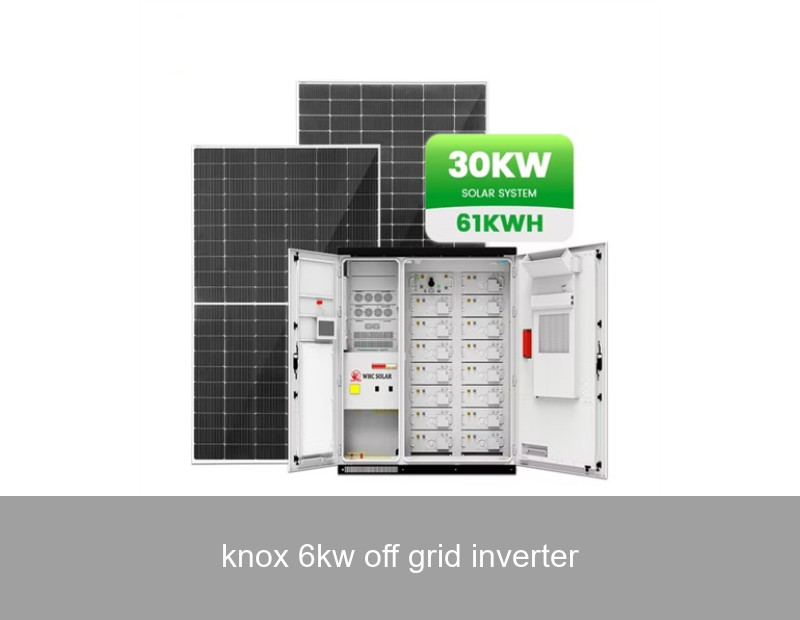
Imagine a life where your power supply is truly yours—unaffected by grid outages, rising utility rates, or remote locations. This is the promise of off-grid living, and at its very heart lies a critical component: the off-grid inverter. Today, we're focusing on a powerhouse in this category: the Knox 6kW off-grid inverter. This isn't just a piece of equipment; it's the brain and brawn of a self-sufficient energy system, converting stored DC battery power into the AC electricity that powers your home or business. For over 18 years, Highjoule has been at the forefront of this technology, designing intelligent storage solutions that empower energy independence across the globe. Let's explore why a robust inverter like the 6kW class is often the perfect cornerstone for a reliable off-grid setup.
Table of Contents
- What is a 6kW Off-Grid Inverter and Why Does Size Matter?
- Key Features to Look for in a Reliable Off-Grid Inverter
- Building Your System: More Than Just an Inverter
- Real-World Power: A Case Study from the Scottish Highlands
- The Highjoule Approach: Engineering for Real-Life Demands
- Is Your Energy Future Ready for Independence?
What is a 6kW Off-Grid Inverter and Why Does Size Matter?
In simple terms, an off-grid inverter is the device that makes the electricity from your solar panels and batteries usable for your appliances. It takes the direct current (DC) from your battery bank and converts it into the alternating current (AC) that your fridge, lights, and tools require. The "6kW" rating is its continuous power output capacity. Think of it like the engine in a truck: a 6kW engine can handle a significant load.
But why is 6kW such a popular and practical size? The data from off-grid installations, particularly in residential and small business settings, shows a clear trend. A 6kW inverter can typically manage the simultaneous load of essential household appliances—like a well pump (1kW), a refrigerator (0.8kW), lighting (0.5kW), and a washing machine (2kW)—with power to spare for occasional larger tools or a water heater. It strikes an optimal balance between capability, cost, and efficiency for many users. Choosing an inverter that's too small leads to constant overloads and shutdowns; one that's too large is inefficient and unnecessarily expensive. The 6kW sweet spot often aligns perfectly with the energy needs of a modern, efficiency-conscious household or a small commercial workshop aiming for energy autonomy.
Key Features to Look for in a Reliable Off-Grid Inverter
Not all inverters are created equal. When your entire power supply depends on this single device, its features and build quality are paramount. Here are the non-negotiable aspects you should consider:
- Pure Sine Wave Output: This is essential for powering sensitive electronics (laptops, medical equipment, variable-speed motors) without risk of damage. Modified sine wave inverters are cheaper but incompatible with many modern devices.
- High Peak Power Surge Capacity: Appliances like motors and compressors require a burst of power (2-3 times their running wattage) to start. A quality 6kW inverter should have a surge rating of at least 12,000-18,000 watts to handle these momentary demands seamlessly.
- Robust Battery Charging: A great inverter is also a smart battery charger. Look for multi-stage charging (bulk, absorption, float) that properly maintains your battery bank, extending its lifespan significantly.
- Grid or Generator Compatibility: For backup or hybrid setups, the inverter should seamlessly accept power from a backup generator or a grid connection to assist in charging batteries when solar is insufficient.

Image Source: Unsplash - A modern off-grid setup relies on a capable inverter.
At Highjoule, our engineering philosophy embeds these critical features as standard. For instance, our Fortis Series Off-Grid Inverters, which include models in the 6kW range, are built with these exact principles. They feature advanced hybrid functionality, allowing for flexible integration of solar, battery, and backup sources, all managed by our intuitive Helios Energy Management System for optimal performance and user control.
Building Your System: More Than Just an Inverter
The inverter is the commander, but it needs a well-equipped army. A complete off-grid power system is an integrated ecosystem. Here’s how the components work together:
| Component | Role | Consideration for a 6kW System |
|---|---|---|
| Solar Panels | Primary energy source, generating DC electricity. | Typically 3-4kWp of panels to effectively recharge batteries for daily 6kW load use. |
| Battery Bank | Energy storage, supplying power when the sun isn't shining. | Lithium-ion (e.g., LFP) is preferred for depth of discharge, lifespan, and safety. Capacity is measured in kWh (e.g., 10-20kWh). |
| Charge Controller | Regulates voltage/current from panels to batteries. | Must be sized to match your solar array's voltage and current (MPPT controllers are most efficient). |
| Off-Grid Inverter (6kW) | Converts DC from batteries to usable AC, manages system. | The system's hub. Must match battery voltage (48V is common) and have necessary features. |
| Monitoring & Control | Provides system data, alerts, and control. | Integrated platforms, like Highjoule's Helios, are crucial for system health and optimizing self-consumption. |
Designing this balance is where professional expertise shines. An undersized battery bank will be drained quickly by a 6kW inverter, while an oversized solar array without proper control can waste potential. Highjoule's service goes beyond hardware; we provide comprehensive system design and simulation, using historical weather data and load profiles to ensure every component, from the Knox 6kW off-grid inverter to the last battery module, is perfectly harmonized for your specific location and consumption patterns.
Real-World Power: A Case Study from the Scottish Highlands
Let's move from theory to practice. In 2022, Highjoule partnered with a remote bed-and-breakfast in the Scottish Highlands, UK. The property had an unreliable grid connection and relied on a noisy, expensive diesel generator. Their goal was 95% energy independence and silent, clean operation.
- Challenge: Power a 4-bedroom B&B with commercial kitchen appliances (fridge, dishwasher, induction hob) and electric heating pumps, especially during long, dark Scottish winters.
- Solution: A system centered on two parallel Highjoule Fortis 6kW off-grid inverters (providing a scalable 12kW peak capacity), coupled with a 24kWh Highjoule Lithium Ferro Phosphate (LFP) battery bank and an 8kWp solar array.
- Results: The data after one year of operation is compelling:
- Diesel Generator Use Reduced by 94%: The generator now only runs for brief maintenance cycles.
- Annual Energy Cost Savings: £3,800 (approximately $4,800 USD), with a projected ROI of under 7 years.
- Reliability: Zero guest disruptions due to power outages, even during severe winter storms that took the local grid offline for days.
This case underscores that a correctly specified 6kW-class inverter system isn't just for small cabins. When designed as part of a robust, scalable solution, it can power demanding commercial operations, providing tangible financial and operational resilience. You can read more about the importance of battery storage for grid resilience from the U.S. Department of Energy.

Image Source: Unsplash - The clean, integrated look of a modern energy storage cabinet.
The Highjoule Approach: Engineering for Real-Life Demands
What sets a Highjoule system apart? It's our holistic focus on intelligence, durability, and service. We understand that an off-grid inverter must be more than a simple converter; it must be an adaptable energy manager.
Our Fortis inverters, for example, feature programmable auxiliary relays that can automatically start a backup generator based on battery state of charge or time certain loads. This level of automation is crucial for true peace of mind. Furthermore, our use of premium LFP battery chemistry, with a lifespan exceeding 6000 cycles, ensures your investment endures for decades. We back this with remote monitoring and proactive diagnostics, allowing our technical teams in Europe and North America to often identify and resolve potential issues before you're even aware of them.
This integrated approach is vital for navigating challenges like those outlined by the International Energy Agency (IEA) regarding the integration of variable renewables. While their focus is often on utility-scale, the same principles of smart management and reliable hardware apply directly to your personal microgrid.
Is Your Energy Future Ready for Independence?
The journey to energy independence starts with a single question: What are the critical loads you cannot afford to lose during an outage, or what is the true cost of your current remote power solution? Whether it's a Knox 6kW off-grid inverter or a larger scalable solution, the right technology is here, proven, and more accessible than ever.
What's the first appliance you would want to secure with your own resilient, clean power system?
 Inquiry
 Online Chat