


Unlocking Energy Independence: The Ultimate Guide to Commercial Off-Grid Solar Systems
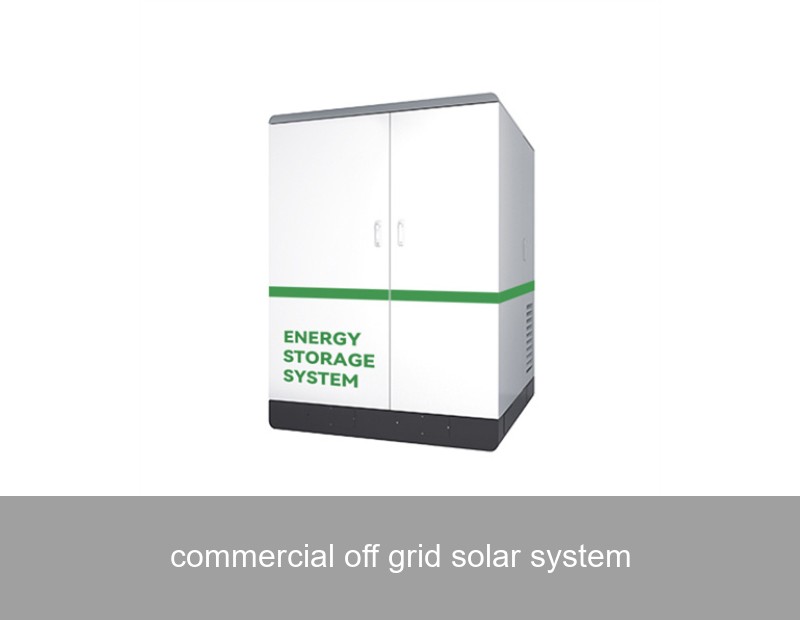
Imagine a business, thriving in a remote location, completely powered by the sun. No grid connection, no volatile utility bills, just clean, reliable energy. This isn't a futuristic dream; it's the reality for a growing number of enterprises powered by commercial off-grid solar systems. For businesses beyond the reach of traditional power lines or those prioritizing ultimate resilience and cost control, these systems are a game-changer. This guide will demystify the technology, showcase its real-world impact, and explore how companies like Highjoule are pioneering intelligent solutions for a self-sufficient energy future.
Table of Contents
- The Rise of Off-Grid Commercial Power
- Core Components of a Robust System
- Case Study: A Winery's Sustainable Transformation
- Highjoule's Role: Intelligence Meets Storage
- Is an Off-Grid System Right for Your Business?
The Rise of Off-Grid Commercial Power: A Response to Modern Challenges
The commercial energy landscape is shifting. While grid-tied solar is common, true energy independence offers unique advantages. Think of remote agricultural operations, mining sites, eco-tourism lodges, or telecommunications infrastructure. For these ventures, running miles of power lines is prohibitively expensive, often costing over $100,000 per mile in rugged terrain. Furthermore, businesses in grid-connected areas are increasingly considering off-grid solutions as a defense against rising electricity costs and growing concerns about grid reliability, especially in regions prone to extreme weather.
A 2023 report from the International Energy Agency (IEA) highlights that modern renewable energy capacity additions have soared, with solar PV accounting for three-quarters of this growth. A significant portion is serving decentralized applications, including off-grid commercial and industrial setups. The data is clear: businesses are investing in self-sustaining power not just for environmental reasons, but for hard-nosed economic and operational security.
Core Components of a Robust Commercial Off-Grid Solar System
Unlike a simple grid-tied setup, an off-grid system must be a meticulously engineered micro-grid. It's a symphony of components working in unison:
- Solar Photovoltaic (PV) Array: The primary energy generator. Size and technology (e.g., monocrystalline for high efficiency) are critical.
- Energy Storage System (ESS): The heart of off-grid operation. This is where advanced battery technology shines, storing excess solar energy for use at night or during cloudy periods.
- Charge Controller: The intelligent regulator that protects batteries from overcharging, maximizing their lifespan.
- Inverter/Charger: A dual-function powerhouse. It converts DC electricity from the panels and batteries into usable AC power for equipment, and can also manage backup charging from an optional generator.
- Backup Generator (Optional): A fossil-fuel or biofuel generator acts as a safety net for prolonged periods of low solar irradiance, ensuring 100% uptime.
- Energy Management System (EMS): The "brain." This software optimizes energy flow, prioritizes loads, and provides real-time monitoring and control.

Credit: Unsplash - A commercial-scale solar array, the first component in a robust off-grid system.
Designing for Success: The Critical Role of Battery Storage and Intelligence
The most common pitfall in off-grid design is undersizing the battery bank. It's not just about daily usage; you must account for "days of autonomy"—the number of consecutive cloudy days the system must bridge. This is where lithium-ion batteries, particularly Lithium Iron Phosphate (LFP), have revolutionized the industry. Compared to older lead-acid batteries, LFP offers longer lifespan (often over 6,000 cycles), deeper safe discharge, higher efficiency, and requires minimal maintenance.
But the hardware is only half the story. Intelligent energy management is what separates a system that simply works from one that works optimally. A smart EMS can learn your consumption patterns, automatically start a backup generator only when absolutely necessary (saving fuel), and shed non-critical loads if storage gets low.
Case Study: Sustainable Viticulture in Napa Valley, USA
Let's look at a concrete example. A prestigious winery in the hills of Napa Valley, California, faced a dual challenge: expanding its production facility to a grid-remote parcel of land, and committing to its 100% sustainable brand promise. Trenching for grid power was quoted at over $500,000.
Their solution was a custom-designed commercial off-grid solar system. The system features:
| Component | Specification | Role |
|---|---|---|
| Solar PV Array | 150 kW | Primary power generation |
| Battery Storage | 400 kWh LFP | Provides power through the night and for 2+ cloudy days |
| Backup Generator | 50 kW (biofuel-capable) | Emergency backup for extended low-sun periods |
| Energy Management System | Advanced AI-driven platform | Orchestrates all components for maximum efficiency |
The results were transformative. The winery avoided the massive grid connection fee and now has a predictable energy cost of near zero for its operations. It eliminated an estimated 120 tons of CO2 emissions annually. The system's reliability ensures constant temperature and humidity control in the fermentation tanks—a non-negotiable for wine quality. This case, documented in part by the National Renewable Energy Laboratory (NREL), underscores how off-grid solutions enable both economic and environmental goals.

Credit: Unsplash - Critical commercial processes, like wine production, require unwavering power reliability.
Highjoule's Role: Pioneering Intelligent Off-Grid Solutions
At Highjoule, we understand that a commercial off-grid system is a critical infrastructure investment. Since 2005, we've moved beyond simply supplying components to delivering integrated, intelligent power solutions. Our approach centers on our proprietary HPS (Highjoule Power Stack) technology.
For off-grid applications, our HPS platform integrates seamlessly with solar arrays, our high-cycle LFP battery banks, and backup generators. What sets it apart is its predictive energy management software. Using historical data and weather forecasting, it pre-emptively adjusts charging and discharging cycles, ensuring optimal battery health and guaranteeing power availability. For a remote hotel, this might mean prioritizing energy for refrigeration and security systems during a forecasted storm. For an industrial site, it could involve scheduling high-energy tasks for peak solar production hours.
Our services encompass everything from initial feasibility studies and custom design to installation supervision, remote monitoring, and lifetime maintenance support. We don't just sell a system; we partner with businesses to ensure their journey to energy independence is seamless, reliable, and financially sound.
Key Considerations Before You Invest
Is an off-grid system the right path for your business? Ask these questions:
- Location & Grid Access: Is the grid unavailable, unreliable, or prohibitively expensive to connect to?
- Energy Profile: Have you meticulously audited your load requirements, including seasonal variations and peak demands?
- Site Suitability: Do you have adequate, unshaded space for solar panels and a secure, temperature-controlled location for the storage system?
- Total Cost of Ownership (TCO): Are you evaluating the 20+ year TCO, including maintenance and potential fuel savings, versus the ongoing and rising cost of grid power or diesel generation?
Making the Leap: Your Next Step Towards Energy Sovereignty
The technology for robust, commercial-scale off-grid solar is here, proven, and more accessible than ever. It represents a shift from being a passive consumer to an active producer and manager of your most critical operational resource: energy. The journey requires careful planning and the right technology partner.
What operational bottleneck in your business could be solved by unlocking a permanent, predictable, and clean power source right on your own property?
 Inquiry
 Online Chat