


Finding the Right KWP Solar Panels for Sale: Your Guide to a Smarter Energy Investment
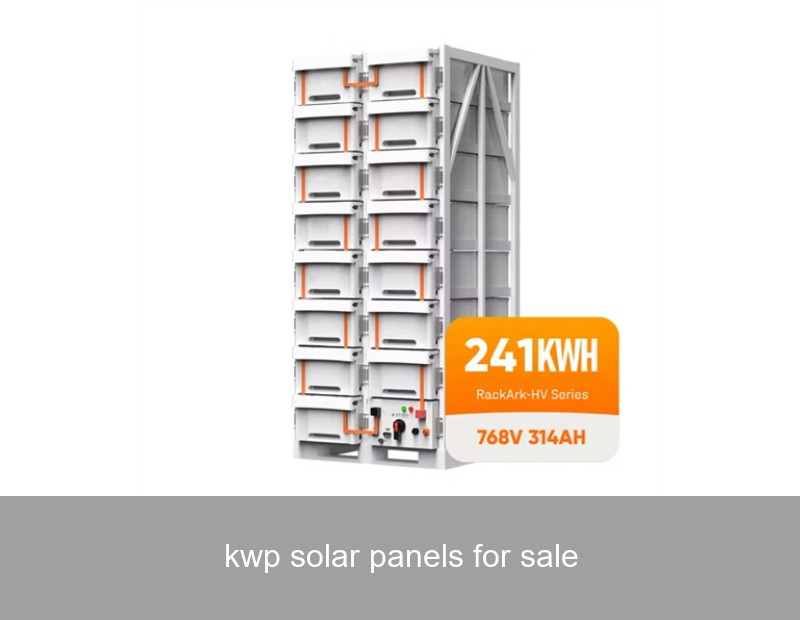
So, you're searching for "KWP solar panels for sale." That's a fantastic first step towards energy independence. But let's be honest, the sheer volume of options, technical jargon, and varying price points can be overwhelming. You're not just buying panels; you're investing in a system that will power your home or business for decades. This article will cut through the noise. We'll explore what "kilowatt-peak" truly means for your energy bill, how to match a system size to your actual needs, and why the right energy storage solution is the secret ingredient to maximizing your return. As a leader in advanced energy storage since 2005, Highjoule is here to ensure your solar investment delivers its full potential.
Table of Contents
- What Does KWP Really Mean? It's More Than a Number
- Sizing Your Solar Array: Why Bigger Isn't Always Better
- The Missing Piece: Why Solar Panels Shine Brighter with Storage
- Real-World Impact: A German Bakery's Recipe for Energy Resilience
- Future-Proofing Your Investment: Smart Integration with Highjoule
- What's Your Energy Independence Goal?
What Does KWP Really Mean? It's More Than a Number
KWP stands for kilowatt-peak. It's the maximum power output your solar panels can generate under ideal laboratory conditions: bright, direct sunlight at a specific temperature. Think of it as the "engine size" of your solar array. A 6 KWP system has a higher potential output than a 4 KWP system.
However, here's the crucial insight many miss: real-world generation is different. Your roof's orientation, local weather patterns, shading, and even temperature affect daily output. A 5 KWP system in sunny Arizona will produce far more annual energy than the same system in Scotland. Therefore, when evaluating KWP solar panels for sale, look beyond the peak rating. Ask for estimated annual kilowatt-hour (kWh) production based on your specific location. This kWh figure is what directly offsets your electricity bill.

Image: Understanding real-world solar output is key. (Photo by Unsplash)
Key Factors Influencing Real Output
- Geography & Irradiation: Southern Europe receives more sun hours than Northern Europe.
- Roof Pitch and Azimuth: South-facing (in the Northern Hemisphere) at an optimal angle yields best results.
- Panel Efficiency: Higher efficiency panels generate more power per square meter, crucial for space-constrained roofs.
- System Losses: Inverters, wiring, and dirt cause minor but predictable energy losses.
Sizing Your Solar Array: Why Bigger Isn't Always Better
The temptation is to install the largest system your roof can hold. But an oversized system without a plan for the surplus energy can be an inefficient capital expenditure. In many regions, feed-in tariffs for sending power back to the grid are falling.
The modern approach is to size your solar generation to match your daytime consumption profile, and then use a battery to store any excess for use in the evening. This dramatically increases your self-consumption rate—the percentage of solar energy you use directly—which is the most cost-effective way to use solar power today.
| System Size (KWP) | Estimated Annual Production (kWh)* | Best For |
|---|---|---|
| 3-4 KWP | 2,800 - 3,800 | Small household with low daytime use. |
| 5-7 KWP | 4,700 - 6,600 | Typical family home with moderate daytime load. |
| 8-10 KWP+ | 7,500 - 9,400+ | Larger homes, electric vehicle charging, or small businesses. |
*Estimates for Central European climate. Source: European Commission PVGIS Tool.
The Missing Piece: Why Solar Panels Shine Brighter with Storage
Here's the core challenge: the sun doesn't shine when energy demand is often highest (evenings). Without storage, you export excess midday solar energy at a low price and import expensive grid power at night. This is where pairing your search for KWP solar panels for sale with a high-performance battery system becomes non-negotiable.
A battery like Highjoule's Residential Energy Hub transforms your solar array into a 24/7 power plant. It stores surplus daytime energy for use at night, slashing your grid dependence. During power outages, it can keep your essential circuits running, providing peace of mind that panels alone cannot offer.
The Highjoule Advantage: Intelligence Meets Storage
Highjoule doesn't just provide batteries; we provide intelligent energy management systems. Our products integrate seamlessly with new or existing solar arrays, offering:
- Adaptive Learning: Our software learns your consumption patterns to optimize charging and discharging cycles.
- Grid Services Ready: In some markets, systems can participate in grid-balancing programs for additional revenue.
- Scalable Design: Start with what you need and expand storage capacity as your needs grow.
Real-World Impact: A German Bakery's Recipe for Energy Resilience
Let's move from theory to practice. Consider Bäckerei Schmidt, a family-run bakery in Bavaria, Germany. Their challenge: high energy costs from running ovens and refrigeration, with solar production peaking before their pre-dawn baking started.
- Phenomenon: High daytime solar export, high nighttime grid import, volatile energy costs.
- Data: They had a 30 KWP solar array but only used 35% of the generation directly.
- Solution: Highjoule installed a tailored Industrial Battery Storage System (120 kWh capacity).
- Result: Self-consumption rose to over 80%. The system stores afternoon solar energy to power the 4 AM baking shift and refrigerators overnight. They've reduced their grid electricity purchases by 65% and secured backup power for their cold storage, protecting inventory. The investment payback period is projected to be under 7 years, a strong financial and operational decision.

Image: Commercial energy storage, like Highjoule's systems, turns solar into reliable power. (Photo by Unsplash)
Future-Proofing Your Investment: Smart Integration with Highjoule
Purchasing KWP solar panels for sale is a long-term decision. Your energy needs will evolve—perhaps you'll buy an electric vehicle, add a heat pump, or see energy prices shift. A standalone solar system is static; a solar-plus-storage system from Highjoule is adaptive.
Our Microgrid Controller for commercial applications and smart Home Energy Management for residences allow you to integrate and control multiple energy assets. Imagine a system that automatically charges your EV with surplus solar, sells excess power back to the grid at the most profitable times, and prepares for a storm by ensuring your battery is 100% charged. This isn't future tech; it's what Highjoule delivers today.
For deeper technical insights into battery longevity and performance, independent resources like the National Renewable Energy Laboratory (NREL) provide valuable research.
Your Checklist Before You Buy
- Get a detailed energy audit of your past year's consumption.
- Request site-specific production estimates (in kWh, not just KWP).
- Insist on a quote that includes integrated storage solutions from the start.
- Ask about system intelligence and software updates.
- Choose a provider with proven expertise, like Highjoule's global network of certified installers.
What's Your Energy Independence Goal?
The journey beyond simply finding KWP solar panels for sale is about designing a resilient, efficient, and intelligent energy ecosystem for your property. Whether it's shielding your home from blackouts, eliminating demand charges for your business, or simply taking maximal control of your energy costs, the combination of solar and smart storage is the answer.
What specific energy challenge—be it reliability, cost, or sustainability—is driving you to explore solar power today, and how can a tailored storage solution address it?
 Inquiry
 Online Chat