


Adani Company Solar Panel: A Catalyst for a Global Energy Shift
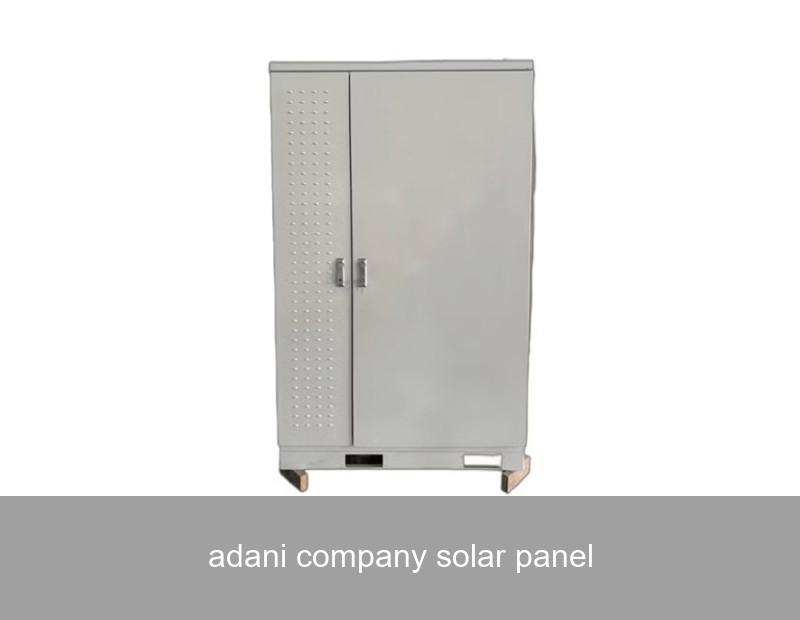
When we talk about the global transition to renewable energy, a few names consistently rise to the top of the conversation. The Adani company, particularly through Adani Green Energy, has become a dominant force in solar panel deployment and large-scale renewable projects. Their ambitious gigawatt-scale solar farms are reshaping energy landscapes, especially in regions like India. But this rapid, utility-scale growth brings to light a critical, parallel challenge: how do we integrate this massive, intermittent solar power into a stable, reliable grid? The sheer scale of projects championed by the Adani company solar panel initiative underscores a universal truth in modern energy—generation is only half the battle. The other, equally crucial half is intelligent storage and management. This is where advanced energy storage systems (ESS) become the indispensable partner to solar giants, ensuring every megawatt generated is captured, optimized, and delivered on demand.
Table of Contents
- The Phenomenal Scale of Modern Solar: More Power, New Challenges
- Data: The Grid Integration Challenge Behind Solar Success
- Case Study: California's Duck Curve & The Storage Imperative
- The Highjoule Role: Intelligent Storage for a Solar-Dominant World
- The Future: Beyond Backup - Solar, Storage, and Smart Microgrids
The Phenomenal Scale of Modern Solar: More Power, New Challenges
Companies like Adani are not just building power plants; they are building solar regions. With a target of 45 GW of renewable energy capacity by 2030, Adani Green Energy exemplifies the "go big" approach necessary to displace fossil fuels. These vast solar parks, with millions of panels, deliver clean energy at an unprecedented scale and cost-effectiveness. However, this success creates a new set of technical phenomena. Solar power is inherently variable—it peaks at midday and drops to zero at night. When you have a single facility generating hundreds of megawatts, its connection and disconnection from the grid create significant management headaches for grid operators. The question shifts from "How do we generate enough?" to "How do we balance the grid when the sun goes down, or during sudden cloud cover?"

Image: Large-scale solar farms, like those developed by industry leaders, require sophisticated grid integration solutions. Credit: Unsplash.
Data: The Grid Integration Challenge Behind Solar Success
The data paints a clear picture of the integration challenge. According to the International Energy Agency (IEA), to hit net-zero emissions by 2050, the world needs to add over 1,300 GW of energy storage capacity, the vast majority of which will be battery storage systems. Why this staggering number? Let's break it down with a simple analogy: think of the grid as a network of highways. Solar farms are like giant, scheduled convoys that only travel at noon. Without storage (like parking garays and on-ramps), this causes a traffic jam at midday and empty roads at night. Grid operators face this as:
- Voltage and Frequency Fluctuations: Rapid changes in solar output can destabilize the delicate balance of the grid.
- Curtailment Waste: In periods of low demand and high production, valuable solar energy is literally "turned off" because there's nowhere to put it.
- Evening Ramp-Up Crisis: As solar fades in the evening, traditional power plants must ramp up extremely quickly to meet demand, an inefficient and costly process.
This is not a critique of solar; it's the reality of its success. The solution lies in pairing these monumental solar assets with equally sophisticated storage.
Case Study: California's Duck Curve & The Storage Imperative
No discussion of solar integration is complete without examining California's now-famous "Duck Curve." This graph, published by the California Independent System Operator (CAISO), visually depicts the net load on the grid—the difference between electricity demand and renewable generation. As solar pours onto the grid during the day, net load plummets, forming the "belly" of the duck. In the late afternoon and evening, as the sun sets and people return home, net load skyrockets, forming the "neck" and "head" of the duck. This steep ramp is a major operational challenge.
California's response has been a massive build-out of battery storage. In just a few years, it has become a world leader. For instance, during a September 2022 heatwave, battery storage systems provided over 3,300 MW of power to the grid at a critical evening peak, preventing blackouts and showcasing storage as a reliable grid asset. This real-world data from a leading solar adopter proves that storage is no longer optional; it's the critical enabler for high solar penetration. The lesson for Europe, the US, and regions with ambitious solar goals is clear: planning for storage must be concurrent with planning for generation.
The Highjoule Role: Intelligent Storage for a Solar-Dominant World
This is precisely where Highjoule's expertise becomes vital. While entities like the Adani company solar panel divisions drive generation costs down, Highjoule focuses on the intelligence behind storage. We don't just provide battery racks; we deliver integrated, smart energy storage systems designed to maximize the value and stability of solar investments. For a commercial or industrial facility with a large rooftop solar array, or a utility partnering with a solar developer, our systems turn solar from a variable resource into a dispatchable one.
Highjoule's HPS Series for commercial and industrial applications is a prime example. It's more than a battery; it's an all-in-one solution with built-in energy management intelligence. It can:
- Perform Solar Time-Shifting: Store excess midday solar energy and release it during the expensive evening peak, dramatically reducing energy bills.
- Provide Critical Backup Power: Ensure operations continue seamlessly during grid outages, a key concern for businesses.
- Offer Grid Services: For larger installations, systems can be configured to support grid stability through frequency regulation, helping to smooth out the very fluctuations caused by large-scale solar.
For utility-scale and microgrid applications, our GridMax platform allows for the orchestration of multiple storage units alongside solar generation, creating a virtual power plant that can bid into energy markets and provide reliable capacity. By integrating with solar of any scale, from a corporate campus to a large solar farm, Highjoule systems ensure that clean energy is not just generated, but is also reliable, economical, and grid-friendly.

Image: Intelligent control systems, like those in Highjoule's solutions, are key to managing solar-storage integration. Credit: Unsplash.
The Future: Beyond Backup - Solar, Storage, and Smart Microgrids
The future synergy between titans of solar generation and innovators in storage will define our energy resilience. The next frontier is the creation of intelligent, decentralized energy networks—microgrids. Imagine a industrial park powered by its own solar canopy, backed by a Highjoule storage system, capable of operating independently from the main grid during outages or peak price events. This model, replicable across campuses, communities, and even islands, reduces strain on the central grid and enhances local energy security.
Companies leading in solar panel deployment have the opportunity to be architects of this new energy paradigm by offering integrated storage solutions. The value proposition shifts from selling kilowatt-hours of solar to providing guaranteed, 24/7 clean power packages. This requires deep technical partnership between generation and storage experts.
Conclusion: A Partnership for a Stable Energy Future
The remarkable progress of the Adani company solar panel projects and similar global initiatives is a cause for optimism. It demonstrates that the clean energy transition is not only possible but is underway at a breathtaking pace. However, to solidify this transition and build a grid that is both green and granite-solid, advanced energy storage is the non-negotiable counterpart. It's the bridge between a sunny afternoon and a powered, productive evening.
Is your organization looking to maximize the return and reliability of its solar investment, whether it's a single facility or a portfolio of assets?
 Inquiry
 Online Chat