


Understanding the Key Characteristics of Photovoltaic Panels for Optimal Solar Investment
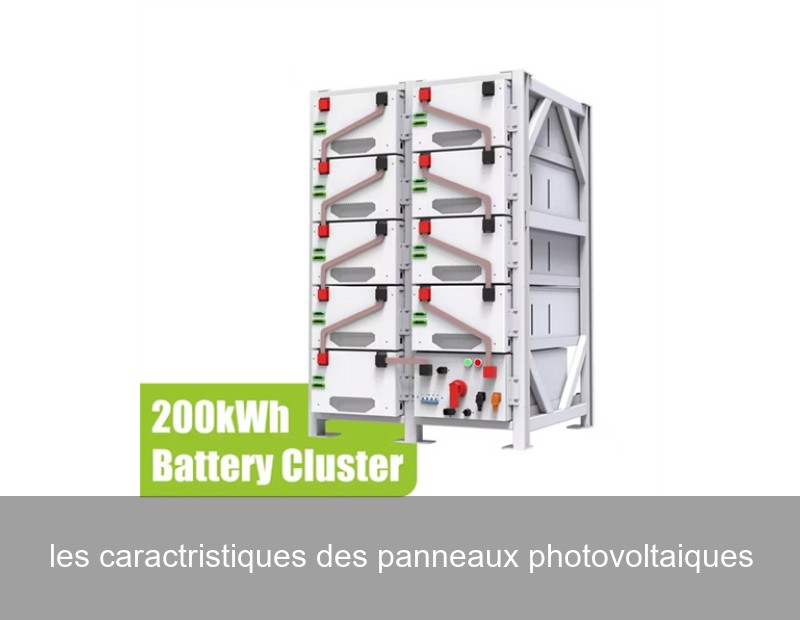
So, you're considering solar energy. You've seen the sleek, blue-black arrays on rooftops and fields, and you know they harness the sun's power. But when it comes to selecting the right system, the differences between panels can seem as vast as a sunny day is long. The true value of a solar installation isn't just in the panels themselves, but in understanding the characteristics of photovoltaic panels and how they interact with the entire energy ecosystem. It's this synergy that transforms sunlight into reliable, cost-effective electricity for decades.
Think of it like building a championship sports team. A star player (the panel) is crucial, but without a strong supporting cast—the inverter, the mounting, and crucially, the energy storage system—the team can't perform consistently, day in and day out. This is where a holistic approach, championed by experienced providers like Highjoule, becomes indispensable. Founded in 2005, Highjoule has evolved into a global leader in advanced energy storage, providing intelligent and sustainable power solutions that ensure the high-quality electricity your panels generate is never wasted.

Image Source: Unsplash. A close-up reveals the intricate cell technology, a fundamental characteristic defining panel performance.
The Core Pillars: Key Characteristics of Photovoltaic Panels
Let's break down the essential characteristics of photovoltaic panels that you, as an informed buyer, should evaluate. These specs aren't just numbers on a datasheet; they're predictors of performance, durability, and long-term financial return.
1. Cell Technology & Material: The Heart of the Matter
The base material defines the panel's family. Monocrystalline silicon cells, made from a single crystal structure, are the efficiency leaders (often 20%+), offering better performance in limited space and a distinctive dark, uniform look. Polycrystalline cells, with their blue, speckled appearance, are slightly less efficient but have been a cost-effective workhorse. The rapid rise of thin-film technologies, like Cadmium Telluride (CdTe), offers advantages in weight, flexibility, and performance in high temperatures.
- Monocrystalline: High efficiency, space-effective, higher cost per panel.
- Polycrystalline: Good value, slightly lower efficiency and heat tolerance.
- Thin-Film: Lightweight, performs well in diffuse light and heat, lower efficiency requires more space.
2. Power & Efficiency: The Energy Output Equation
Panel power output is measured in Watts-peak (Wp) under Standard Test Conditions (STC). A 400W panel produces more power than a 350W panel of the same size. Efficiency is the percentage of sunlight hitting the panel that's converted to electricity. Higher efficiency means more power from the same rooftop area. For example, a 22% efficient panel will generate roughly 22% more energy in the same space as an 18% efficient panel over the same period.
| Panel Type | Typical Efficiency Range | Key Advantage |
|---|---|---|
| Monocrystalline | 19% - 23% | Maximum power per square meter |
| Polycrystalline | 15% - 18% | Proven, cost-effective technology |
| Thin-Film (CdTe) | 16% - 19% | Better high-temperature performance |
3. Temperature Coefficient & Low-Light Performance
Here's a critical but often overlooked fact: solar panels dislike extreme heat. The temperature coefficient tells you how much a panel's power output decreases for every degree Celsius above 25°C. A coefficient of -0.30%/°C is better than -0.40%/°C. In hot climates like Southern Europe or the American Southwest, this characteristic drastically impacts annual yield. Similarly, good low-light performance ensures your system produces useful energy on cloudy days or during early mornings and late evenings.
4. Durability & Warranties: The Long-Term Promise
Your panels will face decades of UV exposure, wind, snow loads, and thermal cycling. Key durability indicators include:
- Performance Warranty: Guarantees a certain output (e.g., 92% after 25 years).
- Product Warranty: Covers material and workmanship defects (typically 12-15 years, extending to 25+ for premium panels).
- Certifications: Look for IEC 61215 (design qualification) and IEC 61730 (safety certification) as minimum standards.
This is where partnering with a seasoned provider pays off. Highjoule's expertise extends to selecting panels with robust warranties and proven field reliability, ensuring your core asset is protected.
5. Mechanical & Electrical Specifications
Don't forget the physical and electrical details. Dimensions and weight affect installation logistics. The power tolerance (e.g., 0 to +5%) indicates whether a panel will deliver at or above its rated Wp. The type of bypass diodes (which mitigate shading losses) and the quality of the junction box and frame also contribute to long-term reliability.
Image Source: Unsplash. A well-installed array where panel characteristics are matched with quality mounting and system design.
From Panel to Powerhouse: The Critical Role of the Balance of System
Even the world's best panel is only as good as the system it's part of. This is the "Balance of System" (BoS): inverters, mounting, wiring, and monitoring. But in today's energy landscape, the most transformative BoS component is energy storage. Without storage, excess solar energy produced at midday is exported to the grid at low rates, and you're forced to buy expensive power in the evening.
This is the precise challenge Highjoule's integrated solutions address. Our smart battery storage systems, like the Highjoule HES Series for commercial & industrial applications or the ResiCore for homes, capture every kilowatt-hour your panels produce. By pairing high-characteristic photovoltaic panels with Highjoule's advanced storage, you dramatically increase self-consumption, gain independence from grid price volatility, and create a resilient backup power source. Our energy management software intelligently decides when to store, use, or (if beneficial) export energy, maximizing the financial return on every solar component.
Case Study: Maximizing ROI on a German Dairy Farm
Let's look at a real-world example from Bavaria, Germany. A mid-sized dairy farm installed a 250 kWp rooftop solar system using high-efficiency monocrystalline panels (21.8% efficiency, -0.29%/°C temperature coefficient). Initially, without storage, they consumed only 35% of their solar generation on-site, exporting the rest.
The pivotal upgrade came with the integration of a Highjoule HES-100 battery storage system (100 kWh capacity). The results, monitored over one year, were compelling:
- On-site consumption of solar power increased from 35% to 82%.
- Grid electricity purchases during high-tariff evening hours were reduced by over 90%.
- The combined system provided uninterrupted power for critical cooling and milking operations during two grid outages.
- The projected payback period for the combined PV + storage system was calculated at 8 years, compared to 11 years for PV alone, thanks to optimized self-consumption and avoided grid costs.
This case underscores that the true value of superior panel characteristics is fully unlocked when coupled with intelligent storage. The panels' high efficiency and good temperature coefficient ensured maximum harvest, while Highjoule's storage ensured that harvest was effectively utilized. For more on the importance of storage in renewable systems, see this report by the International Energy Agency (IEA).
Choosing the Right Panels for Your Project: A Practical Guide
So, how do you navigate these choices? First, define your primary goal: Is it maximizing total lifetime energy output (favoring high efficiency and low degradation)? Is it achieving the lowest upfront cost per kW (where value-oriented panels shine)? Or is it ensuring resilience and independence (where storage becomes non-negotiable)?
For most residential and commercial projects in Europe and the U.S., we see a clear trend toward high-efficiency monocrystalline panels paired with storage. The logic is simple: roof or land area is often limited, and electricity prices are volatile. You want to generate the most power possible in your available space and retain as much of it as you can. This is the integrated solution Highjoule has perfected over nearly two decades. We don't just sell components; we design power solutions where panel characteristics, inverter technology, and storage capacity are meticulously matched to your load profile, local climate, and energy goals. To understand the technological standards behind reliable panels, resources like the National Renewable Energy Laboratory (NREL) efficiency charts are invaluable.
Image Source: Unsplash. The modern energy system: where solar generation meets intelligent storage and monitoring.
Given the characteristics we've discussed—efficiency, temperature performance, durability—and the game-changing role of storage, what would be the first question you'd ask an installer to ensure your solar investment is future-proof and truly optimized for your energy independence?
 Inquiry
 Online Chat