


Li-ion Inverter: How Much Does This Critical Energy Hub Really Cost?
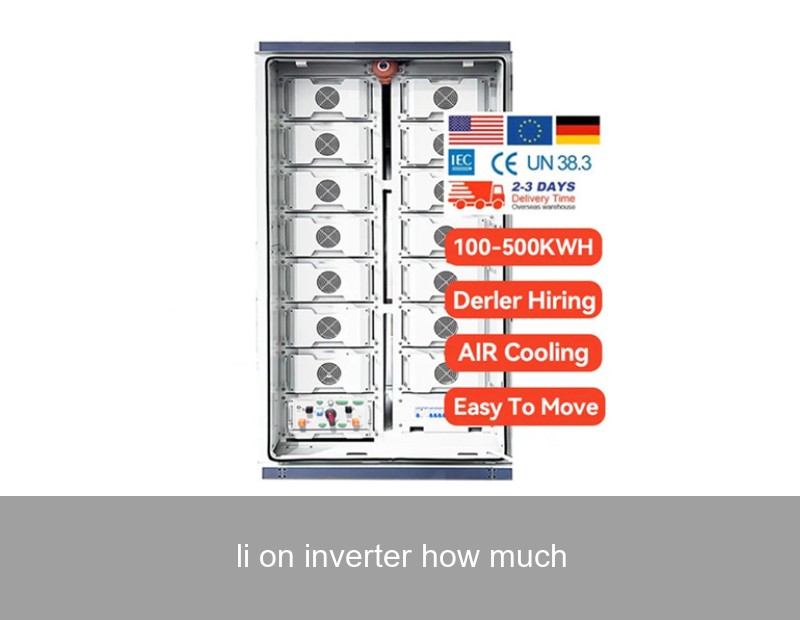
You've decided to take control of your energy future. The solar panels are picked out, and you're eyeing a sleek lithium-ion battery to store that clean power. But then comes a pivotal, and often puzzling, question: the li-on inverter how much should I budget for? It's more than just a price tag on a box. This component is the intelligent hub of your entire energy system, and its cost reflects its crucial role in safety, efficiency, and unlocking your investment's full potential. Let's demystify the real cost behind the li-ion inverter and what you're truly paying for.
Table of Contents
What Exactly is a Li-ion Inverter? The Brain of Your Power System
Think of your lithium-ion battery as a sophisticated power reservoir—it stores energy as Direct Current (DC). However, every appliance in your home or business runs on Alternating Current (AC). The inverter is the essential translator and manager. A modern li-ion inverter doesn't just convert DC to AC; it's a sophisticated energy manager that:
- Optimizes charging and discharging cycles to maximize battery lifespan.
- Seamlessly switches between grid, solar, and battery power during an outage.
- Enables smart features like time-of-use load shifting to avoid peak tariffs.
As the U.S. Department of Energy notes, choosing the right inverter is critical for system performance and safety. Skimping here is like putting a budget engine computer in a high-performance electric vehicle.
The "Li-on Inverter How Much?" Cost Breakdown
So, let's address the core question. In markets like Europe and the U.S., the price of a residential or commercial hybrid inverter (designed for li-ion batteries) typically ranges from $1,500 to $4,000+ for hardware alone. This wide range isn't arbitrary. It's defined by capability.
| Cost Factor | Price Influence | What It Means for You |
|---|---|---|
| Power Rating (kW) | High | A 5kW inverter costs less than a 10kW one. Sizing it correctly for your peak load is essential. |
| Waveform & Features | High | Basic modified sine wave units are cheaper. Pure sine wave inverters (safer for electronics) and those with advanced grid-support functions cost more. |
| Brand & Reliability | Medium-High | Established brands with proven durability and robust warranties command a premium, protecting your long-term investment. |
| Installation & Integration | Variable | This can add $500-$2,000, depending on system complexity and local labor rates. A pre-integrated solution can slash this cost. |
The true "cost" also includes opportunity. A cheaper inverter might lack software for dynamic grid interaction, locking you out of valuable grid service programs or future energy tariffs. Your inverter is a gateway to future savings.
Case Study: A German Bakery's Recipe for Savings with the Right Inverter
Let's look at a real-world example from Bavaria, Germany. Schmidt's Family Bakery faced crippling peak demand charges and sought energy resilience. Their 50kW solar array needed a battery and inverter system.
- Phenomenon: High energy costs from early morning oven operation coincided with peak grid rates.
- Data & Solution: They installed a 40kWh li-ion battery paired with a high-efficiency, programmable 30kW hybrid inverter system. The inverter was key, programmed to discharge the battery precisely during 6:00-9:00 AM peak hours.
- Result: The system cut their peak demand charges by 60% and provided backup power for refrigeration. The intelligent inverter, with its precise control logic, was credited for enabling 95% of the calculated financial savings. The premium for this advanced inverter was paid back in under 18 months.

This case highlights that asking "li-on inverter how much" is really asking "how much value can it generate?" For Schmidt's Bakery, the right inverter was a profit center, not just a cost.
The Highjoule Advantage: Where Inverter Intelligence Meets Seamless Integration
At Highjoule, we've redefined the cost-efficiency equation since 2005. We understand that the inverter is the nerve center, which is why our HPS Series (Hybrid Power Station) features a fully integrated, UL/Certified hybrid inverter designed from the ground up for our lithium-ion battery modules.
This approach transforms the cost structure:
- Eliminated Integration Costs: No costly compatibility engineering or third-party inverter markup. You get a single, optimized system.
- Superior Lifespan Management: Our proprietary Battery Management System (BMS) communicates directly with the inverter, ensuring perfect synchronicity that extends battery life by up to 20% compared to mismatched systems.
- Smart Grid Ready: Every HPS system comes with Highjoule's EnergyOS software, enabling automatic peak shaving, participation in utility demand response programs, and real-time monitoring—features that often cost extra with other brands.
For our commercial and microgrid clients, this integrated intelligence scales further. Our GridMaster inverter series enables complex functions like black start capability and grid-forming, turning a local energy store into a stable grid asset.
Future-Proofing Your Investment: The Hidden Cost of a "Bargain" Inverter
A low upfront cost can harbor future expenses. Consider these risks of an under-specified inverter:
- Battery Degradation: Poor charging algorithms can accelerate capacity loss in your expensive li-ion battery.
- System Obsolescence: Inverters without software-upgradable firmware may not support new grid codes or energy market rules.
- Limited Scalability: Need to add more solar or battery capacity later? A low-power or non-stackable inverter might require a full replacement.
Investing in a capable, integrated system like Highjoule's is an investment in adaptability. As energy markets evolve, your system's brain needs to be ready to learn new tricks.

What's Your Energy Independence Blueprint?
The question "li on inverter how much" opens the door to a more strategic conversation about energy resilience and financial prudence. It's not merely a component purchase; it's about selecting the intelligent core of your personal or commercial power ecosystem.
Are you evaluating inverter quotes based solely on kilowatt price, or are you assessing the total ecosystem's intelligence, integration, and potential for future value creation? What specific energy challenge—be it unpredictable utility bills, critical backup needs, or a sustainability goal—is driving your search for the right li-ion inverter solution today?
 Inquiry
 Online Chat