


Your Ultimate Guide to the Choetech 300W Portable Power Station
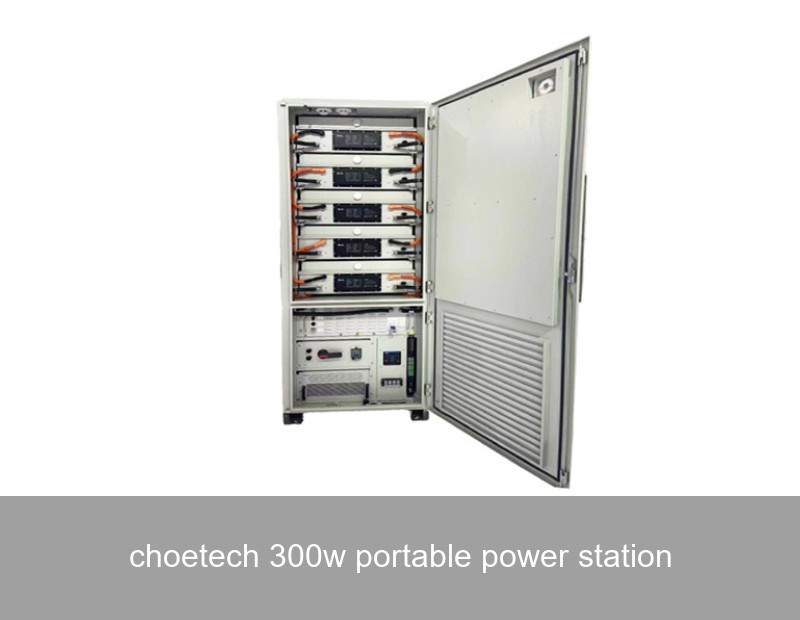
Imagine this: you're in the middle of a crucial video conference call when a sudden storm knocks out the power. Or, you're camping with your family, and your phone's battery is blinking red, cutting you off from maps and safety contacts. In our hyper-connected world, losing access to power isn't just an inconvenience; it's a disruption to our work, safety, and leisure. This is where portable power stations, like the popular Choetech 300W Portable Power Station, step in as a modern essential. But what exactly can you power with 300 watts, and how does this technology fit into the broader landscape of energy storage? As a leader in advanced energy solutions, Highjoule understands that reliable power, from a small portable device to a whole-home battery system, is the backbone of modern resilience and sustainability.
Table of Contents
- What is a 300W Portable Power Station?
- The 300W Reality: What Can It Really Run?
- The Technology Core: From Portable Stations to Whole-Home Backup
- A Real-World Case: The Portable Power Lifeline in California
- Choosing the Right Power Solution for Your Needs
- The Future is Portable and Integrated
What is a 300W Portable Power Station?
A portable power station is essentially a large, sophisticated battery in a box with built-in outlets. Unlike noisy gas generators, they operate silently, emit zero fumes, and can be used safely indoors. The "300W" rating refers to its continuous power output. Think of watts as the rate of energy flow. A 300W device can simultaneously run appliances whose combined running wattage is less than 300. It's crucial to distinguish this from surge wattage (the brief burst needed to start motor-driven devices) and the battery capacity, measured in watt-hours (Wh), which tells you how long it can run those devices.
For example, a typical Choetech 300W Portable Power Station might have a 288Wh battery. This means it could theoretically run a 60W laptop (288Wh / 60W = ~4.8 hours) or keep a 10W LED light bulb on for nearly 29 hours. It's the perfect companion for short-term, mobile power needs.

Image Source: Unsplash - Portable power solutions enable productivity and connectivity anywhere.
The 300W Reality: What Can It Really Run?
Let's get practical. A 300W portable power station is incredibly versatile for its size, but it's not meant to power your refrigerator or microwave. Its strength lies in keeping your personal electronics and small appliances running.
| Device | Typical Running Watts | Estimated Runtime on a 288Wh Station |
|---|---|---|
| Smartphone (charging) | 5-10W | 30-55 hours |
| Laptop | 50-100W | 3-5.5 hours |
| LED Desk Lamp | 10W | ~29 hours |
| CPAP Machine (without humidifier) | 30-60W | 5-9 hours |
| Small TV (32") | 30-50W | 6-9 hours |
| Mini Cooler (not a full fridge) | 40-60W | 5-7 hours |
Important Note: Always check your appliance's actual wattage, usually found on a label. Devices with heating elements (coffee makers, hair dryers) or motors (like a standard fridge) often exceed 300W. This is where understanding your total energy needs becomes critical. For powering essential home appliances during an outage, you would look towards larger, permanent home battery storage systems like those Highjoule provides for residential and commercial applications.
The Technology Core: From Portable Stations to Whole-Home Backup
The magic inside a portable power station is Lithium-ion (Li-ion) or the newer, safer Lithium Iron Phosphate (LiFePO4) battery chemistry. These are the same foundational technologies scaled up in massive residential and industrial energy storage systems (ESS). At Highjoule, we leverage advanced, grid-grade LiFePO4 batteries in our solutions for their exceptional longevity and thermal stability.
Think of it as a spectrum of energy storage:
- Portable (100Wh - 1000Wh): Like the Choetech 300W. For personal electronics, short trips, and very limited backup.
- Home Backup (3kWh - 20kWh+): Like Highjoule's Residential Energy Hub. These are permanently installed, can integrate with solar panels, and power critical home circuits (lights, fridge, sump pump, medical equipment) for hours or even days during a blackout.
- Commercial/Industrial (100kWh - MWh): Large-scale systems that manage energy costs, provide backup for businesses, and support microgrids.
While a portable station is a fantastic tool for individual use, a whole-home system like those from Highjoule provides comprehensive energy security and independence, often becoming a central part of a household's renewable energy strategy.
A Real-World Case: The Portable Power Lifeline in California
Let's look at data and a real scenario. In 2022, the U.S. experienced a staggering 1.3 billion hours of power interruptions, with weather-related events being a primary cause. California, for instance, has seen an increase in Public Safety Power Shutoffs (PSPS) to prevent wildfires.
Case Study: A freelance graphic designer based in Sonoma County, California. Working remotely, her livelihood depends on a reliable internet connection and her computer. During a planned 12-hour PSPS event, she used a Choetech 300W Portable Power Station as her primary backup.
- Devices Powered: Fiber modem/router (15W), laptop (65W), and a desk lamp (10W). Total draw: ~90W.
- Result: With her 288Wh unit, she achieved nearly 3 hours of continuous runtime. By strategically cycling power—turning off the lamp and using her laptop's battery for a period—she stretched the power station to cover critical work periods throughout the outage, submitting a project on time without disruption.
- The Insight: The portable station was a perfect, cost-effective solution for her specific, low-wattage needs. However, after this event, she began researching larger systems. She realized that for longer outages or to also preserve her refrigerator's contents, she would need a scalable solution. This is a common pathway where users start with portable power and then explore integrated home systems like Highjoule's offerings, which can be sized to match exact household energy profiles and even charge from solar panels during an extended grid failure.

Image Source: Unsplash - Professional installation of a permanent home battery backup system.
Choosing the Right Power Solution for Your Needs
So, how do you decide? Ask yourself these questions:
- What do I need to power? Make a list with wattages. Is it just phones and a laptop? Or do you need to keep a fridge, medical device, or well pump running?
- For how long? A few hours during a brief outage, or multiple days?
- Where will I use it? Is it purely for outdoor recreation, or is it for essential home backup?
If your answers lean towards high-wattage appliances and whole-home coverage, it's time to look beyond portable units. This is where Highjoule's expertise shines. We don't just sell batteries; we provide intelligent, integrated power solutions. Our systems are designed with sophisticated energy management software, allowing homeowners to prioritize circuits, monitor consumption via an app, and seamlessly integrate with solar generation to create a true personal microgrid. For businesses, our commercial and industrial ESS solutions provide not just backup, but also significant savings through peak shaving and demand charge management.
The Future is Portable and Integrated
The trend is clear: energy storage is becoming more modular, smarter, and accessible. Portable power stations are the gateway product that introduces consumers to the benefits of battery storage. The logical next step for many is a permanent, automated home system. Imagine a future where your electric vehicle, your home battery, and your portable power station can all communicate and share energy based on your needs—a vision of a fully integrated, resilient, and efficient energy ecosystem that companies like Highjoule are actively building today.
Whether you start with a Choetech 300W Portable Power Station for your camping trips or go straight to a whole-home backup system, the important step is taking control of your energy. Have you calculated what your essential devices would require during a 24-hour blackout? The answer might surprise you and point you toward your ideal power solution.
 Inquiry
 Online Chat