


Understanding the Lifespan of Solar Battery: A Guide to Long-Term Energy Independence
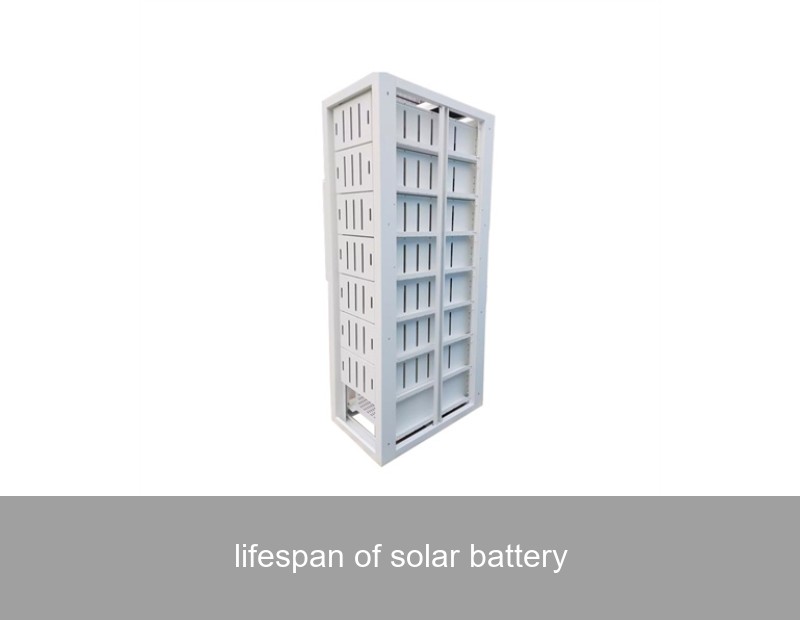
You've made the smart decision to invest in solar panels, but have you considered the heart of your energy storage system—the solar battery? The lifespan of a solar battery is the single most critical factor determining the long-term value, reliability, and sustainability of your home or business energy setup. It's the difference between a 10-year investment and a 25-year partnership with energy independence. Let's demystify what dictates how long your battery will last and how to maximize its service life.
What Do We Mean by "Solar Battery Lifespan"?
Unlike a lightbulb that simply burns out, a solar battery's end of life is defined by capacity fade. Typically, a battery is considered to have reached the end of its useful lifespan when it can only hold 60-80% of its original capacity. Manufacturers usually specify two key metrics:
- Cycle Life: The number of complete charge/discharge cycles a battery can perform before hitting its capacity threshold (e.g., 6,000 cycles to 80% capacity).
- Calendar Life: The maximum years a battery will last regardless of use, often 10-15 years for quality systems.
Your real-world lifespan of solar battery is a interplay between these two factors. A battery might be rated for 10 years or 6,000 cycles, whichever comes first.
Key Factors That Dictate Your Battery's Longevity
Think of your battery like a high-performance engine. How you treat it dramatically impacts its longevity. Four primary forces are at work:
| Factor | Impact on Lifespan | Ideal Range/Mitigation |
|---|---|---|
| Depth of Discharge (DoD) | Frequently draining a battery completely causes significant stress. | Use a system with a high recommended DoD (e.g., 90%) but operate at partial cycles daily. |
| Temperature | High heat accelerates chemical degradation; freezing reduces performance. | Install in a climate-controlled space (10-25°C / 50-77°F is ideal). |
| Charge/Discharge Rate (C-rate) | Rapid charging or discharging creates heat and mechanical stress. | Systems with intelligent power management prevent harmful high C-rates. |
| Maintenance & Software | Poor calibration and lack of updates can lead to imbalance and inefficiency. | Choose a system with remote monitoring and over-the-air firmware updates. |
Battery Chemistry: The Foundation of Lifespan
At the core, the chemical recipe inside your battery is its destiny. Here’s how the two dominant types stack up:
- Lithium Iron Phosphate (LFP): This is the current champion for solar battery lifespan. It offers exceptional cycle life (often 6,000+ cycles), superior thermal stability, and is inherently safer. While its energy density is slightly lower than NMC, its longevity makes it the preferred choice for stationary storage. At Highjoule, our H-Series residential batteries utilize advanced LFP chemistry, engineered to deliver a robust cycle life with minimal degradation, backed by one of the industry's leading warranties.
- Nickel Manganese Cobalt (NMC): Known for higher energy density (more capacity in a smaller space), traditional NMC batteries may have a shorter cycle life than LFP. However, new generations are improving. Their performance can be more sensitive to high temperatures and deep discharge patterns.

Image source: Unsplash (Representative image of battery cells)
Real-World Lifespan: A Case Study from Germany
Theory is good, but real data is better. A 2023 study by Fraunhofer ISE, a leading European research institute, provides invaluable insight. They monitored a fleet of commercial solar-plus-storage systems in Germany over 8 years.
The Findings: Systems using quality LFP batteries, when operated within recommended parameters (average DoD of 60%, stable temperature), showed an average annual capacity fade of only 0.5-1%. This projects a lifespan of 15-20 years before reaching 80% original capacity. The study highlighted that the battery management system (BMS) was the critical component in ensuring even wear across cells, proving that hardware is only as good as its software brain.
Proactive Steps to Extend Your Solar Battery's Life
You have significant control over your battery's destiny. Here’s your action plan:
- Right-Size Your System: An oversized battery constantly sits at high charge; an undersized one is cycled too deeply. Professional design is key.
- Prioritize Climate: Install indoors or in a shaded, insulated enclosure. Avoid garages that can become ovens in summer.
- Leverage Smart Settings: Use time-based control or self-consumption modes to avoid unnecessary shallow cycles and keep the battery in its "happy zone" (e.g., 30-80% state of charge for daily use).
- Embrace Monitoring: Regularly check your system's health via its app. Look for alerts on temperature or cell voltage imbalance.
The Highjoule Approach: Engineering for Exceptional Lifespan
At Highjoule, we don't just sell batteries; we deliver long-term energy resilience. Our philosophy is that the true cost of storage is measured in cost per cycle over the system's lifetime. This drives our design:
- Cell-Level Intelligence: Our proprietary BMS doesn't just monitor the battery pack; it actively manages each cell cluster. This precise balancing prevents individual weak cells from dragging down the entire pack's performance and lifespan.
- Active Thermal Management: Our H-Series and commercial MegaJoule systems feature liquid-cooling technology. This maintains an optimal, consistent temperature, effectively "weatherizing" the battery against seasonal extremes—a crucial feature for both European winters and American Southwest summers.
- Adaptive Software: Our AI-driven energy management platform learns your consumption patterns and grid conditions. It optimizes charge/discharge cycles to minimize stress, effectively acting as a "personal trainer" for your battery's long-term health.

Image source: Unsplash (Representative image of a home energy installation)
For instance, our H-Series residential battery is not only built with premium LFP cells but is integrated with this holistic ecosystem. The result is a product designed to meet its full warranty period with significant capacity to spare, ensuring you get every ounce of value from your investment.
Looking Beyond the Warranty
A warranty is a safety net, not a prediction. The National Renewable Energy Laboratory (NREL) notes that ongoing advancements in BMS and chemistry are pushing practical lifetimes beyond warranty periods. The question becomes: Is your system designed with this future in mind, or is it built to just meet its warranty specs?
Given that your energy storage system is likely the cornerstone of your decarbonization strategy for the next decade or more, what specific operational data will you track today to ensure it's still performing optimally in Year 12?
 Inquiry
 Online Chat