


Liquid Nitrogen Energy Storage: A Cool Solution for a Sustainable Grid?
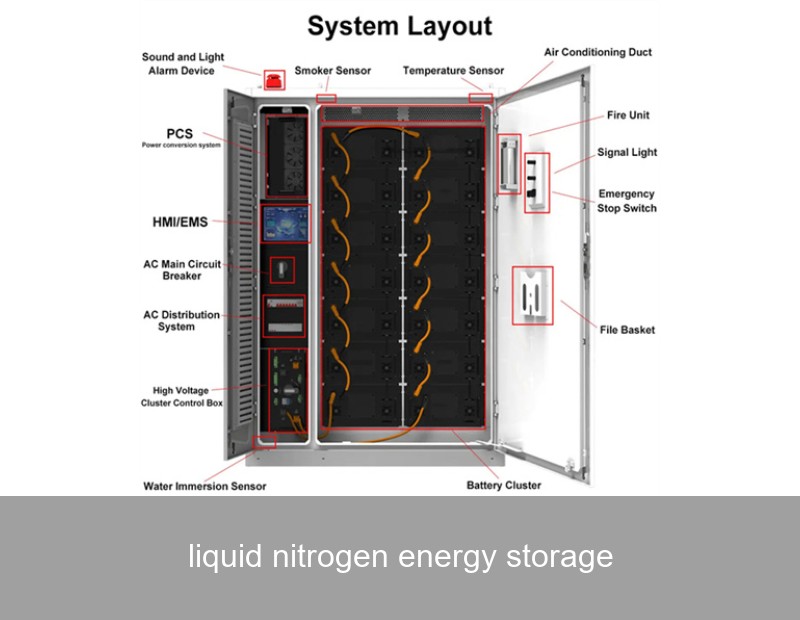
As the world accelerates its transition to renewable energy, a persistent challenge looms large: how do we store the sun's abundance and the wind's power for when we truly need it? While lithium-ion batteries dominate conversations, a fascinating and cryogenic alternative is chilling down: liquid nitrogen energy storage. This technology, leveraging the incredible cold, might just be the key to unlocking long-duration, large-scale storage that our future grids desperately require. Let's explore how turning air into a liquid could solidify our renewable energy future.
Table of Contents
- The Challenge: Renewable Energy's Intermittency Problem
- How Does Liquid Nitrogen Energy Storage (LNES) Work?
- The Chilling Advantages: Why Consider LNES?
- From Theory to Reality: A UK Pilot Case Study
- The Role of Established Storage Solutions
- The Highjoule Approach: Integrating Innovation with Proven Systems
- The Future Outlook for Cryogenic Storage
The Challenge: Renewable Energy's Intermittency Problem
You've likely experienced it firsthand: a cloudy, still day when solar panels and wind turbines generate far less power. This intermittency isn't just a minor inconvenience; it's a fundamental grid stability issue. The International Energy Agency (IEA) highlights that achieving net-zero goals will require a massive expansion of long-duration energy storage (LDES)—technologies that can store energy for 10+ hours, even days or seasons. While batteries are perfect for short-term balancing (seconds to hours), their cost and material footprint for multi-day storage remain a significant hurdle. This gap is where novel technologies like liquid nitrogen storage enter the fray.
How Does Liquid Nitrogen Energy Storage (LNES) Work?
At its core, LNES is a form of cryogenic energy storage. It's a physical battery that uses excess electricity to cool and liquefy air, storing energy in the form of extreme cold. The process follows a clear thermodynamic cycle:
- Charging (Liquefaction): During periods of low demand or high renewable output, excess electricity powers a large-scale air liquefier. This unit cools and compresses ambient air to around -196°C (-321°F), turning it into liquid nitrogen, which is then stored in well-insulated, low-pressure tanks.
- Storage: The liquid nitrogen can be stored for weeks or months with minimal losses in these specialized cryogenic tanks, acting as a "thermal battery."
- Discharging (Power Recovery): When electricity is needed, the liquid nitrogen is pumped, warmed, and rapidly expanded. This process turns it back into a high-pressure gas that drives a turbine or piston engine, generating electricity to feed back into the grid.

Image: Cryogenic systems involve managing extreme cold, a principle at the heart of liquid nitrogen storage. (Source: Unsplash, representative image)
The Chilling Advantages: Why Consider LNES?
So, what makes this "cold chain for electrons" so compelling? The benefits address some critical pain points in the energy transition:
- Long Duration & High Capacity: The energy density of liquid air/nitrogen allows for storage durations from several hours to weeks, ideal for seasonal shifting or backup during prolonged calm periods.
- Abundant and Safe Materials: The primary feedstock is air—inexhaustible and free. Nitrogen is non-toxic and non-flammable, presenting minimal environmental or safety risks compared to some chemical batteries.
- Potential for Low Lifetime Cost: While upfront capital costs can be significant, the components (tanks, turbines, heat exchangers) are durable and have long lifespans (20-30+ years). The lack of rare-earth materials also insulates it from volatile commodity markets.
- Location Flexibility: LNES plants don't require specific geography like pumped hydro (mountains) or caverns for compressed air. They can be deployed close to demand centers or renewable generation hubs.
From Theory to Reality: A UK Pilot Case Study
The theory is sound, but does it work in practice? A landmark project in the UK provides compelling evidence. The Pilot Liquid Air Energy Storage (LAES) plant in Bury, commissioned by Highview Power, has been operational since 2018, demonstrating the technology's grid-scale viability.
| Project Aspect | Data / Detail |
|---|---|
| Location | Bury, Greater Manchester, United Kingdom |
| Capacity | 5 MW / 15 MWh (can power ~5,000 homes for 3 hours) |
| Round-Trip Efficiency | Approximately 60-70% (with waste heat integration) |
| Key Achievement | Successfully provided grid services like frequency response and stored renewable energy, proving commercial and technical readiness. |
This pilot is a critical data point. It shows that cryogenic storage is not just a lab experiment but a functional technology capable of providing essential grid stability services. The UK government, through its Long Duration Energy Storage competition, is actively funding its further scale-up, targeting a 50 MW/300 MWh facility. This real-world validation is crucial for attracting further investment and deployment.
The Role of Established Storage Solutions
It's important to frame LNES within the broader storage ecosystem. Technologies like lithium-ion battery energy storage systems (BESS) are unmatched for rapid response and high-power applications. For commercial and industrial (C&I) sites or grid operators needing to manage peak demand, smooth solar ramps, or provide backup power in seconds, advanced BESS solutions remain the workhorse.
This is precisely where companies like Highjoule excel. With nearly two decades of experience since 2005, Highjoule has established itself as a leader in delivering intelligent, turnkey BESS solutions. Our systems, like the Highjoule H-Series commercial battery, are engineered for reliability and efficiency, integrating seamlessly with solar PV to maximize self-consumption, reduce demand charges, and ensure operational resilience for businesses across Europe and North America.
The Highjoule Approach: Integrating Innovation with Proven Systems
At Highjoule, we view the energy storage landscape holistically. Our expertise lies in deploying the right technology for the right application. While we champion the maturity and versatility of our battery systems for most C&I and residential needs, we are actively monitoring and assessing emerging technologies like liquid nitrogen storage.
Our focus is on building intelligent, hybrid energy platforms. Imagine a future microgrid for a large industrial campus: Highjoule's BESS manages the daily solar load-shifting and short-term backup, while a large-scale LNES system, perhaps integrated into the same energy management software, provides the weekly or seasonal "bank" of energy from the winter winds. We believe in a multi-technology future, and our role is to provide the smart, proven backbone that can connect and optimize diverse assets for true energy independence.

Image: Solar farms generate abundant daytime power, creating a prime use case for both short and long-duration storage. (Source: Unsplash)
The Future Outlook for Cryogenic Storage
The path forward for liquid nitrogen energy storage involves scaling up manufacturing to reduce costs, further improving efficiency through better heat management, and integrating with industrial processes that produce waste heat or cold. Its potential synergy with hydrogen production and other industrial sectors is particularly promising.
For a facility manager, a renewable project developer, or a community planning a microgrid, the question is no longer "if" you need storage, but "what mix of storage technologies" will deliver the most reliable and cost-effective outcome over the next 25 years. Is your organization considering how long-duration storage technologies could future-proof your energy strategy against both price volatility and the deepening need for grid support?
 Inquiry
 Online Chat