


Lithium Batteries in Sweden: Powering a Sustainable Future
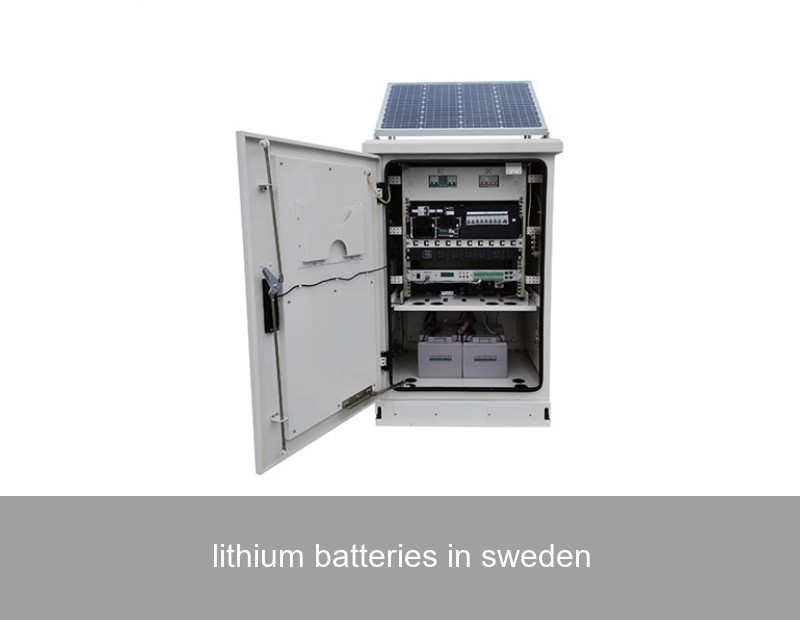
Sweden, a global leader in the clean energy transition, is witnessing a remarkable surge in the adoption of lithium batteries. From the sun-drenched summers of Skåne to the dark, energy-intensive winters of Norrland, these advanced energy storage systems are becoming the cornerstone of a resilient and fossil-free grid. But what's driving this rapid integration, and how are Swedish homes and businesses harnessing this technology? Let's explore how lithium batteries in Sweden are not just storing energy—they are reshaping the nation's relationship with power.
Table of Contents
- The Swedish Phenomenon: More Than Just a Trend
- The Data Behind the Demand: Sweden's Storage Surge
- A Real-World Case: The Söderhamn Community Microgrid
- Key Insights for Adopting Lithium Battery Storage
- Highjoule's Intelligent Solutions for the Swedish Market
- Looking Ahead: What's Next for Energy Storage in Sweden?
The Swedish Phenomenon: More Than Just a Trend
Sweden's ambitious goal to achieve 100% renewable electricity production by 2040 is a powerful engine for innovation. However, renewables like solar and wind are inherently variable. This is where lithium-ion battery energy storage systems (BESS) step in as the critical enabler. They are the "buffer" that smooths out supply, stores excess generation for when it's needed most, and ensures grid stability. For the average Swedish homeowner with solar panels, this means maximizing self-consumption of their solar energy, even during the long winter nights. For industries, it means avoiding peak demand charges and securing backup power.

Image source: Unsplash. A typical Swedish setting for solar and storage integration.
The Data Behind the Demand: Sweden's Storage Surge
The numbers tell a compelling story. According to the Swedish Energy Agency, the installed capacity of energy storage, predominantly lithium-based, has seen exponential growth. While large-scale grid projects make headlines, the distributed, behind-the-meter segment—think residential and commercial systems—is booming. Drivers include:
- Falling Technology Costs: The price per kWh for lithium battery storage has dropped significantly over the past decade, making it a viable investment.
- Supportive Policies: Tax incentives and subsidies for home energy storage (like the ROT-avdrag for renovation) and favorable regulations for grid services.
- Rising Electricity Prices: Volatile energy markets have increased the economic payoff for energy independence.
- Climate Consciousness: A strong societal push for sustainable solutions aligns perfectly with battery storage's role in enabling more renewables.
This confluence of factors has created a perfect storm of adoption, positioning Sweden as a European frontrunner in smart energy storage deployment.
A Real-World Case: The Söderhamn Community Microgrid
Let's move beyond theory to a concrete example. In the municipality of Söderhamn, a forward-thinking community microgrid project was launched to address local grid constraints and integrate more local wind power. The project centered on a 2.5 MWh lithium-ion battery storage system coupled with advanced control software.
| Project Aspect | Detail |
|---|---|
| Location | Söderhamn, Sweden |
| Core Technology | Grid-Scale Lithium-Ion BESS |
| Storage Capacity | 2.5 MWh |
| Primary Functions | Frequency Regulation, Wind Power Firming, Peak Shaving |
| Key Outcome | Reduced local grid congestion by over 40%, allowing for additional renewable connections. |
This system performs multiple revenue-generating and grid-supportive tasks simultaneously: it provides fast frequency response to the national grid, stores excess energy from the local wind farm during high winds, and discharges during peak hours to reduce strain on the local distribution network. The 40% reduction in congestion is a game-changer, demonstrating how lithium batteries can be a cost-effective alternative to traditional grid infrastructure upgrades. You can read more about such grid-scale applications in Sweden through reports by Energiföretagen Sverige.
Key Insights for Adopting Lithium Battery Storage
Based on the Swedish experience, here are crucial considerations for anyone looking to invest:
1. Understand Your Energy Profile
Do you have high peak demand charges? Do your solar panels produce a surplus at noon that's gone by evening? A detailed analysis of your consumption and generation patterns is the first step to right-sizing a system.
2. Look Beyond Basic Storage
The real value lies in intelligence. The most advanced systems, like those developed by Highjoule, use AI-driven software to optimize every charge-discharge cycle based on weather forecasts, electricity prices, and your usage habits. This turns a simple battery into a smart energy asset.
3. Prioritize Safety and Integration
Lithium batteries are safe when designed and installed correctly. Ensure your provider uses high-quality, UL/Certified cells, integrates robust battery management systems (BMS), and offers seamless compatibility with existing solar inverters and home energy management systems.
Highjoule's Intelligent Solutions for the Swedish Market
At Highjoule, we've been designing advanced energy storage systems since 2005, and the unique demands of the Nordic market are deeply integrated into our product philosophy. Our solutions for Sweden go beyond just providing lithium batteries; we deliver comprehensive, intelligent energy ecosystems.
For residential customers, our Highjoule HomePower series is engineered for Nordic conditions. With exceptional cycle life and efficient performance even in colder temperatures, it ensures Swedish families get the most out of their solar investment year-round. Our intuitive app allows users to monitor, control, and optimize their home's energy flow—choosing to save money, maximize green consumption, or ensure backup readiness.

Image source: Unsplash. Representing a sleek, integrated home battery unit.
For commercial and industrial applications, our Highjoule GridMax solutions offer scalable, containerized or modular BESS. These systems are designed to perform like the Söderhamn project—providing peak shaving, demand charge reduction, and ancillary grid services. Our proprietary energy management platform (EMP) acts as the brain, continuously analyzing data to execute the most profitable and grid-supportive strategy for the asset owner. Partnering with Highjoule means gaining a partner with deep expertise in both the technology and the complex energy markets of Europe and North America.
Looking Ahead: What's Next for Energy Storage in Sweden?
The journey for lithium batteries in Sweden is just accelerating. We are moving towards more sophisticated "virtual power plants" (VPPs), where thousands of distributed batteries are aggregated to act as a single, large power plant, providing critical flexibility to the national grid. Second-life batteries from electric vehicles also present a fascinating opportunity for circular economy storage solutions. The integration with smart EV charging will create a fully electrified and optimized home ecosystem.
As an industry leader, Highjoule is actively involved in these innovations. But the question we pose to you, whether you're a homeowner in Stockholm, a factory manager in Gothenburg, or a municipality planner, is this: How will you actively shape your energy resilience and participate in the flexible grid of tomorrow? The tools to take control, reduce costs, and contribute to a fossil-free Sweden are here today. What's the first step you'll take to explore what intelligent energy storage can do for you?
 Inquiry
 Online Chat