


Finding the Best BMS for Lithium Batteries: Your Guide to Safety, Performance, and Longevity
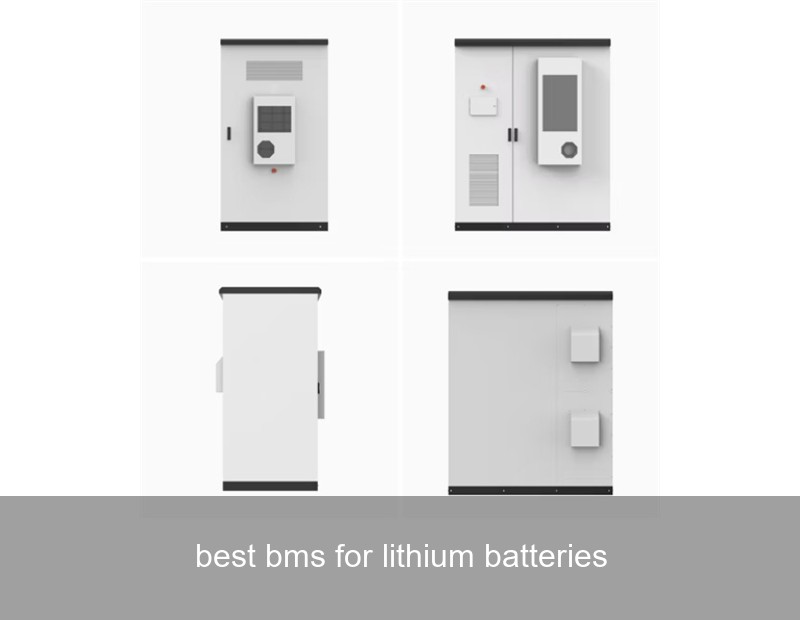
If you're working with lithium batteries—whether for a home solar setup, an electric vehicle project, or a large-scale industrial energy storage system—you've likely heard the term BMS thrown around as a critical component. But what exactly makes a Battery Management System (BMS) the best BMS for lithium batteries? It's not just a simple circuit board; it's the guardian, the brain, and the optimizer of your entire battery pack. A superior BMS is the unsung hero that stands between a safe, high-performing, long-lasting asset and a potential liability. In this deep dive, we'll move beyond the specs to understand the real-world impact of choosing the right BMS, supported by data and real cases, and explore how advanced solutions from leaders like Highjoule are setting new standards.
Table of Contents
- The Silent Guardian: Why Your Lithium Battery is Only as Good as Its BMS
- Beyond the Basics: Key Features of the Best BMS for Lithium Batteries
- From Theory to Reality: A Real-World Case Study in Commercial Storage
- The Highjoule Approach: Intelligent BMS as the Core of Advanced Energy Storage
- The Future of BMS: What's Next for Battery Intelligence?
The Silent Guardian: Why Your Lithium Battery is Only as Good as Its BMS
Let's start with a simple phenomenon: two identical lithium battery cells, from the same production batch, installed in similar systems. After two years, one pack has lost 15% of its original capacity, while the other has degraded by 40%. What's the difference? Often, it's the sophistication of the Battery Management System. The BMS is responsible for critical functions that directly dictate safety, efficiency, and lifespan.
- Cell Balancing: No two cells are perfectly identical. Over charge/discharge cycles, small differences in voltage and capacity grow. A top-tier BMS actively balances these differences, ensuring all cells work in harmony and preventing weak links.
- State Monitoring: Continuously tracking State of Charge (SOC), State of Health (SOH), voltage, temperature, and current in real-time. This is the data foundation for all intelligent actions.
- Protection: This is non-negotiable. The BMS must instantly disconnect the battery in case of over-voltage, under-voltage, over-current, short circuit, and critically, thermal runaway. According to a NFPA report, faulty battery management is a leading contributor to lithium-ion battery incidents.
- Thermal Management: Lithium batteries are sensitive to temperature. The best BMS doesn't just monitor heat; it integrates with cooling/heating systems to maintain the optimal temperature window, maximizing performance and life.
Neglecting the BMS is like building a high-performance sports car with a fragile, outdated braking system. The potential is there, but the risk is immense.
Beyond the Basics: Key Features of the Best BMS for Lithium Batteries
So, what should you look for when evaluating a BMS? The market is flooded with options, but the best BMS for lithium batteries distinguishes itself with advanced capabilities.
| Feature Category | Basic BMS | Advanced BMS (The "Best" Class) |
|---|---|---|
| Communication & Integration | Basic local alerts, limited protocols | Cloud-connected, IoT-enabled with MODBUS, CAN, Ethernet. Seamlessly integrates with energy management systems (EMS) and SCADA. |
| Data Analytics & SOH Calculation | Estimates SOC based on voltage | Uses advanced algorithms (e.g., Kalman filters) for accurate SOC and precise State of Health (SOH) prediction, forecasting end-of-life. |
| Active Balancing | Passive balancing (dissipates excess energy as heat) | Active balancing (shuttles energy from strong to weak cells), increasing overall efficiency and pack capacity by up to 5-10%. |
| Modularity & Scalability | Fixed configuration for a specific pack size | Modular architecture that can easily scale from a small residential stack to a massive containerized system without performance loss. |
An advanced BMS transforms a static battery into a dynamic, intelligent asset. It's the difference between a battery that simply stores energy and one that actively participates in optimizing your energy ecosystem.

Image Source: Unsplash (Representative image of industrial energy storage monitoring)
From Theory to Reality: A Real-World Case Study in Commercial Storage
Let's ground this in a concrete example. A mid-sized fruit cold storage facility in Northern Italy faced a dual challenge: high energy costs during peak hours and unreliable grid power that risked spoiling perishable goods. They installed a 500 kWh lithium iron phosphate (LFP) battery storage system to shift energy use and provide backup.
The Initial Problem: Their first-generation BMS provided only basic protection and minimal data. Within 18 months, they noticed uneven capacity loss across battery modules, leading to a faster-than-expected reduction in usable storage (degradation rate of ~3% per year). More critically, the BMS could not communicate effectively with their building management system, making automated peak shaving complex and inefficient.
The Solution & Data-Driven Outcome: The facility upgraded to a modern, cloud-connected BMS with advanced active balancing and open API integration. The results over the next two years were telling:
- Degradation Rate Slowed: Annual capacity fade reduced to an estimated 1.5%, effectively doubling the projected system lifespan.
- Energy Throughput Increased: Active balancing recovered approximately 4% of previously unusable capacity, translating to an extra 20 kWh of available storage daily.
- Operational Savings Optimized: Seamless integration with their energy software allowed for dynamic, AI-driven charge/dispatch schedules, increasing their annual peak shaving savings by 22%.
This case underscores that the "best" BMS pays for itself not just in safety, but in hard financial returns and guaranteed performance. It moves the battery from a cost center to a strategic, revenue-protecting investment.
The Highjoule Approach: Intelligent BMS as the Core of Advanced Energy Storage
At Highjoule, we've understood this principle since our founding in 2005. We don't view the BMS as a separate component to be sourced; we design it as the beating heart of our integrated storage solutions. Our Highjoule Sentinel™ BMS is engineered from the ground up for the demands of commercial, industrial, and microgrid applications.
What makes the Sentinel™ BMS a contender for the title of best BMS for lithium batteries in demanding applications?
- Predictive Health Analytics: Our proprietary algorithms go beyond standard SOH. They analyze historical cycling data, temperature stress, and internal resistance trends to predict maintenance needs and potential cell failures weeks in advance.
- Grid-Forming & Black Start Capability: For our microgrid and critical backup clients, the Sentinel™ BMS enables our battery systems to not just follow the grid but to create a stable, clean grid themselves—a crucial feature for resilience.
- Cybersecurity by Design: As a cloud-connected device, security is paramount. We implement hardware-based secure boot, encrypted communications, and regular OTA (Over-the-Air) security updates, a standard often overlooked in conventional BMS designs.
- Seamless Highjoule Ecosystem Integration: The Sentinel™ BMS is the brain that powers our complete suite, from residential Highjoule HomePower systems to massive, containerized Highjoule GridMax solutions. It provides a unified interface for monitoring and controlling your energy assets, whether you have one system or one hundred.

Image Source: Unsplash (Representative image of advanced electronic circuitry)
The Future of BMS: What's Next for Battery Intelligence?
The evolution of the BMS is accelerating. We're moving towards even greater intelligence. Imagine a BMS that uses digital twin technology to create a real-time virtual model of your physical battery, running simulations to predict the optimal charging strategy for the next day's weather and energy prices. Research into embedded AI chips at the module level, as referenced in studies from institutions like Nature Energy, promises to bring machine learning directly onto the BMS for instantaneous, localized decision-making.
The line between the BMS and the overall Energy Management System (EMS) is also blurring. The future best BMS for lithium batteries will be an open, adaptive platform that not only manages cell health but also negotiates in real-time with solar inverters, EV chargers, and the grid itself to maximize economic value and grid support.
Your System's Foundation
Choosing the right BMS is one of the most consequential decisions you'll make for your energy storage project. It's the foundation upon which safety, return on investment, and long-term reliability are built. It's not a place to cut corners, but an opportunity to invest in intelligence that pays dividends for years.
Does your current battery system's BMS give you the depth of insight, control, and confidence you need to truly optimize your energy independence and resilience?
 Inquiry
 Online Chat