


The Quiet Revolution in Power: Why Your Energy Storage Needs Are Changing
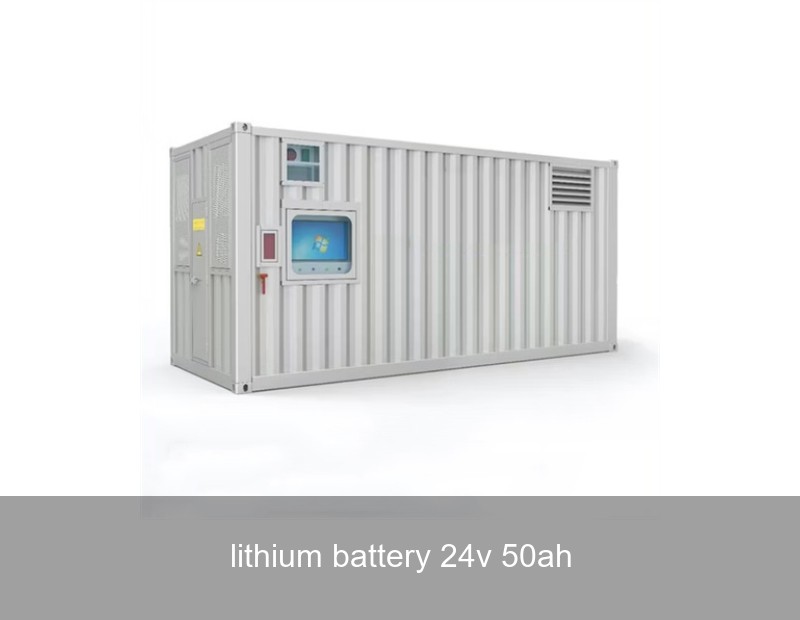
Have you ever stopped to think about the silent workhorse behind your off-grid cabin, your marine electronics, or your backup power system? For decades, the answer was often a heavy, maintenance-intensive lead-acid battery. But a shift is underway. A lithium battery 24v 50ah unit isn't just a simple replacement; it represents a fundamental upgrade in how we store and use energy. This compact power module is becoming the cornerstone for applications demanding reliability, longevity, and efficiency. Whether you're a homeowner integrating solar, a business securing critical operations, or an engineer designing a microgrid, understanding this specific energy storage block is key to building a resilient and sustainable power system.
The move towards lithium-ion technology, particularly in the versatile 24V 50Ah configuration, is driven by a global push for energy independence and efficiency. In Europe and the US, where energy prices can be volatile and grid stability is a growing concern, having a dependable, high-performance storage solution is no longer a luxury—it's a strategic necessity.

Image Source: Unsplash - Representative image of a modern energy storage system.
Decoding the Specs: What Does a 24V 50Ah Lithium Battery Really Mean?
Let's break down the technical jargon. "24V" refers to the nominal voltage, a common standard for many mid-sized systems—think electric vehicles like golf carts, larger solar power storage, telecom sites, and industrial equipment. "50Ah" (Amp-hours) denotes the battery's capacity. In simple terms, a 50Ah battery can theoretically deliver 50 amps of current for one hour, or 5 amps for 10 hours, before needing a recharge. But here's where lithium shines: unlike lead-acid, you can safely use most of that capacity without damaging the battery.
When combined, a lithium battery 24v 50ah offers a practical energy content of approximately 1.28 kilowatt-hours (kWh) (24V * 50Ah = 1280Wh). This makes it a powerful building block. You can connect multiple units in parallel to increase capacity (kWh) for longer runtime, or in series to increase voltage for more demanding applications. This modularity is a game-changer for scalable design.
The Core Chemistry: LiFePO4 - The Safe and Stable Choice
Not all lithium is created equal. The most trusted chemistry for stationary and mobile storage is Lithium Iron Phosphate (LiFePO4 or LFP). It's the technology of choice for companies like Highjoule because it prioritizes safety and cycle life. LiFePO4 batteries are inherently stable, resistant to thermal runaway, and boast a significantly longer lifespan—often exceeding 6000 cycles while maintaining 80% of their original capacity. For a system running through one full cycle per day, that translates to over 16 years of reliable service.
The Data-Driven Advantage: Lithium vs. The Old Guard
The superiority of a modern lithium battery 24v 50ah becomes crystal clear when we look at the data. Let's compare it directly with a traditional sealed lead-acid (SLA) battery of the same voltage and capacity.
| Parameter | Lithium (LiFePO4) | Sealed Lead-Acid (SLA) | Advantage |
|---|---|---|---|
| Usable Depth of Discharge (DoD) | >95% | ~50% (to preserve lifespan) | You effectively get nearly double the usable energy. |
| Cycle Life (to 80% capacity) | 3,000 - 6,000+ cycles | 300 - 500 cycles | Lasts 6-10x longer, reducing long-term cost and waste. |
| Charge Efficiency | >99% | ~70-85% | More solar or grid power is stored, less is lost as heat. |
| Weight (Approx.) | ~15 kg (33 lbs) | ~30 kg (66 lbs) | 50% lighter, easier to install and handle. |
| Maintenance | Virtually None | Periodic equalization required | Set-and-forget operation. |
As you can see, the Total Cost of Ownership (TCO) for lithium is often lower despite a higher initial investment. You're buying more usable energy, for a much longer time, with far less hassle. For a deeper dive into lithium battery chemistries and their properties, resources from the U.S. Department of Energy provide excellent technical background.
A Real-World Case: Powering a Sustainable Farm in Bavaria
Let's move from theory to practice. Consider a family-run dairy farm in Bavaria, Germany. Their goals were clear: reduce grid dependency, lower energy costs, and ensure uninterrupted power for milking systems and refrigeration—a critical need.
Challenge: The farm's existing 10kW solar array was underutilized, exporting excess midday power to the grid at low rates while drawing expensive power in the evening. A lead-acid battery bank was bulky, required a dedicated ventilated room, and needed replacement every 4-5 years.
Solution: The farm partnered with Highjoule to design a streamlined storage system. The core consisted of eight modular lithium battery 24v 50ah units configured to create a 48V, 200Ah system (approximately 10kWh of usable storage). This was paired with a Highjoule bi-directional hybrid inverter for seamless integration.
Results (Data after 18 months):
- Self-Consumption: Increased from 35% to over 85%.
- Grid Bill Reduction: 72% decrease in net electricity costs.
- Reliability: Survived three prolonged grid outages with no operational impact.
- Space Savings: The new battery cabinet occupied 60% less space than the old lead-acid setup.
This case exemplifies how the right lithium battery 24v 50ah technology, integrated into a smart system, delivers tangible financial and operational resilience. It's a pattern we see across commercial and agricultural applications in Europe and North America.

Image Source: Unsplash - Representative image of agricultural solar integration.
Beyond the Box: The Highjoule Intelligent Ecosystem
At Highjoule, we understand that a battery is more than just a container for energy. Our lithium battery 24v 50ah modules are designed as intelligent components of a broader energy management system. What does this mean for you?
Our commercial and residential battery systems feature built-in Battery Management Systems (BMS) that monitor every cell for voltage, temperature, and current. This data isn't locked away—it's communicated to our user-friendly monitoring platform. You can see your energy flow, system health, and savings in real-time from your phone or computer.
For larger-scale Industrial and Microgrid applications, Highjoule's solutions truly shine. Our containerized or skid-mounted energy storage systems can be built using these reliable 24V building blocks, scaled to megawatt-hour capacities. These systems provide services like peak shaving (reducing demand charges), frequency regulation, and black-start capability, turning a cost center into a grid-supporting asset. This level of grid interaction is a topic actively discussed by grid operators, with information available from organizations like NREL (National Renewable Energy Lab).
Highjoule's Commitment to Safety and Sustainability
Since 2005, safety has been our non-negotiable principle. Every Highjoule LiFePO4 battery undergoes rigorous testing. Furthermore, we design for the entire lifecycle. Our modular approach means individual modules can be serviced or upgraded, and we have established recycling partnerships to ensure materials are recovered responsibly at end-of-life, aligning with the circular economy principles valued in the EU and US markets.
Choosing the Right 24V 50Ah Solution: Key Considerations
Ready to explore a lithium battery 24v 50ah for your project? Here’s a quick checklist to guide your selection:
- Chemistry: Insist on LiFePO4 for safety and longevity.
- Integrated BMS: Ensure it has protection against overcharge, deep discharge, overcurrent, and short circuits.
- Communication: Can it "talk" to your inverter and monitoring system? (Common protocols: CAN, RS485, Modbus).
- Scalability: Verify the manufacturer's guidelines for parallel and series connections.
- Warranty & Support: Look for a strong warranty (e.g., 10 years) and accessible technical support from a proven provider like Highjoule.
- Certifications: Check for relevant regional safety certifications (e.g., UL, CE, UN38.3).
Your Power, Your Future: What's the Next Step?
The transition to intelligent, lithium-based storage isn't just about technology; it's about taking control. Whether your goal is to achieve energy independence for your home, harden your business against outages, or develop a community microgrid, the foundation starts with understanding units like the lithium battery 24v 50ah.
We've seen the data and a real-world example of its impact. Now, we're curious: What's the biggest energy challenge you're facing today that a smarter, more resilient storage system could solve? Is it unpredictable utility bills, a need for backup power for specific critical loads, or integrating a renewable source that currently isn't being fully utilized?
We invite you to share your scenario. Let's discuss how modular, intelligent energy storage can be tailored to meet your unique needs.
 Inquiry
 Online Chat