


Understanding the Power of a Lithium Battery 72V 30Ah: A Complete Guide
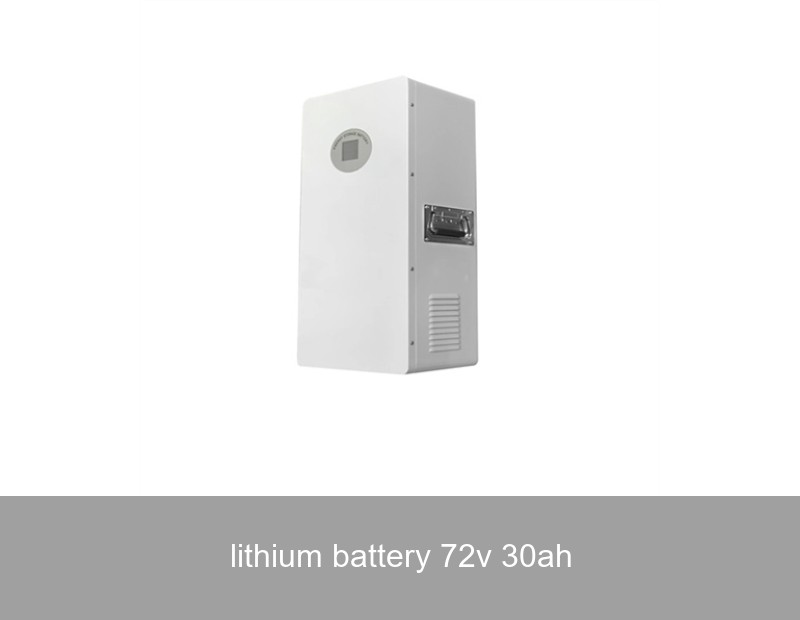
If you're exploring energy storage for an electric vehicle, a solar power system, or an industrial backup, you've likely encountered the specification "lithium battery 72V 30Ah." This isn't just a random string of numbers and letters. It's the key to unlocking a specific level of power, runtime, and efficiency. But what does it truly mean for your project? In this guide, we'll demystify this common battery configuration, explore its ideal applications, and show you how choosing the right technology partner, like Highjoule, can make all the difference in performance and longevity.
Table of Contents
- Decoding the Specs: Voltage, Capacity, and Energy
- Why 72V 30Ah? Ideal Use Cases and Applications
- Beyond the Basics: The Critical Role of BMS and Build Quality
- A Real-World Case: Powering a California Landscaping Fleet
- Choosing Your 72V 30Ah Battery: Key Considerations
- Highjoule's Approach to Advanced 72V Energy Storage
Decoding the Specs: Voltage, Capacity, and Energy
Let's break it down. A lithium battery 72V 30Ah combines two fundamental electrical ratings.
- Voltage (72V): This is the "pressure" of the electrical system. A 72V battery pack is common in high-power applications where it provides a great balance between efficiency and power delivery. Compared to lower voltage systems (like 48V), it allows for thinner wiring and can run high-power motors more efficiently, reducing energy loss as heat.
- Capacity (30Ah): This stands for Ampere-hours. Think of it as the size of the fuel tank. A 30Ah battery can, in theory, deliver 30 amps of current for one hour, 15 amps for two hours, and so on.
The real magic is when you multiply Voltage and Capacity to get Energy, measured in Watt-hours (Wh). For our 72V 30Ah battery: 72V x 30Ah = 2,160 Wh or 2.16 kWh. This single number tells you the total energy stored. It's enough to power a 1,000-watt appliance for just over 2 hours, or, as we'll see, propel an electric utility vehicle for a meaningful work shift.
Why 72V 30Ah? Ideal Use Cases and Applications
This specific energy package (2.16 kWh) is remarkably versatile. It's a sweet spot for applications that need substantial power and decent runtime without being excessively large or heavy.
- Electric Mobility: This is a prime application. Large electric scooters, mid-sized electric motorcycles, golf carts, and neighborhood electric vehicles (NEVs) often use 72V systems. The 30Ah capacity provides a practical range for daily commutes or community travel.
- Light Electric Utility Vehicles (EUVs): Think industrial floor cleaning machines, compact forklifts, or airport ground support tugs. These machines need torque and sustained power, which 72V delivers, and the 30Ah capacity can cover a full shift of operation.
- Renewable Energy Storage: In a solar-plus-storage system for a cabin, tiny home, or as part of a larger residential bank, a 72V 30Ah battery module can be an excellent building block. Multiple modules can be connected in parallel to increase capacity while maintaining the efficient 72V bus voltage.
- Backup Power for Critical Loads: It can serve as a compact UPS for specific telecom equipment, network hubs, or medical devices, offering clean, silent, and maintenance-free power.

Credit: Unsplash / Possessed Photography. Electric utility vehicles are a prime application for robust 72V battery systems.
Beyond the Basics: The Critical Role of BMS and Build Quality
Not all lithium battery 72V 30Ah units are created equal. The raw cells are important, but the true guardian of safety, performance, and lifespan is the Battery Management System (BMS). A sophisticated BMS does much more than prevent overcharging.
| BMS Function | Why It Matters |
|---|---|
| Cell Balancing | Ensures all individual cells within the 72V pack charge and discharge evenly, preventing premature failure. |
| Thermal Management | Monitors temperature and can reduce power or shut down to prevent dangerous overheating. |
| State-of-Charge (SOC) Accuracy | Provides a reliable "fuel gauge," so you know exactly how much energy is left. |
| Communication Protocols | Allows the battery to "talk" to your inverter, charger, or vehicle controller for optimized system integration. |
Furthermore, the mechanical design—how cells are packed, connected, and cooled—directly impacts durability, especially in high-vibration environments like vehicles. This is where partnering with an experienced manufacturer pays dividends over sourcing generic packs.
A Real-World Case: Powering a California Landscaping Fleet
Let's look at a concrete example from our target market. A landscaping company in Southern California wanted to electrify its fleet of commercial-grade turf maintenance vehicles to reduce noise, eliminate fumes, and cut fuel costs. Their existing gas-powered vehicles used about 3 gallons of fuel per 8-hour shift.
They retrofitted several vehicles with a Highjoule 72V 30Ah Lithium-Ion Battery System, paired with a compatible electric motor kit. The results over a 6-month pilot were compelling:
- Operational Cost: Energy cost per full charge (2.16 kWh) was approximately $0.35 (based on local rates), compared to ~$12.00 for 3 gallons of gasoline. This represented a 97% reduction in "fuel" cost per vehicle per day.
- Performance: The 72V system provided equivalent torque and power, easily handling hilly terrain. The vehicles completed full shifts on a single charge, with 15-20% state-of-charge typically remaining.
- Maintenance: The elimination of oil changes, spark plugs, and air filters led to an estimated 50% reduction in scheduled maintenance time and costs.
This case, documented in a U.S. Department of Energy report on electric lawn equipment, highlights the tangible economic and operational benefits of a well-engineered 72V solution.
Choosing Your 72V 30Ah Battery: Key Considerations
When selecting a battery, ask these questions:
- Cell Chemistry: Is it LiFePO4 (LFP) or NMC? LFP, used in many Highjoule systems, offers superior safety, longevity (3,000+ cycles), and stability, making it ideal for demanding daily use. NMC may offer higher energy density but often at the cost of cycle life and thermal tolerance.
- Cycle Life vs. Warranty: Look for a cycle life rating (e.g., 80% capacity after 3,000 cycles) backed by a strong warranty. It's a sign of confidence in the product's durability.
- Integrated Intelligence: Can you monitor the battery's health, track its performance, and receive alerts? Smart features, like those in Highjoule's H-Power Cloud platform, transform a simple battery into a manageable asset.
- Certifications & Safety: Ensure the pack has relevant safety certifications (UN38.3, UL, CE, etc.) for your region, indicating it has passed rigorous testing.
Highjoule's Approach to Advanced 72V Energy Storage
At Highjoule, we don't just assemble battery packs; we engineer integrated power solutions. Our H-Power Commercial & Industrial (C&I) series includes modular 72V battery units designed from the ground up for reliability and intelligence.
For applications requiring a lithium battery 72V 30Ah configuration, we leverage our nearly two decades of experience to deliver:
- Superior LiFePO4 Chemistry: We prioritize safety and cycle life, ensuring our batteries withstand the test of time and rigorous daily cycles.
- Proprietary Adaptive BMS: Our system goes beyond protection, featuring advanced algorithms for state-of-health estimation and adaptive charging that extends battery life.
- Seamless System Integration: Whether for e-mobility or stationary storage, our batteries are designed to communicate flawlessly with a wide array of inverters, chargers, and motor controllers, simplifying your installation.
- Global Support & Monitoring: With our roots as a global provider, we offer support and remote monitoring capabilities that give our customers in Europe and the U.S. peace of mind, knowing their power system is performing optimally.

Credit: Unsplash / ThisisEngineering. Advanced battery systems require precision engineering and rigorous testing.
Ultimately, the journey to electrification or energy independence is about more than just a component. It's about choosing a partner who understands the entire ecosystem. As you consider the right 72V 30Ah lithium battery for your needs, we invite you to think bigger: What could a truly intelligent, durable, and seamlessly integrated energy storage solution unlock for your business or project? We'd love to hear about your specific challenge and explore the possibilities together.
 Inquiry
 Online Chat