


Understanding the 150Ah Energy Storage Cabinet Battery Price: A Smart Investment Guide
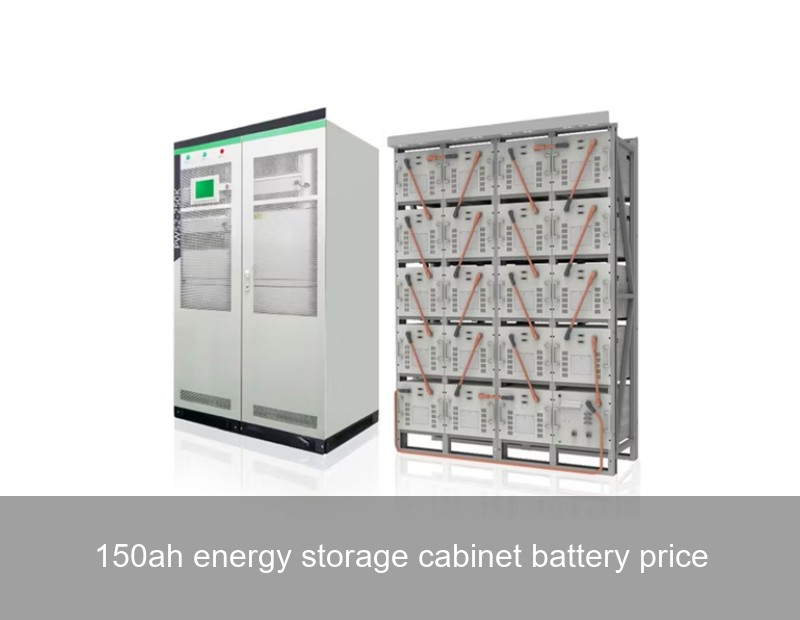
If you're exploring energy storage for your business, factory, or community project, you've likely encountered the term "150Ah energy storage cabinet." The immediate question that follows is often about the 150Ah energy storage cabinet battery price. While the upfront cost is a crucial factor, focusing solely on the price tag can be misleading. The true value lies in understanding the technology, its total lifecycle cost, and the long-term benefits for your energy independence and financial bottom line. As a global leader in advanced energy storage, Highjoule is here to demystify the costs and help you make an informed decision that powers a more sustainable and resilient future.
Table of Contents
- What is a 150Ah Energy Storage Cabinet?
- Key Factors Influencing the 150Ah Battery Cabinet Price
- Beyond the Sticker Price: The Total Cost of Ownership
- Case Study: A Real-World Application in European Commerce
- The Highjoule Solution: Engineered for Value and Performance
- Making the Right Choice for Your Needs
What is a 150Ah Energy Storage Cabinet?
Let's break it down simply. "150Ah" (Ampere-hour) refers to the battery's capacity. Think of it like a fuel tank: a 150Ah battery at a specific voltage (commonly 51.2V for lithium systems) can deliver a certain amount of energy. A typical 51.2V 150Ah lithium iron phosphate (LFP) battery stores roughly 7.68 kWh of usable energy. An "energy storage cabinet" is the complete, integrated system that houses not just the battery cells, but also the critical components that make it safe, smart, and connected: the Battery Management System (BMS), thermal management, safety disconnects, and often an integrated inverter. This cabinet-ready design is what companies like Highjoule provide for seamless commercial and industrial integration.
Key Factors Influencing the 150Ah Energy Storage Cabinet Battery Price
You might see a wide range of prices for what seems like the same product. Here’s why:
- Battery Chemistry: Lithium Iron Phosphate (LFP) is now the dominant choice for stationary storage due to its safety, longevity, and cost-effectiveness over time, though initial costs can be higher than older technologies.
- System Integration & Intelligence: A cabinet with a basic BMS will cost less than one with Highjoule's AI-driven energy management system that optimizes every cycle for lifespan and ROI.
- Scalability & Power Rating: The price is heavily influenced by the cabinet's power output (in kW). A cabinet designed for high-power, short-duration discharge differs from one for long-duration backup.
- Certifications and Safety Standards: Products certified for the stringent markets of Europe (CE, UN38.3) and North America (UL 9540, UL 1973) involve rigorous testing, impacting cost but guaranteeing safety.
- Supply Chain and Scale: Established manufacturers with vertical integration, like Highjoule, can often deliver more consistent pricing and reliability.

Image Source: Unsplash (Representative image of advanced battery cabinet interior)
Beyond the Sticker Price: The Total Cost of Ownership
The real conversation should shift from purchase price to Total Cost of Ownership (TCO). A cheaper cabinet with lower-quality cells might degrade twice as fast, needing replacement years earlier.
| Cost Component | Low-Cost Cabinet (Potential Issues) | High-Quality Cabinet (e.g., Highjoule) |
|---|---|---|
| Initial Purchase Price | Lower | Higher |
| Cycle Life (e.g., to 80% capacity) | 3,000 - 4,000 cycles | 6,000+ cycles (LFP Chemistry) |
| Efficiency | ~92-94% round-trip | >96% round-trip (More energy saved) |
| Warranty & Support | Limited, may be prorated | 10+ year comprehensive warranty |
| Software & Updates | Static, limited functionality | Lifetime OTA updates, smart grid features |
| Effective Cost per kWh over 15 years | Significantly Higher | Substantially Lower |
As you can see, the higher initial 150Ah energy storage cabinet battery price for a premium solution is amortized over a much longer, more productive life, delivering a far lower cost per stored kilowatt-hour.
Case Study: A Real-World Application in European Commerce
Let's look at a concrete example. A mid-sized dairy processing plant in Germany faced high time-of-use electricity rates and sought to increase its use of on-site solar PV. Their goal was peak shaving and backup power for critical cooling lines.
- Challenge: Reduce peak grid demand charges and ensure 4 hours of backup for 50kW critical load.
- Solution: Installation of a scalable Highjoule energy storage system comprising multiple 150Ah-class cabinet units, totaling 120 kWh of storage, integrated with their existing solar array.
- Data & Results: Within the first year:
- Peak Demand Charges Reduced by 40%: The system automatically discharged during high-price periods.
- Solar Self-Consumption Increased from 35% to over 80%: Excess solar energy was stored for evening use.
- ROI Period: The project achieved a return on investment in under 5 years, factoring in energy savings, demand charge avoidance, and local renewable energy incentives.
This case demonstrates that the discussion about cabinet price was secondary to the financial and operational value created by the complete, intelligent Highjoule system.
The Highjoule Solution: Engineered for Value and Performance
At Highjoule, we engineer our energy storage cabinets not to be the cheapest, but to deliver the lowest TCO and highest reliability. Our Commander Series Commercial Cabinet, which utilizes 150Ah-grade LFP cells, embodies this philosophy.
- Cell-to-Pack Innovation: We use automotive-grade, prismatic LFP cells with a proven cycle life exceeding 6,000 cycles, directly impacting long-term value.
- Proprietary Adaptive BMS: Our AI-enhanced BMS doesn't just monitor; it learns energy usage patterns and optimizes charge/discharge cycles to extend battery life by up to 20% compared to standard systems.
- Grid-Interactive Ready: Our cabinets are designed for VPP (Virtual Power Plant) participation, allowing future revenue streams from grid services in markets like the US and Europe. Learn more about grid modernization from the U.S. Department of Energy.
- Full-Service Partnership: We provide more than hardware. From initial site assessment and financial modeling to installation support and 24/7 remote monitoring via our Highjoule Nexus platform, we ensure your storage investment performs as promised.

Image Source: Unsplash (Representative image of a professional cabinet installation)
Making the Right Choice for Your Needs
So, how should you approach the decision? Start by defining your objectives: Is it purely backup power, maximizing solar self-consumption, demand charge reduction, or a combination? Calculate your required energy (kWh) and power (kW). A qualified partner like Highjoule can then help you model the optimal system size and configuration, providing a clear picture of financial returns, not just equipment costs.
Remember, the energy storage market is evolving rapidly. Investing in a scalable, software-upgradable platform protects your investment against future changes in utility rates or regulations. For the latest on battery technology trends, reputable sources like NREL's research offer valuable insights.
Ready to See the Full Picture?
Instead of asking "What is the 150Ah energy storage cabinet battery price?", perhaps the more powerful question is: What value can a smart, reliable energy storage system create for my specific operation, and how do I ensure it delivers that value for decades to come?
 Inquiry
 Online Chat