


Lithium Battery Price BESS: Unlocking Affordable and Reliable Energy Independence
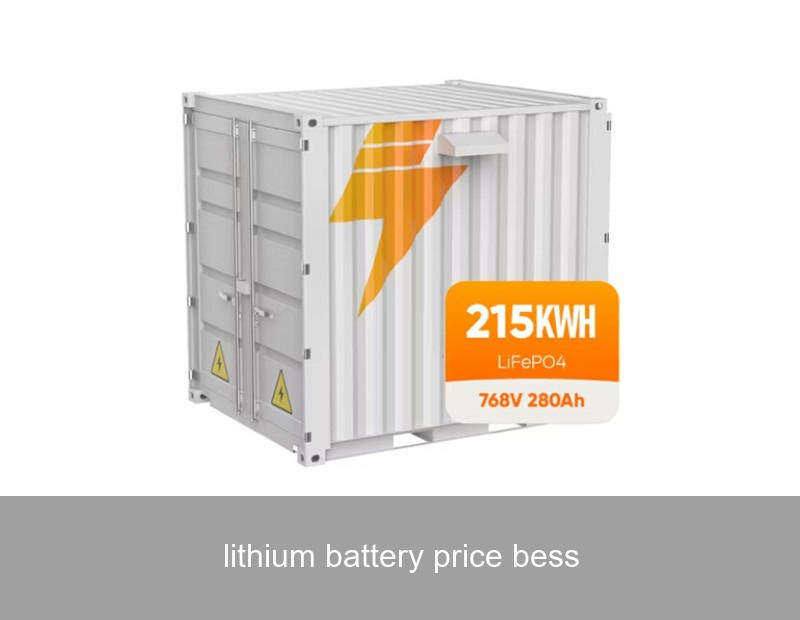
If you've been following the energy sector, you've likely heard the buzz: the lithium battery price BESS (Battery Energy Storage System) equation is undergoing a radical transformation. For years, the dream of widespread, grid-scale energy storage was tempered by one major hurdle—cost. But today, we're witnessing a pivotal shift. The dramatic fall in lithium-ion battery prices isn't just a market trend; it's the key unlocking a future of resilient, sustainable, and cost-effective power for businesses, communities, and homeowners across Europe and the US. This article will guide you through what's driving this change, what it really means for your energy strategy, and how to leverage it for maximum benefit.
Decoding the BESS Cost Breakdown: It's More Than Just Batteries
When we talk about the lithium battery price BESS dynamic, it's crucial to understand what you're actually paying for. A BESS is far more than a box of batteries. It's a sophisticated, integrated system. The lithium-ion battery pack, while critical, is typically 50-70% of the total system cost for a new installation. The remaining 30-50% encompasses the "balance of system" (BoS): power conversion systems (PCS/inverters), battery management systems (BMS), thermal management, safety systems, enclosure, and sophisticated software for energy management.
So, while the core lithium battery price has plummeted—driven by economies of scale, improved manufacturing, and technological innovation—the value of a BESS is increasingly defined by how intelligently and efficiently these components work together. A cheaper battery module is of little value if the system around it is inefficient, unsafe, or short-lived.

The true value of a BESS lies in the integration of hardware and intelligent software, not just the battery cells.
The Data Behind the Drop
Let's look at the numbers. According to BloombergNEF, the volume-weighted average price of a lithium-ion battery pack fell from over $1,200 per kilowatt-hour (kWh) in 2010 to just $139/kWh in 2023*. This near 90% reduction is the primary engine making BESS projects economically viable. For a commercial or industrial facility, this translates directly into shorter payback periods and higher returns on investment when using storage for peak shaving, backup power, or frequency regulation.
Case Study: Powering Through the Outages in California
To see the real-world impact of favorable lithium battery price BESS economics, consider a community in Northern California. Facing increasing Public Safety Power Shutoffs (PSPS) due to wildfire risk, a local microgrid project was initiated in 2022. The centerpiece was a 2 MW / 8 MWh lithium-ion BESS, coupled with existing solar PV.
| Metric | Data | Impact |
|---|---|---|
| System Size | 2 MW / 8 MWh | Powers 500+ homes for 4+ hours during outages |
| Capital Cost (2022) | ~$400/kWh (fully installed) | Cost was ~35% lower than comparable 2019 quotes |
| Primary Revenue/Value Streams | Resilience, Peak Shaving, Grid Services | Estimated payback period under 7 years |
The project's financial feasibility was directly tied to the lower lithium battery price. The BESS provides critical backup power, but also generates revenue by discharging during peak grid demand hours, reducing costs for all participants. This dual-purpose application showcases the modern BESS as both an insurance policy and a revenue-generating asset.
Beyond the Cell: Why Total Cost of Ownership is the True Metric
Focusing solely on the upfront lithium battery price BESS sticker can be misleading. The smarter approach is to evaluate the Total Cost of Ownership (TCO). This includes:
- Cyclical Lifetime: How many full charge/discharge cycles can the system perform before significant degradation? A cheaper battery that lasts 3,000 cycles may be more expensive per kWh stored over its life than a premium battery rated for 8,000+ cycles.
- Efficiency: System round-trip efficiency (AC to AC) determines how much energy you get back. A 5% difference in efficiency can have a massive impact on operational revenue over 15 years.
- Software & Intelligence: Can the system autonomously optimize for multiple value streams (e.g., maximizing self-consumption of solar, participating in grid markets, performing peak shaving) based on weather, price signals, and load forecasts? This intelligence maximizes ROI.
- Safety & Warranty: Robust safety design and a comprehensive, long-term warranty mitigate long-term risk and unexpected costs.
Highjoule's Approach: Engineering Smart Storage for a Smarter Grid
At Highjoule, we've been designing and deploying advanced BESS solutions since 2005. We view the favorable lithium battery price trend as an opportunity to invest more in the intelligence and durability that define a system's long-term value. Our product philosophy is built on TCO optimization.
Our H-Series Commercial & Industrial BESS, for example, is engineered with this holistic view. It features our proprietary Adaptive Cell Management (ACM) software, which extends battery cycle life by individually monitoring and balancing cell health. Coupled with our high-efficiency, bi-directional inverter, the system achieves over 94% round-trip efficiency. For residential applications, our EcoHome PowerWall integrates seamlessly with solar inverters and features an intuitive app that allows homeowners to choose between maximizing savings or maximizing backup readiness.

Integrated home energy systems are becoming a standard for energy-conscious homeowners seeking independence.
For microgrid and utility-scale projects, our GridMax platform goes beyond storage. It's a complete energy management system that orchestrates generation (solar, wind), storage, and load in real-time, ensuring stability and maximizing economic return. We provide full turnkey services—from initial feasibility analysis and system design to installation, commissioning, and 24/7 remote monitoring.
The Role of Policy and Supply Chains
It's also important to acknowledge external factors. Policies like the U.S. Inflation Reduction Act (IRA), which provides investment tax credits for standalone storage, are accelerating adoption by improving project economics further. Meanwhile, efforts to diversify the lithium and critical mineral supply chain aim to create long-term price stability and security*.
The Future Outlook and Your Next Step
While some volatility in raw material costs may occur, the long-term trend for lithium battery price BESS solutions points toward continued accessibility and capability. The next frontier isn't just cost reduction; it's value expansion through smarter software, longer durations, and even more sustainable battery chemistries.
The critical question is no longer "Can we afford energy storage?" but rather "What is the optimal storage strategy for our specific energy profile, risk tolerance, and sustainability goals?" How will you leverage this transformative shift in lithium battery price BESS technology to build a more resilient and profitable energy future for your business or community?
 Inquiry
 Online Chat