


Unlocking Maximum Energy Yield: A Deep Dive into the Ronma Solar 570W N-Type Bifacial Module
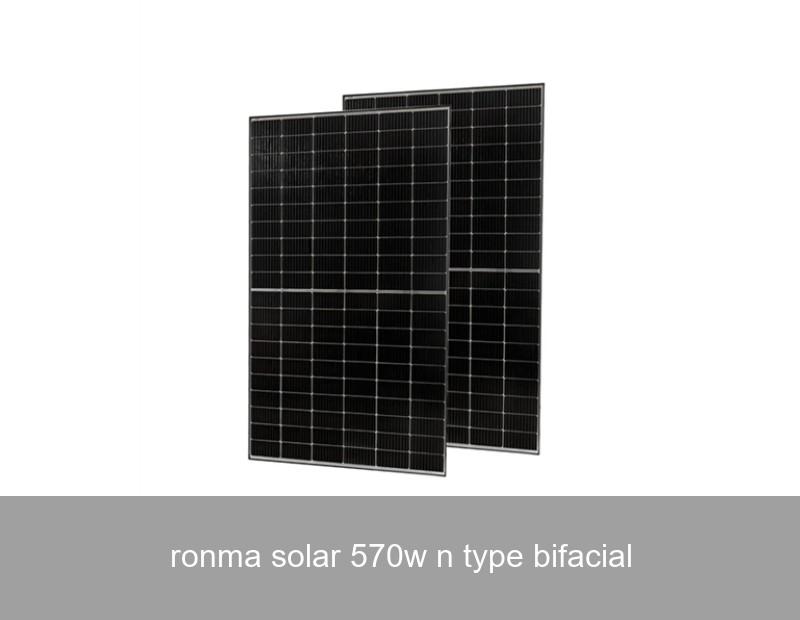
If you're planning a commercial or industrial solar project in Europe or the US, you've likely heard the buzz about high-efficiency, bifacial panels. And one model that consistently comes up is the Ronma Solar 570W N-Type Bifacial module. It represents a significant leap in solar technology, promising higher energy output and better long-term value. But what exactly makes it stand out, and how can you ensure you're maximizing its potential? As a product technology expert at Highjoule, a global leader in advanced energy storage systems since 2005, I see these advanced panels not just as power generators, but as key components in a holistic, intelligent energy ecosystem. Let's unpack the technology and its real-world impact.
Table of Contents
- What is the Ronma Solar 570W N-Type Bifacial Module?
- The N-Type Cell Advantage: More Power, Less Degradation
- Bifacial Power: Harvesting Light From Both Sides
- From Spec Sheet to Reality: Real-World Performance Data
- Beyond the Panel: System Synergy for Maximum ROI
- Highjoule's Role: Integrating Advanced PV with Smart Storage
What is the Ronma Solar 570W N-Type Bifacial Module?
In simple terms, it's a top-tier photovoltaic panel designed for projects where space, efficiency, and lifetime energy yield are critical. The name itself tells the story: 570W indicates a high power output per panel, N-Type refers to the advanced silicon cell technology, and Bifacial means it can generate electricity from both its front and rear surfaces. This combination is engineered to deliver a higher energy density and a better return on investment over the system's 25+ year lifespan, especially in environments with high albedo (reflectivity) like ground-mounted farms on grassy or sandy terrain, or commercial rooftops with light-colored membranes.
The N-Type Cell Advantage: More Power, Less Degradation
The solar industry has long relied on P-type silicon cells. N-type is the next evolution. The core difference lies in the base silicon material used. N-type cells are doped with phosphorus, which has an extra electron, making the material inherently more resistant to impurities.
Why does this matter for your project? Let's break it down:
- Higher Efficiency: N-type cells have a higher theoretical efficiency limit and less light-induced degradation (LID). This means the Ronma 570W panel starts at a higher power output and stays there longer.
- Lower Degradation Rate: While standard P-type panels might degrade at 0.5-0.7% per year, N-type panels like the Ronma 570W often feature degradation rates as low as 0.4% annually. Over 25 years, this difference in retained power output is substantial.
- Better Performance in Heat: N-type cells have a lower temperature coefficient. On a hot summer day when conventional panels lose efficiency, N-types perform relatively better, ensuring more stable output.

Image: Advanced solar cell technology is key to higher efficiency. (Photo by American Public Power Association on Unsplash)
Bifacial Power: Harvesting Light From Both Sides
Traditional panels are monofacial. Bifacial panels, with transparent backsheets and dual-glass construction, allow rear-side light absorption. This reflected light—from the ground, rooftops, or snow—is converted into additional energy.
The actual gain, known as the bifacial gain, is not a fixed number. It depends on:
| Factor | Impact on Bifacial Gain |
|---|---|
| Ground Albedo (Reflectivity) | High albedo (e.g., white gravel, concrete, snow) can boost gain by 10-25%. Green grass might yield 5-10%. |
| Installation Height | Higher mounting (e.g., 1.5m vs. 0.5m) allows more reflected light to reach the rear, increasing gain. |
| Array Spacing | Wider row spacing reduces shading on the rear side, especially in the morning and evening. |
For a Ronma Solar 570W N-Type Bifacial installation on a commercial flat roof with a white coating, a bifacial gain of 8-15% is a realistic and valuable performance uplift.
From Spec Sheet to Reality: Real-World Performance Data
Laboratory ratings are one thing; field performance is another. Let's look at a relevant case study from the European market.
Case Study: Logistics Warehouse in Southern Spain
A 500 kW rooftop system was installed on a large logistics center in Seville in 2022. The roof featured a light-colored, reflective coating. The installer chose the Ronma 570W bifacial panels, mounted on elevated trackers at approximately 1 meter height to optimize rear-side illumination.
- System Size: 500 kW (using 878 Ronma 570W panels)
- Location: Seville, Spain (high solar insolation)
- Installation: Rooftop, elevated mounting on light-colored surface.
- Key Metric - Specific Yield: Over the first full year of operation, the system achieved a specific yield of 1,650 kWh/kWp. This is notably higher than the ~1,550 kWh/kWp typically modeled for high-efficiency monofacial panels in the same location.
- Bifacial Gain Measured: Data analysis, comparing front-side only generation models vs. actual metered output, indicated a consistent 12% annual bifacial gain. This translated to tens of thousands of additional kilowatt-hours of electricity in year one alone, significantly improving the site's energy self-consumption and reducing grid dependence.
This data, corroborated by independent monitoring platforms, underscores how the theoretical advantages of N-type bifacial technology translate into tangible, measurable financial benefits in a real-world commercial setting. You can explore more field data from various technologies on authoritative research platforms like the National Renewable Energy Laboratory (NREL) PV Field Performance page.
Beyond the Panel: System Synergy for Maximum ROI
An advanced panel like the Ronma 570W is only as good as the system it's integrated into. To truly capitalize on its high and consistent power output, you need complementary components:
- Advanced Inverters: High-voltage, multi-MPPT (Maximum Power Point Tracking) string inverters are essential to handle the high power of these panels and minimize losses from mismatch or partial shading.
- Optimized System Design: The mounting structure, wiring, and orientation must be designed specifically to maximize bifacial gain and ensure long-term reliability.
- The Critical Piece: Energy Storage. This is where the conversation becomes truly powerful. The Ronma 570W produces more energy, especially during peak sun hours. Without storage, excess energy is often exported to the grid at low rates. By pairing it with a sophisticated battery energy storage system (BESS), you can capture that surplus for use in the evening or during peak tariff periods, dramatically increasing self-consumption and energy independence.
Highjoule's Role: Integrating Advanced PV with Smart Storage
At Highjoule, we don't just provide storage; we provide intelligent energy ecosystems. Since 2005, we've specialized in creating solutions that make the most of every kilowatt-hour generated, especially from high-yield assets like N-type bifacial solar arrays.
For a project utilizing Ronma Solar 570W N-Type Bifacial panels, our integration offers decisive advantages:
- Highjoule's Commercial & Industrial (C&I) BESS: Our scalable, containerized or modular battery systems are designed to seamlessly couple with large-scale PV installations. They feature advanced battery management systems (BMS) that ensure safety, longevity, and peak performance.
- AI-Powered Energy Management System (EMS): This is the brain of the operation. Our EMS doesn't just store and release energy. It predicts solar generation (leveraging the predictable high output of the Ronma panels), analyzes load patterns, and considers utility tariff structures in real-time. It automatically decides the most economical moment to charge the batteries, power the facility, or sell back to the grid.
- Maximizing Financial Returns: By storing the abundant midday solar production, businesses can avoid expensive peak-demand charges from the grid—a major cost for industrial users in the US and Europe. It also provides backup power resilience, a growing concern for critical operations.

Image: Commercial solar and storage integration is key for modern businesses. (Photo by Andreas Gücklhorn on Unsplash)
In essence, while the Ronma 570W panel captures more energy from the sun, Highjoule's smart storage ensures none of that valuable energy goes to waste, transforming a high-performance solar array into a fully optimized, revenue-generating energy asset. For a deeper look at grid integration and storage value, resources like the Energy Storage News site provide ongoing market insights.
Making the Decision: Is the Ronma 570W Right for Your Project?
So, should you specify the Ronma Solar 570W N-Type Bifacial module? Ask yourself and your project team these key questions:
- Is my site characterized by high reflectivity (light-colored roofs, concrete, sand, or seasonal snow)?
- Do I have the space and structural ability to consider elevated mounting to enhance bifacial gains?
- Is my primary goal to maximize lifetime energy yield per available square meter, rather than just minimizing upfront cost per watt?
- Am I planning to integrate energy storage, either immediately or in the future, to fully leverage the increased and predictable generation?
If you answered "yes" to these, then this advanced panel technology is a compelling choice. The higher initial investment is offset by significantly greater energy production over the system's life, a benefit that is amplified when paired with intelligent storage.
The future of commercial energy is not just about generation; it's about intelligent, integrated management. The Ronma Solar 570W N-Type Bifacial module is a powerful tool in that future. But to unlock its full potential, how will you design the system around it to capture, store, and utilize every possible electron it produces?
 Inquiry
 Online Chat