


Lithium Battery Prismatic Cells: The Engine of Modern Energy Storage
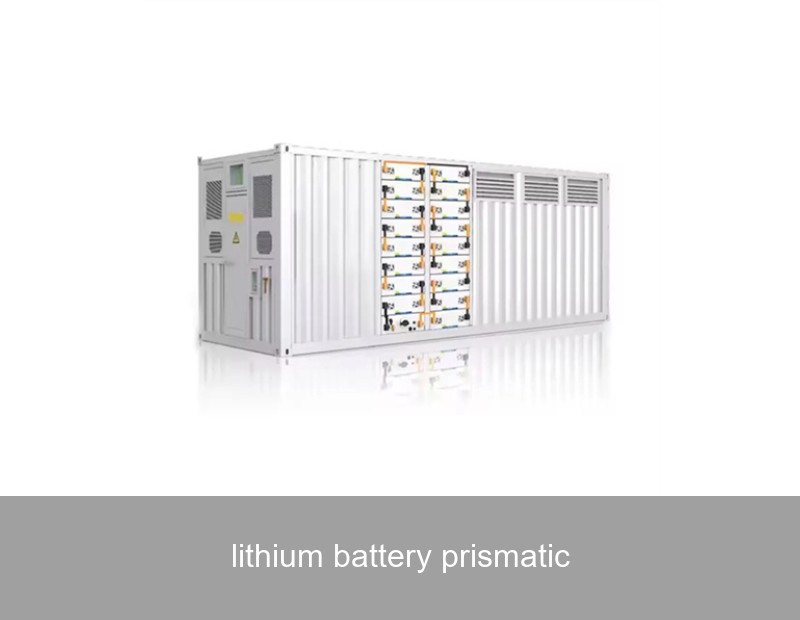
Have you ever wondered what powers your electric vehicle for hundreds of miles, or how a large solar farm delivers electricity long after the sun sets? The answer increasingly lies in a specific, highly engineered component: the lithium battery prismatic cell. Unlike their cylindrical or pouch-shaped cousins, prismatic cells are becoming the cornerstone for robust, large-scale energy storage systems. Their rectangular, hard-case design offers a unique blend of energy density, safety, and longevity that is perfectly suited for demanding applications. But what makes them so special, and why are they the preferred choice for serious energy storage solutions? Let's unpack the technology that is quietly powering our sustainable future.
Table of Contents
- What Are Prismatic Lithium Battery Cells?
- Prismatic vs. Cylindrical vs. Pouch: A Critical Comparison
- Why Prismatic Cells Dominate Advanced Energy Storage Systems (ESS)
- A Real-World Case: Grid Stability in Germany
- The Highjoule Approach: Engineering Beyond the Cell
- Future Trends in Prismatic Cell Technology
What Are Prismatic Lithium Battery Cells?
In simple terms, a lithium battery prismatic cell is a lithium-ion battery enclosed in a rigid, typically aluminum or steel, rectangular casing. Think of it as a sturdy, flat box that houses the essential components: the anode, cathode, separator, and electrolyte. This structure is fundamentally different from the rolled design of cylindrical cells (like the common AA battery or Tesla's 4680 cells) or the flexible laminate of pouch cells.
The key advantages of this design stem from its geometry and construction:
- Space Efficiency: The rectangular shape allows cells to be stacked closely together with minimal wasted space, maximizing energy storage within a given battery pack or system footprint.
- Structural Rigidity: The hard casing provides excellent mechanical stability, protecting the internal layers from swelling, vibration, and external impacts—a critical factor for long-term reliability.
- Simplified Thermal Management: The flat, large surfaces enable efficient cooling plate attachment, allowing for more uniform heat dissipation compared to cylindrical cells.

Image Source: Flux Power (Example of prismatic cell array)
Prismatic vs. Cylindrical vs. Pouch: A Critical Comparison
Choosing the right cell format is a foundational engineering decision. Here’s how prismatic cells stack up:
| Feature | Prismatic Cells | Cylindrical Cells | Pouch Cells |
|---|---|---|---|
| Shape & Case | Rectangular, hard metal (Al/Steel) | Round, hard metal (Steel) | Flat, flexible laminated foil |
| Energy Density (Pack Level) | High (excellent space use) | Moderate (gaps between cells) | Very High (lightweight, no case) |
| Safety & Robustness | Excellent (stable structure) | Good (withstands internal pressure) | Lower (requires external support) |
| Thermal Management | Easier (large flat surfaces) | More Complex (round surfaces) | Challenging (uneven surfaces) |
| Ideal For | EVs, Large-scale ESS, Telecom | Power Tools, EVs, Consumer Electronics | Consumer Electronics, Some EVs |
For applications where longevity, safety, and efficient pack integration over a 15-20 year lifespan are non-negotiable—such as in commercial energy storage—the prismatic cell's benefits are decisive.
Why Prismatic Cells Dominate Advanced Energy Storage Systems (ESS)
The shift towards prismatic cells in stationary storage isn't accidental. It's driven by the harsh economic and technical realities of grid and industrial applications. Let's break it down using the PAS framework:
Problem: Grid operators and businesses need massive amounts of stored energy to balance renewable intermittency, but they face severe space constraints, stringent safety codes, and demanding return-on-investment calculations requiring systems to last for decades.
Agitation: Using less optimal cell formats can lead to faster degradation, complex and expensive thermal management systems, and ultimately, higher levelized cost of storage (LCOS). A system failure or fire incident can be catastrophic, both financially and reputationally.
Solution: The inherent design of the lithium battery prismatic cell directly addresses these challenges. Their high pack density means more energy in a smaller warehouse or container. Their rigid casing integrates seamlessly with robust battery management system (BMS) monitoring points, enhancing safety protocols. Most importantly, their stable chemistry and structure, when properly managed, support the high cycle life required for daily charge/discharge cycles over many years.
A Real-World Case: Grid Stability in Germany
Consider the challenge faced by a German grid operator in Bavaria. With soaring solar PV capacity, the midday net load curve dipped dramatically, creating grid instability and price volatility. They needed a storage solution to absorb excess solar power and release it during the evening peak.
The Project: A 50 MWh grid-scale battery storage facility was commissioned. The core technology selected was LFP (Lithium Iron Phosphate) chemistry in a prismatic cell format.
- **System Efficiency:** The facility achieves a round-trip efficiency of over 94%, thanks in part to the low internal resistance and efficient cooling of the prismatic cell design.
- **Cycle Life:** After two years and over 700 full equivalent cycles, the system's capacity fade was measured at less than 2%, well within projections for a 20-year lifespan.
- **Space Utilization:** The prismatic cell-based modules allowed for a power density that saved an estimated 15% in footprint compared to an alternative cylindrical cell design, a crucial factor in a dense industrial area.
This case underscores how the right cell technology, chosen for its systemic advantages, translates directly into reliable, economical grid services. You can read more about grid-scale storage trends from the Energy Storage News authority.
The Highjoule Approach: Engineering Beyond the Cell
At Highjoule, we understand that a superior lithium battery prismatic cell is only the starting point. Our expertise lies in integrating these cells into intelligent, resilient, and future-proof systems. Since 2005, we have focused on harnessing the potential of prismatic LFP cells for the most demanding commercial, industrial, and microgrid applications.
Our product philosophy is built on three pillars:
- Intelligent Thermal & Battery Management: Our proprietary BMS doesn't just monitor voltage; it creates a 3D thermal map of the entire prismatic cell stack, actively adjusting cooling and load to ensure every cell ages uniformly. This maximizes the innate longevity of the prismatic format.
- Modular & Scalable Architecture: Our H-Cube commercial ESS utilizes a standardized, containerized design built around high-quality prismatic LFP modules. This allows a business to start with a 100 kWh system and scale seamlessly to multi-megawatt hours, all with predictable performance and safety.
- Grid-Interactive Intelligence: For microgrid and utility clients, our systems come with advanced grid-forming inverters and software. This enables the storage system to not just store energy, but to actively stabilize the local grid, manage frequency, and optimize energy arbitrage automatically.

Image Source: Unsplash (Representative image of industrial energy storage)
By controlling the system design from the cell level up, we ensure that the promised benefits of prismatic cell technology—safety, density, and cycle life—are fully realized for our clients. For deeper technical insights into lithium-ion safety, we reference resources like the UL Research Institutes.
Future Trends in Prismatic Cell Technology
The evolution of the lithium battery prismatic cell is far from over. We are actively monitoring and integrating several key advancements:
- Cell-to-Pack (CTP) Integration: This innovation removes intermediate module assemblies, packing more prismatic cells directly into the battery pack. This further increases energy density and reduces complexity, a trend Highjoule is adopting in our next-generation products.
- Solid-State Electrolytes: While still in development, solid-state technology promises even greater safety and energy density. The rigid structure of the prismatic cell is considered an ideal platform for integrating these future electrolytes.
- Enhanced Sustainability: The focus is shifting towards easier recycling. Prismatic cells, with their standardized metal casing and larger format, are inherently easier to disassemble and process at end-of-life compared to thousands of small cylindrical cells.
The journey towards a fully decarbonized grid is complex, but the technological path for the workhorse component—the prismatic cell—is clear: smarter, safer, and more integrated. As an industry leader, Highjoule is committed to turning these technological possibilities into tangible value for our partners.
Given the critical role that cell format plays in the total cost and safety of your energy storage project, what specific operational challenge—be it peak shaving, renewable firming, or backup power—are you looking to solve, and how are you evaluating the underlying battery technology that will power it for the next two decades?
 Inquiry
 Online Chat