


Phoenix Tubular Battery TX 3500 Specifications: Decoding Durability for Your Energy Independence
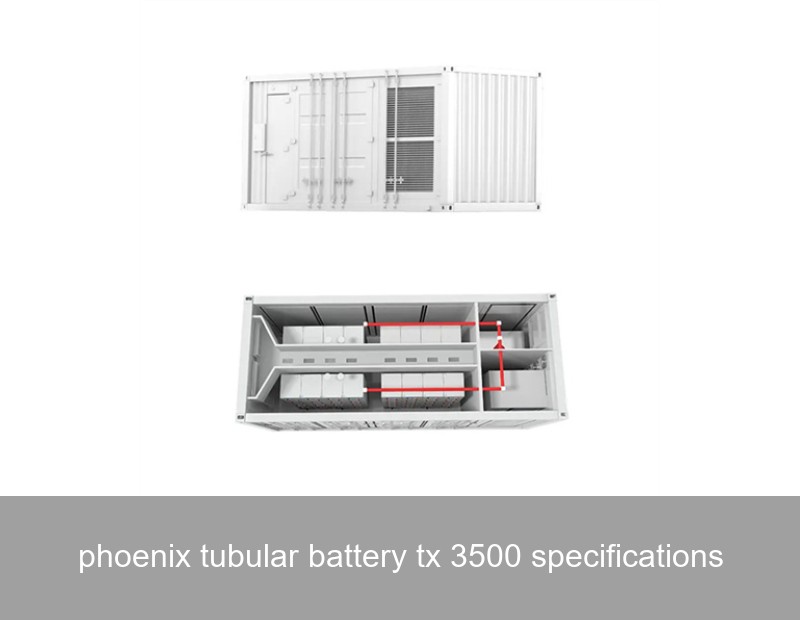
If you're researching solar battery storage for your home or business, you've likely encountered a dizzying array of acronyms and technical jargon. Among the options, one name often surfaces for those prioritizing longevity and reliability: the tubular plate battery. And when we talk about high-performance tubular batteries, the Phoenix Tubular Battery TX 3500 specifications frequently become the benchmark. But what do these numbers and terms actually mean for your daily life and energy bills? Let's demystify this technology together. In this guide, we'll not only break down the TX 3500's specs but also explore why choosing the right battery is only half the story—the other half is integrating it into an intelligent, efficient system. This is where companies like Highjoule, with nearly two decades of experience in advanced energy storage, turn robust hardware into seamless, sustainable power.
What is a Tubular Battery? And Why It's a Game-Changer
First, let's clear up the "tubular" part. Unlike standard flat plate batteries, tubular batteries feature a unique design where the positive active material is held in tubular gauntlets. Think of it as a protective sleeve. This ingenious design significantly reduces corrosion and shedding of the active material, which are the primary reasons batteries fail. The result? A battery built for the long haul. Tubular batteries, especially the deep-cycle variants like the Phoenix TX series, are engineered to be regularly discharged and recharged—a perfect match for the daily cycle of solar energy. They are the workhorses of the renewable energy world, prized for their durability and deep discharge recovery in both on-grid and off-grid applications.

Image Source: Wikimedia Commons (Creative Commons). A visual representation of the durable tubular plate design.
Deep Dive: Phoenix Tubular Battery TX 3500 Specifications
So, let's get into the heart of the matter. The Phoenix TX 3500 is a 12V, deep-cycle, tall tubular lead-acid battery. Its specifications tell a story of capacity, resilience, and design for sustained performance. Here’s a breakdown of what the key figures signify:
- Voltage (V): 12 Volts. This is the standard building block voltage for many residential and commercial energy storage systems. Multiple units can be connected in series or parallel to achieve 24V, 48V, or higher system voltages required by most inverters.
- Capacity (C20): 3500 Ah (Ampere-hours). This is the crown jewel of the spec. It indicates the battery can deliver 3500 amps for 1 hour, or more practically, 175 amps for 20 hours, under standard conditions. This massive capacity is what makes it suitable for applications requiring long backup times or storing substantial solar energy.
- Technology: Tall Tubular Plate. The "tall" refers to the physical plate dimensions, which maximize the active material surface area, contributing to the high capacity and life.
- Approximate Weight: ~250 kg. This isn't just a trivial detail. The substantial weight is a direct result of the thick lead plates and robust construction, which are key to its long life and high capacity. It underscores the battery's heavy-duty nature.
- Design Life: Often rated at 7+ years under ideal float service, and 1500+ cycles at 50% Depth of Discharge (DOD). This cycle life is a critical metric for solar use, where daily cycling is expected.
Key Specifications at a Glance
| Parameter | Specification | What It Means for You |
|---|---|---|
| Nominal Voltage | 12V DC | System building block for scalable storage. |
| Nominal Capacity (C20) | 3500 Ah | High energy reservoir for extended backup or large solar loads. |
| Technology | Tall Tubular Plate | Superior durability and long cycle life. |
| Typical Weight | ~250 kg | Indicator of robust, high-quality construction. |
| Cycle Life (Estimated) | 1500+ cycles @ 50% DOD | Designed to last for years in daily solar cycling. |
| Terminal Type | Heavy-duty stud/lug | Ensures secure, high-current connections. |
Case Study: Powering a German Farmstead Through Winter
Let's move from theory to practice. Consider a dairy farm in Bavaria, Germany. The farm operates a 40kW rooftop solar array but faced a challenge: short winter days and high energy demands for milking machines, cooling, and general operations. Their goal was to increase self-consumption from 35% to over 70% and ensure critical operations during grid outages.
They deployed an off-grid-capable system centered around a bank of eight Phoenix TX 3500 batteries, configured for a 48V system, providing a total usable capacity of approximately 84 kWh (considering a 50% DOD for optimal life). The results, monitored over two years, were compelling:
- Self-Consumption Rate: Increased to 78%, drastically reducing grid dependence.
- Backup Performance: Provided uninterrupted power during a 14-hour winter grid outage, saving thousands in potential milk spoilage.
- System Health: After 730+ daily cycles, the battery bank's performance data showed less than 8% capacity degradation, aligning perfectly with the expected lifespan based on the Phoenix Tubular Battery TX 3500 specifications.
This case illustrates that the right battery, sized and managed correctly, is a reliable financial and operational asset. For more on the importance of battery cycle life in renewables, the U.S. Department of Energy's Solar Energy Technologies Office provides valuable context.

Image Source: Unsplash. Example of a farm utilizing solar and battery storage.
Beyond the Spec Sheet: What Really Matters for Your Energy Storage
While the TX 3500's specs are impressive, a battery doesn't operate in a vacuum. Its real-world performance and lifespan are heavily influenced by three external factors:
- The Brain (The Inverter/Charger): A premium battery needs an intelligent partner. The charging algorithm must be precisely tailored for tubular lead-acid chemistry to prevent under/overcharging.
- The Environment: Temperature is a battery's silent enemy. Consistent high temperatures can halve a battery's life. Proper ventilation and thermal management are non-negotiable.
- System Design & Monitoring: Correct cabling, fusing, and regular monitoring of state-of-charge and health are crucial. You can't manage what you don't measure.
This is the complex puzzle that a complete储能 system provider solves. It’s the integration of robust hardware, intelligent software, and expert design that transforms a box of batteries into a resilient energy asset. A study by the National Renewable Energy Laboratory (NREL) emphasizes that system-level integration is key to achieving projected performance and financial returns.
The Highjoule Advantage: Integrating Robust Technology with Smart Energy Management
At Highjoule, we've been designing and deploying sophisticated energy storage solutions since 2005. We understand that a product like the Phoenix TX 3500 is a superb component, but its true potential is unlocked within a harmonized system. Our approach is holistic:
- Expert System Design: Our engineers don't just sell batteries; we design systems. We calculate your load profiles, solar generation, and backup requirements to determine the optimal configuration—whether that includes batteries like the TX 3500 or other technologies.
- Intelligent Energy Management Systems (EMS): Highjoule's proprietary EMS is the true brain. It doesn't just charge and discharge; it learns your patterns, prioritizes loads, integrates with grid signals for peak shaving, and, most importantly, babysits your battery bank. It ensures the charging profile is perfect for tubular batteries, monitors temperature, and prevents harmful operational conditions, thereby safeguarding your investment and ensuring the specifications on paper translate to performance in your basement or utility room.
- Full-Spectrum Support: From initial site assessment and financial modeling to commissioning and remote monitoring, we provide a seamless service journey. For commercial and industrial clients, this includes detailed reporting on energy savings, carbon reduction, and system ROI.
In essence, we pair proven, durable components like high-quality tubular batteries with our intelligent software layer to deliver smart, efficient, and sustainable power solutions for homes, businesses, and microgrids. Whether your priority is maximizing solar self-consumption, achieving unwavering backup power, or participating in grid services, our technology makes it simple and reliable.
Ready to See How a Durability-First Battery Strategy Can Be Tailored to Your Specific Energy Goals?
What's the most critical factor for your energy storage project: is it maximizing the system's lifespan, achieving the lowest total cost of ownership over 10 years, or ensuring absolute power reliability for your specific critical loads? We'd love to hear what drives your decision-making.
 Inquiry
 Online Chat