


Lithium Battery Projects: Powering the Future of Energy Resilience and Sustainability
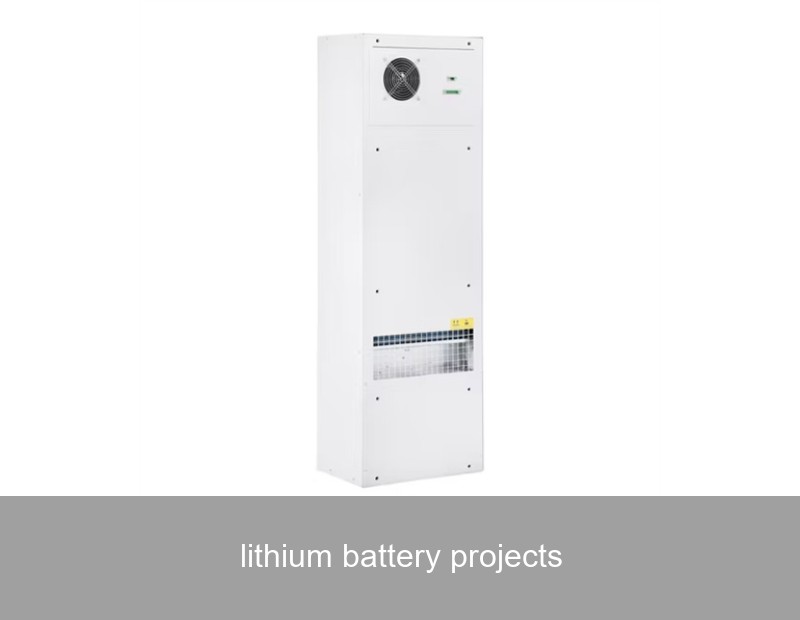
Have you ever wondered what happens when the sun sets on a solar farm, or the wind stops blowing? This intermittent nature of renewable energy is one of the biggest challenges in our transition to a clean grid. The answer, increasingly, lies in large-scale lithium battery projects. These aren't the batteries in your phone; they are sophisticated energy storage systems (ESS) that act as giant buffers for the electrical grid. For businesses, communities, and utilities, investing in a lithium battery project is no longer just an environmental statement—it's a strategic move toward energy independence, cost savings, and a more resilient power infrastructure. Let's explore how these projects are reshaping our energy landscape and how companies like Highjoule are at the forefront of this revolution.
Table of Contents
- The Grid's New Backbone: Why Lithium Battery Projects Are Exploding
- Beyond Storage: The Multifaceted Value of a Modern BESS
- From Blueprint to Reality: Key Components of a Successful Project
- Case Study: A German Industrial Park's Journey to Energy Autonomy
- Choosing the Right Partner: Expertise Matters in Complex Deployments
- The Future is Modular and Intelligent
The Grid's New Backbone: Why Lithium Battery Projects Are Exploding
The surge in lithium-ion battery deployments is driven by a powerful convergence of factors. The phenomenon is clear: renewables are growing, but the grid needs stability. The data is compelling. According to the U.S. Energy Information Administration, battery storage capacity is expected to grow exponentially, with plans to add significant gigawatt-hours to the grid in the coming years. Similarly, Europe's ambitious REPowerEU plan aggressively pushes for energy independence, directly fueling demand for storage.
This isn't just about storing excess solar energy for later use (though that's a key benefit). It's about grid services. Large-scale lithium battery projects provide critical functions like frequency regulation—acting in milliseconds to keep the grid's heartbeat steady—and peak shaving, where they discharge power during times of high demand and expensive electricity prices. For a factory or a data center, this translates directly to a healthier bottom line by avoiding peak demand charges from utilities.
Beyond Storage: The Multifaceted Value of a Modern BESS
Think of a contemporary Battery Energy Storage System (BESS) as a Swiss Army knife for energy management. Its value propositions are layered:
- Economic Optimization: Automated energy arbitrage (buy low, use/sell high) and demand charge reduction.
- Resilience & Backup Power: Providing seamless backup power during outages, crucial for critical operations.
- Renewable Integration: Smoothing the output of solar and wind farms, making them more predictable and valuable.
- Grid Support: Offering voltage support and black-start capabilities to help utilities maintain reliability.
A successful project hinges on integrating these capabilities into a cohesive, intelligent system. This is where deep technical expertise becomes non-negotiable.

Image Source: Unsplash - A visual representation of a utility-scale lithium battery project co-located with solar generation.
From Blueprint to Reality: Key Components of a Successful Project
Deploying a lithium battery project is a complex symphony of components and engineering. It goes far beyond simply procuring battery cells. The core pillars include:
| Component | Function | Critical Consideration |
|---|---|---|
| Battery Cells & Modules | The core energy storage medium, typically Lithium Iron Phosphate (LFP) for safety and longevity. | Cell chemistry, cycle life, degradation rate, and safety certifications. |
| Battery Management System (BMS) | The "brain" that monitors cell voltage, temperature, and state of charge for safety and performance. | Precision, reliability, and ability to communicate with higher-level systems. |
| Power Conversion System (PCS) | Bi-directional inverter that converts DC battery power to AC grid power and vice versa. | Efficiency, response time, and grid code compliance for the target market. |
| Energy Management System (EMS) | The master control software that optimizes system operation based on economics, grid signals, or user preferences. | Intelligence, forecasting algorithms, and user-friendly interface. |
| Thermal Management | Maintains optimal operating temperature for battery health and safety. | Active liquid cooling vs. air cooling, depending on climate and duty cycle. |
At Highjoule, with nearly two decades of experience since 2005, we engineer these components into seamless, turnkey solutions. Our IntelliBESS platform integrates our proprietary EMS with top-tier LFP battery technology and high-efficiency PCS, all housed in modular, pre-fabricated enclosures. This approach de-risks projects and accelerates deployment for our commercial, industrial, and utility partners.
Case Study: A German Industrial Park's Journey to Energy Autonomy
Let's move from theory to practice with a real-world example from Bavaria, Germany. A mid-sized manufacturing park, housing several energy-intensive businesses, faced two major problems: volatile and rising electricity costs, and concerns about grid reliability affecting just-in-time production.
The Phenomenon: High peak demand charges and an inability to self-consume all on-site solar generation.
The Data & Solution: Analysis of one year of load profile data revealed consistent peak demand spikes between 4 PM and 8 PM, often coinciding with low solar production. The park partnered with Highjoule to deploy a 2.4 MWh / 1.2 MW lithium battery project. The system was integrated with the existing 1.5 MW rooftop solar PV array.
The Outcome: The Highjoule IntelliBESS system was programmed for peak shaving and solar self-consumption optimization. Within the first year:
- Peak Demand Charges Reduced by 28%: The battery automatically discharged during expensive peak windows.
- Solar Self-Consumption Increased from 65% to over 90%: Excess midday solar energy was stored for use in the evening.
- Backup Power Assurance: The system provides up to 2 hours of critical backup for essential loads, a feature tested during a brief grid disturbance.
The project's ROI is on track to be achieved in under 7 years, while significantly enhancing the park's sustainability profile and operational resilience.
Choosing the Right Partner: Expertise Matters in Complex Deployments
As the case study shows, a lithium battery project is a long-term infrastructure investment. The choice of technology partner is paramount. Key questions to ask include:
- Does the provider have proven experience in my specific market (e.g., understanding of EU or US grid codes and incentives)?
- Do they offer a true, integrated solution with a single point of responsibility, or are they simply reselling components?
- What is the depth of their software intelligence? Can the EMS adapt to changing market signals and tariffs?
- What does the long-term service and performance guarantee structure look like?
Highjoule's approach is built on being that holistic partner. From initial feasibility studies and financial modeling to system design, grid interconnection support, installation, and 24/7 remote monitoring via our Highjoule Nexus platform, we manage the entire project lifecycle. Our focus on LFP chemistry and robust thermal management underscores our commitment to safety and system longevity—a critical factor for asset owners and financiers.

Image Source: Unsplash - Technical oversight and monitoring are crucial for long-term battery project health.
The Future is Modular and Intelligent
The evolution of lithium battery projects is moving towards greater modularity and intelligence. Containerized, plug-and-play solutions allow for scalable deployments. Meanwhile, advancements in artificial intelligence and machine learning are making EMS platforms smarter, enabling predictive analytics for battery health and more sophisticated participation in energy markets and virtual power plants (VPPs).
Highjoule is actively innovating in this space. Our next-generation systems are designed for easy capacity expansion and feature AI-driven optimization algorithms that can maximize revenue in wholesale markets or community energy sharing schemes. We see the battery not just as storage, but as an active, intelligent node in a decentralized and democratized energy network.
As you consider the role of energy storage for your organization or community, the potential is vast. What specific energy challenge—be it unpredictable costs, reliability concerns, or sustainability goals—could a well-designed lithium battery project solve for you? We invite you to explore this question further and begin a conversation about your unique energy landscape.
For further reading on global energy storage trends, you can refer to this report by the International Energy Agency (IEA).
 Inquiry
 Online Chat