


Understanding Lithium Battery Solar System Price: A Smart Investment Guide
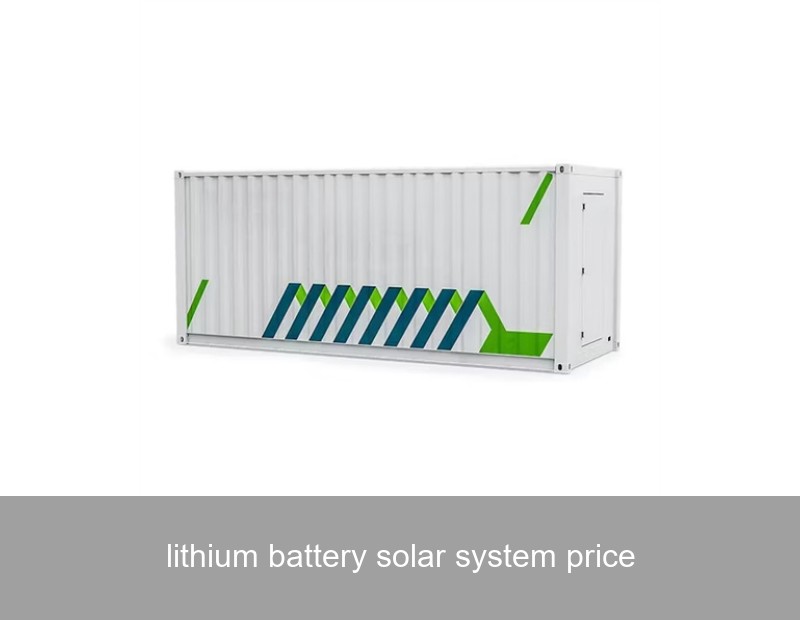
If you're exploring solar power for your home or business, you've likely asked the key question: "What's the real lithium battery solar system price?" It's a smart starting point, but the answer is more nuanced than a simple quote. The price tag you see is just the entry point into a long-term value equation involving energy independence, resilience, and significant savings. As a global leader in advanced energy storage since 2005, Highjoule believes an informed decision starts with peeling back the layers of cost to understand the total value of a smart, integrated power solution. Let's demystify what goes into the pricing and how it translates into a return on investment for you.
The Real Price Tag: More Than Just a Number
When discussing the lithium battery solar system price, it's crucial to shift from thinking about "cost" to considering "investment." A standalone solar panel system captures free energy from the sun, but without storage, excess power often gets fed back to the grid for minimal compensation. Adding a lithium-ion battery system changes the game. It allows you to store that surplus energy for use at night, during peak rate periods, or even during grid outages. Therefore, the price encompasses not just hardware, but the technology to intelligently manage your energy ecosystem, maximize self-consumption, and provide backup power. It's the price of taking full control of your energy.
Breaking Down the Lithium Battery Solar System Price
A transparent quote should clearly itemize the main contributors. Here’s a typical breakdown for a residential or commercial system in markets like the US or Europe.
The Core Components & Their Costs
- Solar Panels (Photovoltaic Array): This is the "fuel" generator. Costs vary by panel efficiency, brand, and system size (measured in kilowatts, kW).
- Lithium-Ion Battery Bank: The heart of storage. Price is primarily driven by capacity (kilowatt-hours, kWh) and the battery's chemistry (e.g., LFP - Lithium Iron Phosphate), which offers superior safety, longevity, and is a core technology in Highjoule's product lines.
- Hybrid Inverter or Inverter + Battery Controller: The brain of the system. This critical component manages energy flow between solar panels, batteries, and your home's electrical panel. An all-in-one hybrid inverter can be more cost-effective than separate units.
- Balance of System (BOS): This includes mounting hardware, wiring, conduits, safety switches, and the critical energy management system (EMS) software.
The "Soft Costs" You Can't Ignore
These often surprise customers but are essential for a safe, compliant, and functional installation.
| Cost Factor | Description | Impact on Price |
|---|---|---|
| Professional Installation | Labor for system design, electrical work, mounting, and commissioning. | Significant; varies by system complexity and roof type. |
| Permits & Inspections | Fees for local building and electrical permits, and utility interconnection approval. | Mandatory; set by local authorities. |
| System Design & Engineering | Customized plans to optimize production, storage, and meet local codes. | Reflects the expertise of the provider. |
| Maintenance & Warranty | Long-term service agreements and the comprehensiveness of the product warranty. | Adds to upfront price but protects long-term value. |

Image: Professional installation is a key component of a system's value and long-term reliability. (Source: Unsplash)
The Data Behind the Trend: Why Prices Are Evolving
Globally, the average price of battery energy storage systems has been on a downward trajectory. According to a report by BloombergNEF, the volume-weighted average price for a battery pack fell to $139 per kWh in 2023[1]. This trend is driven by manufacturing scale, technological improvements, and supply chain maturation. However, the total installed lithium battery solar system price you pay is also heavily influenced by regional factors like local incentive programs, labor rates, and market competition. For instance, the US Investment Tax Credit (ITC) and various European subsidies can directly reduce the net cost by 30% or more, fundamentally altering the investment calculus.
A Real-World Case: The German Bakery's Energy Recipe
Let's look at a concrete example from Bavaria, Germany. A family-owned bakery with high daytime energy consumption for ovens and cooling was facing steep electricity costs and wanted to ensure uninterrupted operations. They installed a 50 kW solar array coupled with a 120 kWh lithium iron phosphate (LFP) battery system.
- Challenge: High operational costs and sensitivity to power outages.
- Solution: A tailored system designed to maximize self-consumption of solar energy, store cheap overnight grid power (when applicable), and provide seamless backup.
- Result: The bakery achieved 75% grid independence. Their annual electricity bill was reduced by €8,500. The system provided full backup for critical refrigeration, preventing spoilage during two brief grid outages in its first year. The projected payback period, considering the German KfW subsidy, was under 7 years.
This case shows how the upfront lithium battery solar system price is offset by immediate operational savings and risk mitigation, creating a compelling business case.
Highjoule's Approach: Delivering Value Beyond the Sticker Price
At Highjoule, we engineer systems where cost-efficiency is built into the design philosophy. Our integrated solutions, like the Highjoule H-Series Commercial Stack and Residential PowerWall, utilize modular LFP battery technology known for its 10,000+ cycle life and inherent safety—reducing long-term replacement risks and costs. Our proprietary energy management software doesn't just store energy; it learns your consumption patterns and dynamically optimizes for the lowest cost, whether by using solar, stored energy, or intelligently leveraging time-of-use grid rates. We view the initial price as the first step in a 20+ year partnership, which is why our comprehensive service packages and industry-leading warranties are core to our offering, ensuring your investment is protected and performs optimally for decades.

Image: A modern, integrated solar and battery storage installation for a home. (Source: Unsplash)
Key Factors That Influence Your Final Investment
To understand a quote, you must know what drives it. Ask your provider about these variables:
- Energy Needs & Goals: Do you want full backup, or just to shift peak usage? Your daily kWh consumption is the starting point for sizing.
- System Size & Scalability: Larger solar arrays and battery banks cost more upfront but can deliver greater savings. Modular systems, like Highjoule's, allow you to expand storage later.
- Technology Quality: Higher-efficiency panels and batteries with longer warranties and better depth-of-discharge (DoD) may have a higher initial cost but a lower lifetime cost per cycle. The U.S. Department of Energy provides excellent resources on battery lifespan factors[2].
- Local Incentives: This is paramount. In the US, the federal ITC applies to battery storage if paired with solar[3]. Many European countries have direct grants or favorable feed-in tariffs.
Is Now the Right Time to Invest in a Solar Battery System?
With volatile energy prices becoming the new normal and grid reliability a growing concern in many regions, the value proposition of energy independence is stronger than ever. While the hardware costs for lithium battery systems continue to improve, waiting might mean missing out on years of savings and current incentive programs that can sunset. The most insightful question isn't just "What is the lithium battery solar system price?" but rather, "What is the cost of *not* having control over my energy future?"
What specific energy challenge—be it a rising monthly bill, a need for operational resilience, or a sustainability goal—is making you consider taking control of your power today?
 Inquiry
 Online Chat