


Lithium-Ion Battery in Dubai: Powering a Sustainable Future in the Desert
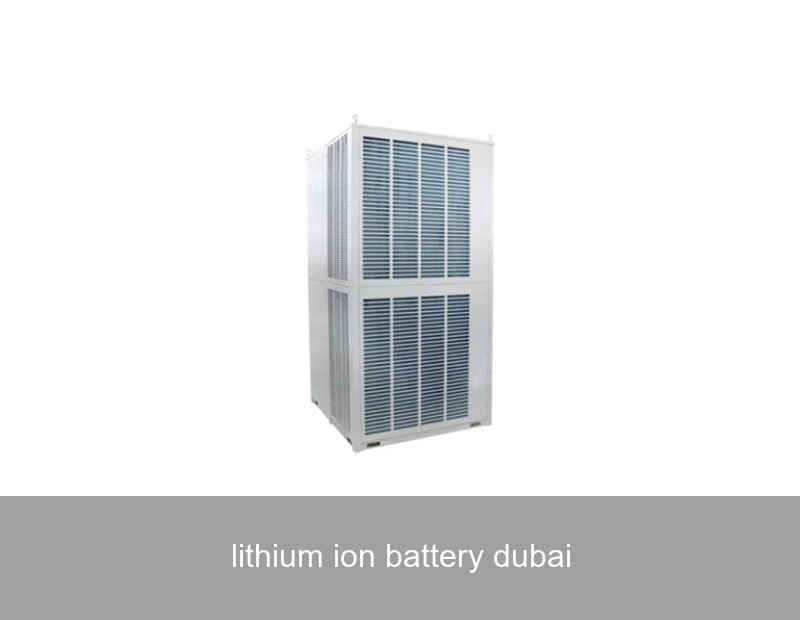
When you think of Dubai, images of towering skyscrapers, vast deserts, and ambitious innovation likely come to mind. But beneath the glittering skyline lies a pressing challenge: powering this relentless growth in a sustainable, reliable, and efficient way. This is where the lithium-ion battery in Dubai is emerging as a game-changing solution. As the emirate aggressively pursues its Dubai Clean Energy Strategy 2050, the shift from traditional fossil fuels to renewable sources like solar creates a critical need for advanced energy storage. Lithium-ion battery systems are the key to unlocking solar power's full potential, storing the sun's abundant energy during the day for use at night, ensuring grid stability, and providing backup power. For businesses and communities, this isn't just about being green—it's about energy independence, cost savings, and future-proofing operations in a dynamic environment.
Table of Contents
- The Dubai Energy Challenge: Sun, Sand, and Peak Demand
- Why Lithium-Ion Batteries Are the Perfect Fit for Dubai
- Case Study: A Dubai Shopping Mall's Journey to Energy Independence
- Beyond Backup: The Multi-Faceted Value of Advanced Storage
- Highjoule's Role: Delivering Intelligent Storage for Dubai's Ambition
- The Future Outlook for Energy Storage in the UAE
The Dubai Energy Challenge: Sun, Sand, and Peak Demand
Dubai's energy landscape is unique. Air conditioning demand drives massive electricity consumption, especially during the scorching summer months, leading to significant peak load strains on the grid. Simultaneously, the city is home to the massive Mohammed bin Rashid Al Maktoum Solar Park, one of the world's largest single-site solar parks. This creates a fascinating paradox: maximum solar generation occurs during the daytime, but a substantial portion of energy demand, particularly for commercial cooling and residential use, extends well into the evening when the sun has set. This mismatch between supply and demand is a classic problem that lithium-ion battery storage is uniquely positioned to solve.

Image: The juxtaposition of modern Dubai and solar energy potential. Credit: Unsplash
Why Lithium-Ion Batteries Are the Perfect Fit for Dubai
Not all batteries are created equal, especially in a demanding climate like Dubai's. Lithium-ion technology offers a compelling set of advantages:
- High Energy Density: They pack a lot of power into a compact footprint, crucial for space-conscious urban and commercial installations.
- Efficiency & Fast Response: With round-trip efficiency often exceeding 95%, they lose very little energy during charge/discharge cycles and can respond to grid signals or load changes in milliseconds.
- Long Cycle Life & Durability: Modern Li-ion batteries are engineered for thousands of deep cycles, making them a long-term investment. Leading systems, like those from Highjoule, feature sophisticated thermal management to ensure performance and longevity even in high ambient temperatures.
- Scalability and Flexibility: Systems can be scaled from a single residential unit to multi-megawatt industrial or grid-support installations.
The Technical Edge: Understanding BESS
A Lithium-ion Battery Energy Storage System (BESS) is far more than just a collection of battery cells. It's an integrated, intelligent solution comprising:
| Component | Function | Why It Matters for Dubai |
|---|---|---|
| Battery Modules (Li-ion) | Store electrical energy chemically | High-density storage for solar energy capture |
| Battery Management System (BMS) | Monitors cell voltage, temperature, and health | Critical for safety and longevity in hot climates |
| Power Conversion System (PCS) | Converts DC battery power to AC for buildings/grid | Enables seamless integration with existing infrastructure |
| Energy Management System (EMS) | The "brain" that controls charging/discharging based on algorithms | Maximizes economic return through peak shaving and energy arbitrage |
Case Study: A Dubai Shopping Mall's Journey to Energy Independence
Let's look at a real-world application. A major shopping mall in Dubai Marina faced two primary issues: exorbitant demand charges from its utility provider (a fee based on the highest 15-minute power draw each month) and a desire to reduce its carbon footprint. Their existing rooftop solar PV system was offsetting daytime load but doing nothing for the evening peak when the mall was busiest.
The Solution: The facility partnered with Highjoule to design and deploy a containerized, turnkey BESS. The 1.5 MWh lithium-ion battery system was integrated with the mall's existing solar and building management system.
- The Highjoule EMS was programmed to perform peak shaving. The batteries would discharge during the mall's predictable evening peak (6 PM - 10 PM), reducing grid draw.
- During off-peak nighttime hours, when grid electricity is cheaper and cleaner, the system would recharge.
- Excess solar energy produced during sunny, low-consumption days was stored instead of being exported at lower rates.
The Results (12-month period):
- 22% Reduction in Monthly Demand Charges: This translated to annual savings of over AED 850,000.
- Increased Solar Self-Consumption: On-site consumption of solar power rose from 68% to 92%.
- Backup Power: The system provides critical load support during brief grid interruptions, enhancing operational resilience.
- ROI: The project achieved a return on investment in under 5 years, with a system design life of 15+ years.
This case exemplifies the tangible economic and operational benefits a well-engineered lithium-ion battery system can deliver in a commercial Dubai setting.
Beyond Backup: The Multi-Faceted Value of Advanced Storage
While backup power is a valuable feature, the true power of modern BESS lies in its intelligence. For Dubai's commercial and industrial (C&I) sector, a system like Highjoule's HPS Series delivers value through multiple, simultaneous revenue streams and savings mechanisms:
- Energy Arbitrage: Buying/store low-cost energy (from solar or grid), using/selling it during high-cost periods.
- Peak Shaving (Demand Charge Management): As seen in the case study, this is often the fastest path to savings.
- Frequency Regulation: Supporting the grid by injecting or absorbing power to maintain a stable electrical frequency—a service utilities may compensate.
- Renewable Firming: Smoothing out the intermittent output of solar PV, making it a more reliable and grid-friendly resource.

Image: A modern, containerized Battery Energy Storage System (BESS). Credit: Unsplash
Highjoule's Role: Delivering Intelligent Storage for Dubai's Ambition
With nearly two decades of experience since 2005, Highjoule is at the forefront of this energy transition. We understand that deploying a lithium-ion battery in Dubai isn't just about hardware; it's about delivering a guaranteed outcome—be it cost savings, sustainability targets, or resilience. Our approach is holistic:
- Product Suite: We offer a range of solutions, from our modular HES (Home Energy Storage) for luxury villas and communities, to our robust HPS (Commercial & Industrial Power Storage) systems, all the way to large-scale HGS (Grid Storage) solutions. All are built with industry-leading Li-ion cells and our proprietary, climate-adaptive thermal management.
- Intelligent Software: The heart of our system is the Highjoule ApexOS™ energy management platform. This AI-driven software continuously analyzes energy prices, consumption patterns, weather forecasts, and grid needs to optimize battery operation for maximum financial return.
- Full-Service Partnership: From initial feasibility studies and financial modeling to system design, grid approval assistance, installation, and long-term performance monitoring, we provide an end-to-end service tailored to the UAE market's regulations and requirements.
The Future Outlook for Energy Storage in the UAE
The trajectory is clear. The UAE's National Energy Strategy 2050 aims to increase the share of clean energy in the total energy mix to 50%. Dubai alone targets 75% by 2050. This ambitious goal is impossible without large-scale, sophisticated energy storage to act as the buffer and enabler. We are moving beyond pilot projects into an era of widespread adoption across sectors: data centers, manufacturing plants, hospitality, and entire residential communities like The Sustainable City.
The question for business leaders, facility managers, and developers in Dubai is no longer if battery storage is relevant, but when and how to integrate it into their energy strategy. With technology costs continuing to fall and software intelligence rising, the economic case grows stronger every day.
What's the First Step for Your Organization?
Is your facility burdened by high demand charges? Do you have solar PV that isn't delivering its full potential? Are you looking to future-proof your operations against rising energy costs and grid volatility? The conversation begins with data. Understanding your load profile is the key to unlocking the potential of a lithium-ion battery system. What would a 20-30% reduction in your peak demand do for your bottom line this year?
 Inquiry
 Online Chat