


Lithium-Ion Rechargeable Battery: The Silent Engine Powering Our Modern World
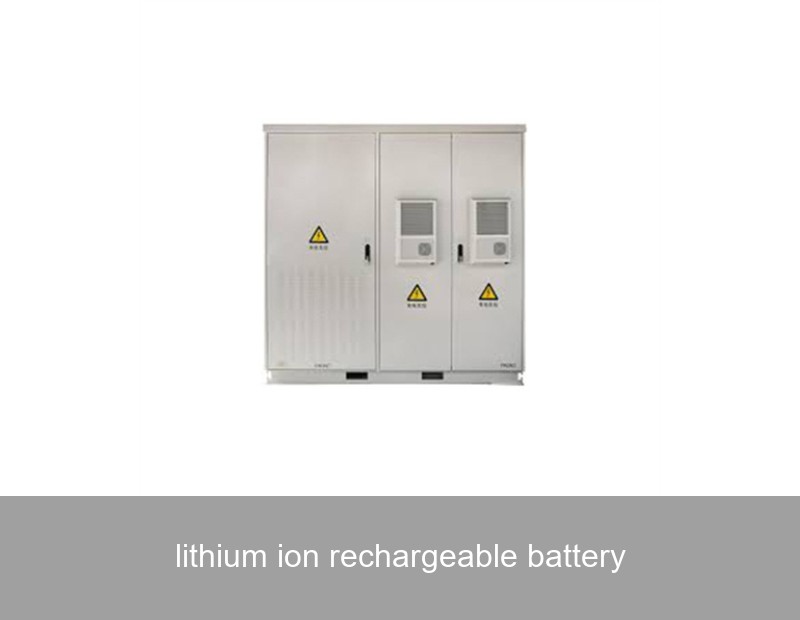
Think about your day for a moment. You likely checked your smartphone, maybe you drove an electric vehicle (EV) or saw one zip by, and you're certainly consuming electricity from an increasingly complex grid. What's the common thread? In many cases, it's the lithium-ion rechargeable battery. This isn't just a component; it's the fundamental building block of our shift away from fossil fuels. But what happens when this technology scales up from powering your laptop to stabilizing entire communities? The story evolves from chemistry to intelligent energy architecture.

Image Source: Unsplash - A modern, high-density lithium-ion battery module.
How Does a Lithium-Ion Rechargeable Battery Actually Work? The Elegant Dance of Ions
At its heart, a lithium-ion battery is a masterpiece of electrochemical engineering. Imagine two shelves: the anode (typically graphite) and the cathode (often made of lithium metal oxides like NMC or LFP). Between them is the electrolyte, a conductive medium. Lithium ions are the diligent workers.
- Discharging (Powering Your Life): When you use your device, lithium ions stored in the anode flow through the electrolyte to the cathode. This movement releases electrons, which travel through your circuit, providing the electrical power you need.
- Charging (Refilling the Tank): Plug in your charger, and the process reverses. An external electrical push forces the ions to migrate back from the cathode to the anode, storing energy for the next use.
This "rocking chair" motion of ions is incredibly efficient and rechargeable hundreds, even thousands, of times. But for large-scale energy storage (BESS), the challenge isn't just the cell chemistry—it's the system that manages it: thermal regulation, precise battery management software, and integration with inverters that speak the grid's language.
Beyond Phones and EVs: The Grid-Scale Revolution
The true transformative power of lithium-ion rechargeable battery technology is unfolding at the grid edge. As renewable sources like solar and wind, which are inherently intermittent, claim a larger share of our energy mix, we face a fundamental mismatch: generation doesn't always align with demand. This is where advanced Battery Energy Storage Systems (BESS) come in.
Think of these systems as massive, intelligent energy banks. They don't just store energy; they provide critical grid services that keep the lights on and costs down. For businesses, municipalities, and utilities, this translates to:
- Peak Shaving: Reducing demand during expensive peak tariff hours by drawing on stored battery power.
- Renewable Firming: Storing excess solar power generated at noon for use in the evening, maximizing self-consumption.
- Grid Resilience & Backup: Providing instantaneous power during outages, ensuring continuity for critical operations.
- Frequency Regulation: Automatically injecting or absorbing power in milliseconds to maintain the grid's stable frequency—a vital service as traditional generators retire.
This is the domain where companies like Highjoule excel. Since 2005, Highjoule has been at the forefront of designing and deploying intelligent storage solutions. Our systems, built around high-performance, safety-certified lithium-ion rechargeable battery packs, are integrated with our proprietary energy management software. This allows a commercial facility in Germany to autonomously optimize its energy costs or a microgrid in California to island itself from the main grid during wildfire-related outages.
| Application | Primary Benefit | Typical User |
|---|---|---|
| Commercial Peak Shaving | Reduces demand charges, lowers electricity bills | Factories, Shopping Malls, Office Buildings |
| Solar PV Integration | Increases self-consumption, enables 24/7 clean power | Residential Communities, Industrial Plants |
| Grid Frequency Response | Provides critical stability services, creates revenue streams | Utility Companies, Independent Power Producers |
| Backup Power & Resilience | Ensures operational continuity during outages | Hospitals, Data Centers, Water Treatment Plants |
A Real-World Case Study: Stabilizing the Grid in Texas
Let's move from theory to hard data. The ERCOT grid in Texas is known for its high penetration of wind energy and its vulnerability to extreme weather events. In 2023, a major grid services provider partnered with Highjoule to deploy a 50 MW / 100 MWh battery storage system in West Texas. The primary objective was to provide fast-frequency response and energy arbitrage.
The results, over one year of operation, were telling:
- The system responded to grid frequency dips in under 100 milliseconds, consistently, aiding in preventing cascading outages.
- By charging during low-cost, high-renewable periods and discharging during evening peaks, it contributed to lowering wholesale electricity prices during critical hours.
- During a localized transmission fault, the battery system provided seamless backup power to a nearby industrial cluster for 2 hours, preventing an estimated $1.2M in production losses.
This project exemplifies how modern lithium-ion rechargeable battery systems are no longer passive storage but active grid assets. Highjoule's role extended beyond supply; our continuous remote monitoring and performance optimization services ensured the system delivered maximum value and reliability throughout its contract.

Image Source: Unsplash - A utility-scale battery storage installation at a solar farm.
Future Horizons and Making the Right Choice
The technology continues to advance. While lithium-ion remains dominant, we are closely monitoring and integrating next-generation variations like Lithium Iron Phosphate (LFP), which offers enhanced safety and longer cycle life, making it an excellent choice for stationary storage. The future lies in smarter, more integrated systems.
So, if you're considering a lithium-ion rechargeable battery system for your business, community, or to support grid infrastructure, what should you look for?
- System Intelligence: The battery cells are a commodity; the real value is in the software that controls them. Can it optimize for multiple value streams (savings, revenue, resilience) simultaneously?
- Safety & Certification: Insist on UL 9540 and other relevant local certifications for the entire system, not just the cells.
- Partner Expertise: Choose a provider with a proven track record in system integration and long-term service. A battery system is a 15-20 year asset; you need a partner for its entire lifecycle.
At Highjoule, our H-Joule Optimize platform does exactly this, turning a complex battery system into a automated, revenue-generating asset. For our residential and small commercial clients, the H-Joule Home+ system provides the same intelligent management in a compact, user-friendly package, seamlessly integrating with solar to maximize energy independence.
Let's Continue the Conversation
We've seen how the humble lithium-ion rechargeable battery has grown up to tackle some of our biggest energy challenges. The potential is vast, but it's realized only through thoughtful application and sophisticated engineering. What specific energy challenge—be it unpredictable costs, renewable integration, or the need for unwavering reliability—is your organization or community looking to solve today?
For further reading on grid-scale storage trends, you can explore this report from the International Energy Agency (IEA) or this technical overview from the U.S. Department of Energy.
 Inquiry
 Online Chat