


Decoding LivGuard Inverter Battery Price and the Value of Modern Energy Storage
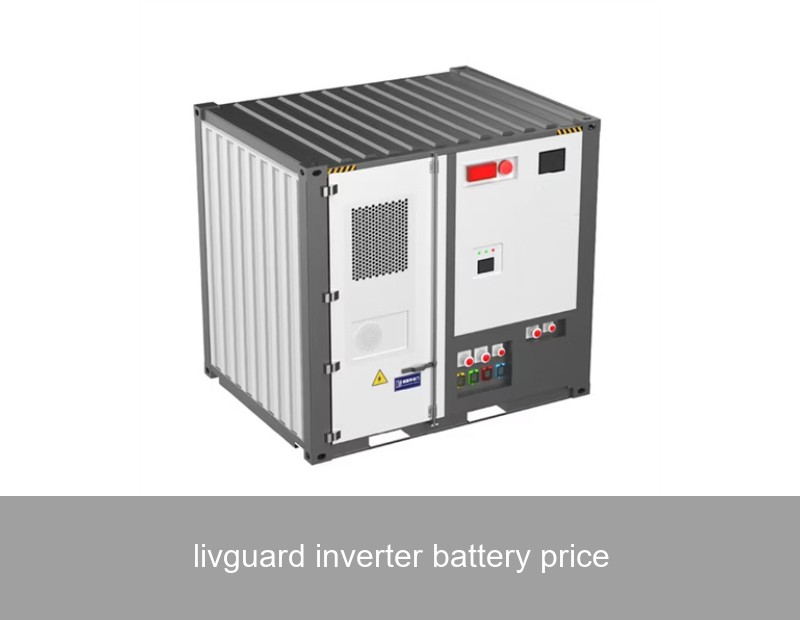
When the power goes out, whether during a storm in Texas or on a calm evening in Berlin, your first thought is likely about your inverter battery. For many, the immediate search is for specifics like "LivGuard inverter battery price." It's a practical starting point, but it tells only a fraction of the story. In today's world, where power reliability is non-negotiable and energy costs are soaring, the conversation needs to shift from mere price to long-term value and intelligent energy management. This is where understanding the full ecosystem of an energy storage system—from battery chemistry to smart controls—becomes critical for homeowners and businesses across Europe and the US.
Key Factors Influencing the Cost of a Reliable Power Backup System
So, what exactly are you paying for? The price of an inverter battery system is a composite of several technological and market factors.
- Battery Chemistry & Capacity: This is the core. A basic lead-acid battery bank will have a lower upfront cost than a lithium-ion (Li-ion) system. Capacity, measured in kilowatt-hours (kWh), directly scales the price. More capacity means more runtime for your appliances.
- The Inverter's Intelligence: The inverter is the brain. A basic model simply converts DC to AC. A premium hybrid or multi-mode inverter can manage grid power, solar input, and battery storage seamlessly, prioritizing solar self-consumption and providing uninterrupted power supply (UPS) functionality. This intelligence commands a higher price but delivers superior efficiency and control.
- Brand, Warranty, and Certification: Established brands invest in research, quality control, and safety standards (like UL 9540 in the US or IEC 62619 in the EU). A robust 10-year warranty on a lithium battery, for instance, reflects confidence in its longevity and is factored into the cost.
- Installation & System Integration: Professional installation by certified technicians ensures safety and optimal performance. For systems integrated with solar PV, costs include additional components like charge controllers and system design.

Image Source: Unsplash - A professional installation ensures safety and performance.
Lithium vs. Lead-Acid: The Price-Performance Paradigm Shift
Let's address the elephant in the room: the upfront price difference. It's significant, but the context is everything. Think of it as the difference between buying a cheap, disposable flashlight and investing in a high-quality, rechargeable LED lantern.
| Feature | Traditional Lead-Acid | Modern Lithium-Ion (e.g., LFP) |
|---|---|---|
| Upfront Cost | Lower | Higher |
| Cycle Life (Typical) | 300-500 cycles | 6,000+ cycles |
| Depth of Discharge (DoD) | ~50% (Using more damages battery) | 90-100% (Usable full capacity) |
| Efficiency | 70-80% | 95-98% |
| Maintenance | Regular watering/checking | Virtually maintenance-free | Space & Weight | Bulky, heavy | Compact, lightweight |
As the table shows, lithium batteries, particularly Lithium Iron Phosphate (LFP), offer dramatically longer lifespan and usable energy. While checking a LivGuard inverter battery price gives a baseline, comparing these technical specs reveals why the global market is decisively shifting towards lithium for residential and commercial storage. For more on battery chemistries, the U.S. Department of Energy provides detailed technical assessments.
The True Cost of Ownership: Looking Beyond the Initial Price Tag
This is where the real conversation begins. Total Cost of Ownership (TCO) includes the purchase price, installation, maintenance, replacement costs, and energy savings over the system's life.
Scenario: A homeowner in Southern California needs backup for essential loads (4 kWh/day).
Option A (Lead-Acid): A $2,000 system that needs replacement every 3-4 years and loses efficiency over time. Over 15 years, they might buy 4-5 systems, spending $8,000+ with recurring maintenance.
Option B (Lithium): A $6,000 Highjoule system with a 12-year warranty. It operates at near-peak efficiency for its entire life, requires no maintenance, and can be paired with solar to offset grid costs. Over 15 years, the single investment, coupled with solar savings, often results in a lower TCO and far greater convenience.
The initial inverter battery price is just the entry ticket. The long-term value is defined by reliability, durability, and integration capabilities.
Case Study: Real-World Savings with Modern Energy Storage
Let's move from theory to practice. Consider a small family-run bakery in Munich, Germany. Their challenge wasn't just occasional outages, but crippling peak-time electricity charges and a desire to use their rooftop solar more effectively.
- Phenomenon: High operational costs due to time-of-use tariffs and solar energy being exported to the grid at low feed-in tariffs.
- Data & Solution: They installed a 15 kWh Highjoule H-Joule SolarBank lithium storage system with a hybrid inverter. The system stores excess solar generated during the day for use in the evening and during peak grid hours.
- Results (Annual):
- Grid Consumption Reduction: 68%
- Self-Consumption of Solar: Increased from 35% to over 90%
- Savings on Energy Bills: €2,300
- ROI Period: Estimated 5-6 years (with available subsidies).
For this bakery, the question wasn't "what is the inverter battery price?" but "what is the value of energy independence and predictable costs?" The Highjoule system provided a clear financial and operational answer. Data on European energy trends can be explored through IRENA's datasets.

Image Source: Unsplash - A modern home integrated with solar and storage.
Highjoule's Approach: Smart Investment in Sustainable Power
At Highjoule, we understand that every family and business has unique energy patterns. Since 2005, we've moved beyond providing mere backup to delivering intelligent, integrated energy ecosystems. Our products, like the H-Joule SolarBank for homes and the H-Joule GridPro for commercial sites, are built with LFP battery chemistry, smart thermal management, and advanced battery management systems (BMS) that ensure safety and longevity.
Our systems are designed to be future-proof. They don't just provide power during an outage; they optimize your energy usage 24/7. By integrating seamlessly with solar generation and, where available, participating in grid services, they can transform a passive battery into an active asset that saves—and even earns—money over time. This holistic approach redefines the value proposition of an energy storage system, making the initial LivGuard inverter battery price part of a much larger and more beneficial economic calculation.
Making the Right Choice for Your Home or Business
So, how do you navigate this decision? Start by asking the right questions:
- What are my critical loads during an outage? (Calculate your essential kWh needs.)
- Do I have, or plan to install, solar PV panels?
- Is my primary goal backup, bill savings, energy independence, or all three?
- What is the total budget, considering potential financing and available incentives (like the U.S. Residential Clean Energy Credit or European national schemes)?
Armed with this clarity, you can evaluate quotes not just on a line-item price, but on the system's specifications, warranty, brand reputation, and the provider's expertise in design and after-sales support.
Your Energy Future
The landscape of power is changing from centralized, one-way flow to a decentralized, interactive network. Your home or business can be an active node in this network. The right energy storage system is the key. What will your first step be towards taking control of your energy costs and reliability?
 Inquiry
 Online Chat