


Understanding the Solar Energy Storage Cabinet Rate in Sweden: A Key to Energy Independence
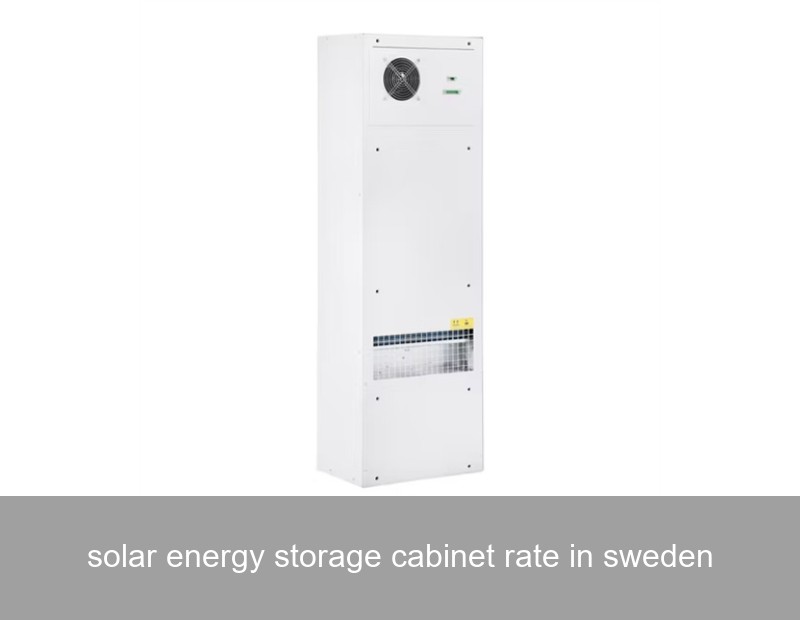
Sweden is charging ahead in the renewable energy race, with ambitious goals to reach 100% renewable electricity production by 2040. A crucial component of this green transition is the adoption of solar power, paired with intelligent energy storage. But for homeowners and businesses, a key question emerges: what is the solar energy storage cabinet rate in Sweden? More than just a technical specification, this "rate" represents the system's ability to capture, hold, and dispatch solar power effectively—directly impacting your energy bill and carbon footprint. In this article, we'll demystify this concept and explore how advanced storage solutions are empowering Swedes to maximize their solar investment.
What Exactly is the "Storage Cabinet Rate"?
In simple terms, the solar energy storage cabinet rate refers to the effective efficiency and power capability of your complete battery storage system. It's not a single number you'll find on a spec sheet, but a practical outcome influenced by several core components:
- Usable Capacity (kWh): The actual amount of solar energy you can store and use after the sun sets.
- Power Rating (kW): How much electricity the cabinet can deliver at once—critical for running multiple appliances or an entire home.
- Round-Trip Efficiency (%): The percentage of energy that survives the storage and retrieval process. Higher efficiency means less waste.
- Depth of Discharge (DoD): How much of the battery's total capacity can be safely used without degrading its lifespan.
Think of it like a water tank. The capacity is its size, the power rating is the width of the tap, and the round-trip efficiency is how much water evaporates while being stored. A high-performing "rate" means a large, efficient tank with a powerful tap.
The Swedish Context: Why Storage is Non-Negotiable
Sweden's energy landscape is unique. While blessed with abundant hydropower and a growing wind sector, solar faces the challenge of extreme seasonal variation. Solar irradiation can vary from over 300 kWh/m² in summer to under 20 kWh/m² in northern winters. This mismatch between peak production (summer days) and peak demand (dark winter evenings) makes storage essential.
Without a storage cabinet, excess summer solar energy is fed back to the grid, often at a lower price than the cost to buy it back in winter. A high-quality storage system flips this script, allowing you to increase self-consumption—the portion of your solar energy used directly in your home—from a typical 30-40% to 70% or more. This directly shields you from volatile electricity prices, a concern for many across Europe and the U.S.

Image Source: Unsplash (Representative image of a modern Swedish home with solar)
Key Factors Impacting Your System's Performance Rate
To optimize your solar energy storage cabinet rate, consider these critical elements:
| Factor | Impact on "Rate" | What to Look For |
|---|---|---|
| Battery Chemistry | Determines lifespan, efficiency, safety, and performance in cold climates. | Lithium Iron Phosphate (LFP) is renowned for long life, thermal stability, and excellent performance in a range of temperatures. |
| System Integration | Seamless communication between solar panels, inverter, and battery maximizes harvest and usage. | An integrated, AC-coupled or DC-coupled system from a single provider ensures optimal control. |
| Energy Management Software (EMS) | The "brain" that learns your consumption patterns and optimizes charging/discharging. | Smart EMS that can factor in weather forecasts, electricity tariffs, and grid demands. |
| Climatic Resilience | Swedish winters demand batteries that operate reliably at low temperatures. | Cabinet with integrated thermal management to keep batteries in their ideal operating range. |
A Real-World Case Study: The Västerås Family Home
Let's make this tangible. The Andersson family in Västerås installed a 12 kW solar array in 2022. Initially without storage, their self-consumption was 38%. In early 2023, they upgraded with a Highjoule H2 Residential Energy Storage Cabinet, featuring a 15 kWh usable LFP battery and a 5 kW continuous power output.
- Self-Consumption Rate: Increased from 38% to 82% annually.
- Grid Independence: Achieved 94% independence during summer months.
- Financial Impact: Reduced their annual electricity purchase from the grid by 68%, despite a colder-than-average winter. Their calculated payback period for the storage addition was reduced to under 8 years.
- Performance Note: The Highjoule cabinet's advanced thermal management maintained over 95% of its rated efficiency even during periods of -15°C outdoor temperatures.
This case highlights how the right storage cabinet doesn't just store energy—it actively optimizes your home's entire energy ecosystem.
Beyond the Basics: Highjoule's Intelligent Approach
At Highjoule, we understand that the true solar energy storage cabinet rate is measured by the value it delivers to your life, not just kilowatt-hours. Our solutions for the European and North American markets are engineered for this holistic purpose.
Our H-Series Residential Cabinets are built with premium LFP cells and feature our proprietary Adaptive Power Core™ technology. This doesn't just manage temperature; it continuously balances cell health to ensure the system's power and capacity "rate" remains high throughout its guaranteed 10+ year lifespan. Furthermore, our Highjoule Energy OS platform turns the cabinet into an intelligent asset. It can be configured to prioritize self-consumption, participate in grid flexibility programs (where available), or ensure backup power for essential loads during an outage—all controllable via an intuitive app.

Image Source: Unsplash (Representative image of a sleek, modern home battery installation)
For commercial and industrial applications, our Matrix™ C&I Storage Systems take this further. They are scalable, containerized solutions designed to manage demand charges, integrate with large-scale solar PV, and provide critical backup power, offering a compelling financial rate of return on investment.
Future Trends and Your Next Steps
The landscape is evolving. We see trends like vehicle-to-home (V2H) integration and increased grid service capabilities becoming standard. Your storage cabinet will likely become the hub of your personal energy ecosystem. Choosing a system with robust, upgradeable software is therefore as important as the hardware specs.
So, how do you assess the right solar energy storage cabinet rate for your specific needs in Sweden or beyond? Start by analyzing your electricity consumption patterns, your solar production profile, and your goals (maximizing self-sufficiency, backup power, or financial return).
What specific energy challenge in your home or business—be it high winter bills, a desire for resilience, or a commitment to sustainability—could a precisely calibrated storage rate solve for you?
 Inquiry
 Online Chat