


Loadshedding Power Supply: Your Complete Guide to Reliable Energy in 2024
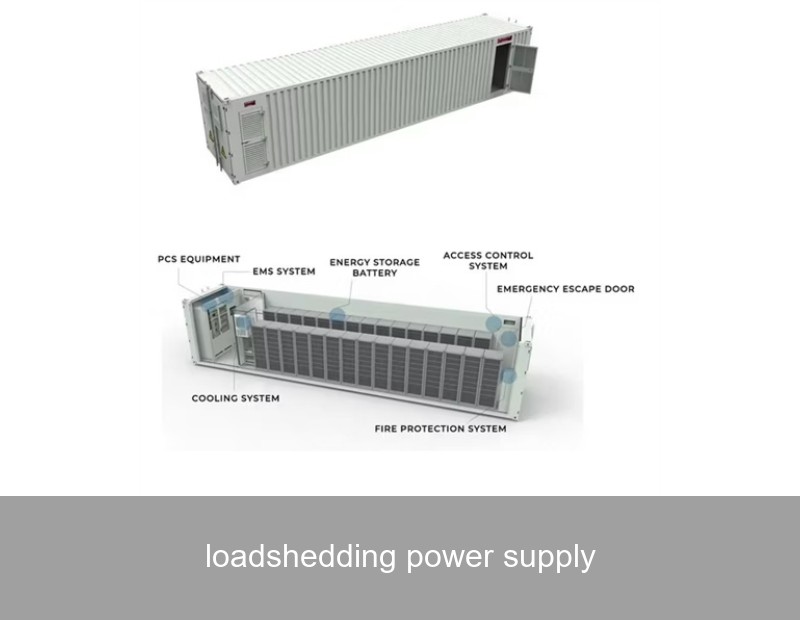
You flick the switch, but the light doesn't come on. The hum of your refrigerator goes silent, and your screen goes black. This is loadshedding—a controlled, rolling power outage implemented by utilities to prevent a total grid collapse when demand outstrips supply. For homes and businesses across Europe and the U.S., what was once a rare inconvenience is becoming a more frequent reality due to aging infrastructure, extreme weather, and the energy transition's strains. This article will demystify loadshedding and explore how modern loadshedding power supply solutions, like advanced battery storage systems, are not just a backup but a transformative step towards energy independence and grid resilience.
Table of Contents
- What is Loadshedding and Why is it Happening Here?
- Beyond Generators: The Modern Loadshedding Power Supply
- Case Study: How a California Winery Beat Loadshedding
- Choosing the Right System for Your Home or Business
- Highjoule's Role in Building a Resilient Energy Future
- Your Next Step Towards Power Security
What is Loadshedding and Why is it Happening Here?
While often associated with emerging economies, planned power cuts are a growing concern in developed grids. The U.S. Energy Information Administration (EIA) has noted increasing stress on the North American grid, particularly during summer heatwaves and winter storms (Source: EIA). In Europe, the geopolitical energy landscape has heightened focus on grid stability.
Think of the power grid like a highway system. During peak "rush hour" (e.g., 6-9 PM on a hot day when AC use is high), the highway becomes dangerously overloaded. Loadshedding is the utility's way of directing some cars off the road to prevent a catastrophic pile-up—a total blackout. This manifests as scheduled, rotating outages in your neighborhood.
The consequences are more than just annoyance. For a household, it means spoiled food, discomfort, and disrupted work-from-home life. For a business, it can mean lost revenue, data corruption, and operational shutdowns. This is why a proactive loadshedding power supply strategy is no longer a luxury for the few; it's essential planning for many.
Beyond Generators: The Modern Loadshedding Power Supply
The traditional answer has been diesel or propane generators. They're loud, polluting, require fuel storage, and only kick in after the power goes out, causing a brief interruption. The modern solution is seamless, clean, and intelligent: the solar-integrated battery energy storage system (BESS).
Here’s how a contemporary system works as the ultimate loadshedding power supply:
- Instantaneous Response: When the grid fails, an advanced inverter and battery system detect the outage and switch to backup power in milliseconds. Your lights might flicker, but most appliances won't even notice.
- Solar Integration: If you have solar panels, your battery can charge from the sun during the day, providing free, renewable fuel for your backup power. During an outage, this combination creates a self-sustaining microgrid on your property.
- Smart Energy Management: These systems aren't passive. They can be programmed to power critical loads (refrigerator, router, medical equipment) for longer, or to avoid using grid power during expensive peak rate periods—a feature known as peak shaving.

Image: A modern home energy setup combining solar panels and battery storage, key for loadshedding resilience. (Source: Unsplash)
Case Study: How a California Winery Beat Loadshedding with Smart Storage
Let's look at a real-world example. A premium winery in Napa Valley, California, faced dual challenges: increasing loadshedding events (Public Safety Power Shutoffs due to wildfire risk) and staggering peak demand charges from their utility. A power outage during fermentation could ruin an entire vintage, representing millions in losses.
Their solution was a turnkey loadshedding power supply and energy management system. They installed a 500 kWh commercial battery storage system integrated with their existing solar array. The results were transformative:
| Metric | Before System | After System Installation |
|---|---|---|
| Outage Impact | Full production halt; risk of product loss | Zero disruption; critical processes run for 10+ hours on backup |
| Peak Demand Charges | ~$12,000 per month | Reduced by ~40% (~$4,800 monthly savings) |
| Grid Independence During Outages | 0% | 100% for critical loads |
This case shows that a modern loadshedding power supply solution pays for itself not only through outage protection but also via daily bill savings and operational continuity. The winery now views its energy system as a strategic asset, not just an insurance policy.
Choosing the Right Loadshedding Power Supply System for Your Needs
Not all systems are created equal. Here’s a quick guide to the key considerations:
- Power (kW): This determines how many appliances you can run at once. Do you need to back up your entire home (whole-house), or just a few critical circuits (essential loads)?
- Capacity (kWh): This is your "gas tank." How long do you need to run those backed-up appliances? A longer outage duration requires a larger battery capacity.
- Integration: Is the system designed to work seamlessly with solar? Can it manage energy flows intelligently for both backup and savings?
- Scalability: Can you add more batteries later if your needs grow?
This is where partnering with an experienced provider makes all the difference. Companies like Highjoule specialize in auditing your energy profile, understanding your unique vulnerability to loadshedding, and designing a system that fits both your technical requirements and financial goals.
Highjoule's Role in Building a Resilient Energy Future
With nearly two decades of experience since 2005, Highjoule has been at the forefront of the advanced energy storage revolution. We understand that a reliable loadshedding power supply is the cornerstone of modern energy security. Our solutions are built on three pillars:
- Intelligence: Our Highjoule Sentinel™ energy management platform uses AI to predict usage patterns, optimize battery cycling for max savings, and provide real-time system health monitoring from your smartphone.
- Efficiency: Our battery systems boast industry-leading round-trip efficiency, meaning you get more usable power out for every unit of power you put in, whether from the grid or your solar panels.
- Sustainability: We provide end-to-end sustainable solutions, from long-lifecycle battery chemistry to recycling programs, ensuring your step towards resilience also supports a healthier planet.
For a homeowner, this might mean a sleek Highjoule HomePower system that keeps the lights on and the home office running. For a factory or retail store, it could be a modular Highjoule GridShield commercial BESS that prevents six-figure downtime losses and slashes demand charges.

Image: A technician performing maintenance on a commercial-scale battery storage system. (Source: Unsplash)
Your Next Step Towards Power Security
The trend is clear: our weather is becoming more extreme, and our grid is under new pressures. Relying solely on the traditional grid is a growing risk. The question is no longer if you need a plan for loadshedding, but what kind of loadshedding power supply is right for you. Will you choose a reactive, noisy generator, or a smart, silent system that protects your comfort, your business, and your wallet 24/7?
What's the first thing in your home or business that you can't afford to lose when the power goes out? Let that be the starting point for your conversation about energy resilience.
 Inquiry
 Online Chat