


The Low Cost Container House: A Sustainable Power Challenge and Solution
Imagine a sleek, modern home built from repurposed shipping containers. It's affordable, durable, and eco-friendly—the epitome of a low cost container house. But there's a hidden challenge every owner or developer faces: how do you power this efficient dwelling reliably and sustainably without compromising its cost-effective ethos? The answer lies not just in the structure, but in the intelligent energy system within. As we explore the rise of container living, we'll uncover why the right energy storage solution is the true key to unlocking its full potential for independence and sustainability.
Table of Contents
- The Power Paradox of Affordable Living
- Beyond the Solar Panel: The Critical Role of Storage
- Real-World Case Study: The Berlin Micro-Community
- The Highjoule Solution: Intelligent Power for Intelligent Homes
- The Future of Low Cost Container Homes

Image: A modern container home often integrates solar panels, but storage is key. Credit: Unsplash
The Power Paradox of Affordable Living
The appeal of a low cost container house is clear. Construction costs can be 20-40% lower than traditional builds, and the build time is significantly faster. But here's the paradox: to truly live affordably and off-grid—a common goal for such projects—you cannot rely on the traditional grid or expensive generator fuel. Solar power is the obvious partner, yet its intermittent nature (no sun at night, cloudy days) creates a reliability gap. This is where many projects stumble, turning a low-cost build into a high-hassle living experience.
The Data: Why Solar Alone Isn't Enough
Consider this: a typical 5kW solar array on a container home in Southern California might produce 20-25 kWh on a sunny day. However, household consumption, especially with heating/cooling (a major need in a metal box), appliances, and devices, often peaks in the morning and evening—times when solar production is low or zero. Without storage, you're either sending excess energy back to the grid for minimal feed-in tariffs, or you're drawing power at peak rates. According to the U.S. Department of Energy, the value of solar photovoltaic (PV) electricity drops significantly without the ability to time its use. For a truly resilient and cost-effective setup, storage is non-negotiable.
Beyond the Solar Panel: The Critical Role of Storage
Think of your energy system like a kitchen. Solar panels are your fantastic grocery haul—plentiful but perishable. A battery storage system is your refrigerator and pantry, preserving that bounty so you can cook a meal (power your home) anytime you need. For a low cost container house, this isn't a luxury; it's what transforms it from a grid-tied box into a self-sustaining home.
The technical requirements are specific:
- High Cycle Life: The battery will charge and discharge daily, requiring robust chemistry.
- Space Efficiency: Container homes maximize space; the storage system must have a compact footprint.
- Safety & Integration: It must operate safely in varied climates and integrate seamlessly with solar inverters and home energy management systems.
This is precisely the challenge Highjoule has been solving since 2005 for projects much larger than single homes. Our expertise in commercial and industrial storage directly informs the robust, scalable solutions perfect for the demanding environment of a container-based dwelling.
Real-World Case Study: The Berlin Micro-Community
Let's look at a concrete example. In 2022, a development firm in Berlin, Germany, created "KiezBox," a community of six low cost container houses designed as affordable urban housing. Their goal was 85% energy autonomy to shield residents from volatile European energy prices.
- Challenge: Limited roof space per container, high winter energy demand for heating, and a need to manage a shared community power load.
- Solution: A centralized, containerized battery energy storage system (BESS) coupled with individual rooftop solar on each unit. This "shared storage" model was more cost-effective than individual units per home.
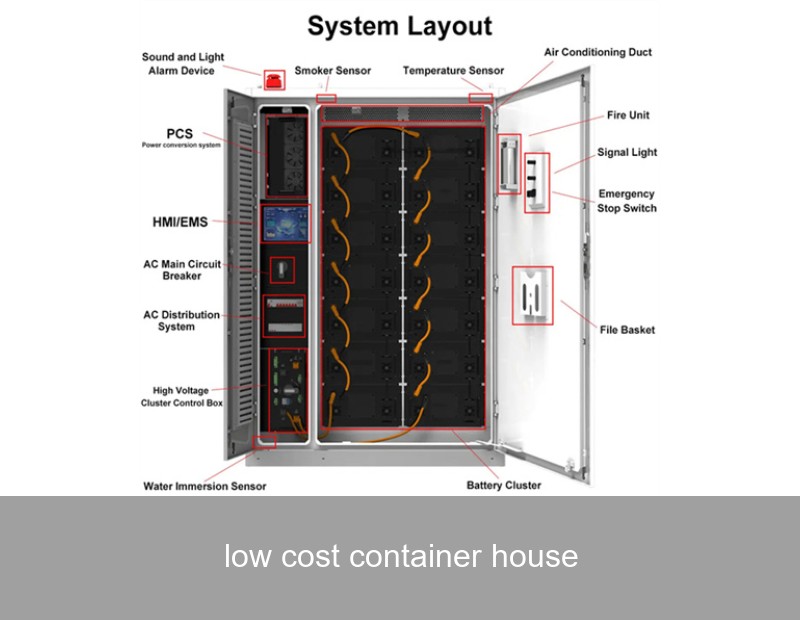
- Technology Implemented: The project utilized a scalable, rack-mounted lithium iron phosphate (LFP) battery system known for safety and long life—technology principles core to Highjoule's product lines like our H-IQ Commercial Series.
- Result: After one year, the community achieved 82% energy independence. The shared BESS reduced peak grid demand by 70%, and residents reported average energy cost savings of 60% compared to neighboring traditional apartments. The system paid for itself in under 4 years, a compelling figure for any affordable housing project.
Data sourced from project monitoring reports and published EU sustainable housing case studies, including references from the European Commission's energy efficiency platform.

Image: The interior comfort of a container home depends on reliable, stored power. Credit: Unsplash
The Highjoule Solution: Intelligent Power for Intelligent Homes
So, how does a global leader in advanced energy storage systems apply its knowledge to the scale of a low cost container house? The principles remain the same: intelligence, efficiency, and sustainability. While our large-scale systems power factories and microgrids, the underlying technology informs solutions for smaller, innovative dwellings.
For architects, builders, and forward-thinking homeowners specializing in container construction, Highjoule offers the expertise and scalable product philosophy. Imagine integrating a system like our H-IQ Residential platform, adapted for the high-efficiency demand of a container home. Its AI-driven energy management would:
| Challenge for Container Home | Highjoule-Inspired Solution |
|---|---|
| Managing temperature extremes (heating/cooling loads) | Intelligent load forecasting to pre-charge the battery before peak thermal demand. |
| Maximizing limited solar input | Advanced Maximum Power Point Tracking (MPPT) integration to harvest more energy from every hour of sunlight. |
| Ensuring system safety and longevity | LFP battery chemistry and proprietary battery management system (BMS) for unparalleled safety and cycle life. |
| Simple monitoring and control | User-friendly app to track energy production, consumption, and savings in real-time. |
Our approach isn't just about selling a battery; it's about providing a holistic power resilience strategy. For a container home development of 10, 20, or 50 units—common in some US and European affordable housing projects—this translates to designing a custom, scalable microgrid that turns each development into its own sustainable power hub.
Why This Expertise Matters
Building a low cost container house is an exercise in smart engineering. The energy system should be no different. Using components not designed to work in harmony can lead to inefficiency, safety risks, and a higher total cost of ownership. Partnering with a provider like Highjoule, with a deep bench of experience from the National Renewable Energy Laboratory (NREL)-validated technologies to real-world deployments, ensures the power system is as innovative and reliable as the home itself.
The Future of Low Cost Container Homes
The trend towards sustainable, affordable housing isn't slowing down. The next evolution of the low cost container house will be as a "prosumer" unit—not just consuming energy, but actively managing and optimizing it for the benefit of the occupant and the local grid. With vehicle-to-home (V2H) technology on the rise, your future container home's battery system could even integrate with an EV, creating a personal energy ecosystem.
The question is no longer "Can I build an affordable home from a container?" It's now, "How do I ensure the energy powering my innovative home is as smart, resilient, and cost-effective as the structure itself?"

Image: Smart energy management is the final, crucial piece of the container home puzzle. Credit: Unsplash
What's the first energy challenge you'd want to solve in your vision of a sustainable, affordable container home?
 Inquiry
 Online Chat