


Central Solar Fotovoltaicas: The Powerhouse Driving a Sustainable Energy Future
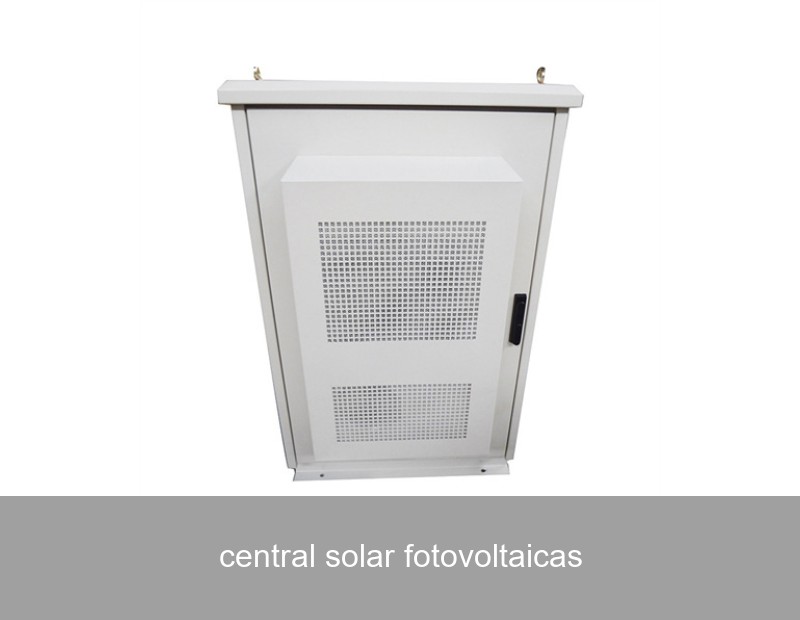
Imagine a vast field, not of crops, but of gleaming solar panels, silently converting sunlight into megawatts of clean electricity for thousands of homes and businesses. This is the reality of central solar fotovoltaicas, also known as utility-scale solar farms. These large-scale installations are becoming the backbone of the renewable energy transition, particularly in sun-rich regions. But as their deployment accelerates, a critical question emerges: how do we ensure this massive, intermittent power source is reliable, stable, and truly integrated into our grids? The answer lies not just in the panels themselves, but in the intelligent systems that manage, store, and deliver their power. Companies like Highjoule, a global leader in advanced energy storage systems since 2005, are providing the essential technological keys to unlock the full potential of these solar powerhouses.
Table of Contents
- The Rise of Solar Giants: More Than Just Panels
- The Grid Integration Challenge: Intermittency Meets Demand
- The Storage Solution: Batteries as the Game-Changer
- Case Study: Taming the Iberian Sun for Grid Stability
- Highjoule's Role: Intelligent Storage for Central Solar Plants
- Future Horizons: What's Next for Large-Scale Solar?
The Rise of Solar Giants: More Than Just Panels
Central solar fotovoltaicas are typically defined as ground-mounted solar installations with a capacity exceeding 5 MW, often reaching hundreds of megawatts. Unlike rooftop systems, they feed electricity directly into the transmission grid, serving as centralized power stations. According to the International Energy Agency (IEA), utility-scale solar PV is the lowest-cost option for new electricity generation in a significant majority of countries today. In the United States, the Solar Energy Industries Association (SEIA) reports that large-scale solar accounted for over 70% of all new solar capacity installed in 2023.
This growth isn't just about economics; it's a fundamental shift in infrastructure. Think of it as moving from decentralized wells to a massive, clean water reservoir. The scale brings efficiency and lower costs but introduces new complexities in logistics, grid management, and power delivery.
The Core Components of a Solar Farm
- PV Modules: Thousands of panels forming arrays.
- Inverters: Convert DC electricity from panels to grid-compatible AC.
- Tracking Systems: (Often used) to tilt panels and follow the sun.
- Substation & Grid Connection: The critical link to the high-voltage grid.
- The Missing Piece: Increasingly, a large-scale Battery Energy Storage System (BESS).

Credit: Photo by American Public Power Association on Unsplash
The Grid Integration Challenge: Intermittency Meets Demand
Here's the core challenge everyone in the energy sector is talking about: the sun doesn't shine on demand. Solar generation peaks in the middle of the day, which may not align with peak electricity demand in the evening. This creates the famous "duck curve" – a deep dip in net demand during sunny days followed by a steep ramp-up as the sun sets. This phenomenon, first identified in California, is now a reality for grid operators worldwide.
Without a solution, this intermittency can lead to:
- Grid Instability: Rapid fluctuations in voltage and frequency.
- Curtailment: Wasted solar energy because the grid can't absorb it.
- Reliance on Peaker Plants: Needing to fire up fossil-fuel plants to cover evening peaks, undermining solar's carbon benefits.
So, how do we make this abundant but fickle resource behave like a dependable, traditional power plant? The bridge between problem and solution is advanced energy storage.
The Storage Solution: Batteries as the Game-Changer
Coupling central solar fotovoltaicas with large-scale battery storage transforms them from intermittent sources into dispatchable assets. A Battery Energy Storage System (BESS) acts as a shock absorber and a power reservoir for the solar farm.
| Function | Benefit to Solar Farm | Benefit to the Grid |
|---|---|---|
| Energy Time-Shifting | Store excess midday generation for later use. | Flattens the duck curve, provides power during peak demand. |
| Frequency Regulation | Provides ultra-fast response to grid frequency changes. | Maintains grid stability and reliability. |
| Ramp Rate Control | Smooths out sudden drops in output (e.g., from cloud cover). | Prevents destabilizing spikes and dips in power supply. |
| Capacity Firming | Guarantees a certain power output level, making solar "firm." | Allows grid operators to rely on solar as a predictable resource. |
But not all storage solutions are created equal. The technology, chemistry, and—most importantly—the intelligence of the control system are paramount. This is where specialized expertise, like that developed by Highjoule over nearly two decades, becomes critical.
Case Study: Taming the Iberian Sun for Grid Stability
Let's look at a real-world example from Southern Europe. In 2022, a major 200 MW central solar fotovoltaicas plant in Spain faced significant curtailment issues and grid connection challenges. The local grid operator required new renewable plants to provide advanced grid services, including frequency response and predictable ramp rates.
The project developer integrated a 50 MW / 100 MWh DC-coupled battery storage system using Highjoule's HPS (Highjoule PowerStack) containerized solution. The system's advanced Adaptive Control Engine (ACE) was configured to perform multiple value streams simultaneously:
- Primary Frequency Response: The BESS responds to grid frequency deviations in less than 500 milliseconds.
- Solar Smoothing: The system buffers the plant's output, ensuring a maximum ramp rate of 10 MW per minute as required by the grid code.
- Energy Arbitrage: It stores approximately 30% of the midday surplus, dispatching it during the high-price evening period (7-10 PM).
The Results (18 months post-commissioning):
- Grid curtailment was reduced by 92%, maximizing solar energy utilization.
- The plant achieved full grid code compliance, avoiding financial penalties.
- Additional revenue from energy arbitrage increased the project's annual ROI by an estimated 18%.
- The BESS provided over 200 frequency response events, contributing measurably to Iberian grid stability.

Credit: Photo by Science in HD on Unsplash
Highjoule's Role: Intelligent Storage for Central Solar Plants
For a central solar fotovoltaicas developer, adding storage is a major capital decision. The system must be reliable, safe, and financially optimized over a 20+ year lifespan. Highjoule's solutions are engineered specifically for this harsh, large-scale environment. Our HPS series offers containerized, plug-and-play battery systems that seamlessly integrate with new or existing solar farms, whether AC- or DC-coupled.
What sets our approach apart is the software intelligence. Our Energy Management System (EMS) doesn't just store and release energy; it continuously analyzes market prices, grid conditions, weather forecasts, and the solar plant's performance to make millisecond decisions that maximize value. It allows a single asset to participate in multiple revenue streams—from wholesale energy markets to ancillary services—transforming a solar farm from a simple generator into a smart, grid-supportive power plant.
Furthermore, our focus on safety and longevity is non-negotiable. With thermal propagation prevention, state-of-the-art monitoring, and robust design for diverse climates, Highjoule systems are built to provide peace of mind for operators and financiers alike, ensuring the solar-plus-storage asset performs reliably day in and day out.
Key Highjoule Features for Solar Farm Integration
- DC-Coupled Optimized Design: Higher round-trip efficiency for direct PV charging.
- Multi-Port Inverter Technology: Enables simultaneous charging from PV and grid.
- Grid-Forming Inverter Capability: Can help "black start" the grid or operate in islanded microgrids.
- Predictive Analytics Suite: Uses AI to forecast solar yield and optimize storage dispatch.
Future Horizons: What's Next for Large-Scale Solar?
The future of central solar fotovoltaicas is undeniably hybrid. The combination of plummeting battery costs, sophisticated software, and evolving grid requirements is making "solar-plus-storage" the default model for new utility-scale projects. We are moving towards autonomous energy parks that can bid into markets, self-optimize, and act as virtual power plants (VPPs).
Emerging trends include the integration of green hydrogen production for long-duration seasonal storage and the use of artificial intelligence for ultra-precise forecasting and trading. The line between power generator and grid stabilizer will continue to blur.
As you consider the future of energy in your region, whether you're a project developer, a grid operator, or a policy maker, the question is no longer if storage is needed, but how to implement it most effectively. The success of your next central solar fotovoltaicas project may hinge on the intelligence and resilience of the storage solution you choose.
What specific grid challenge in your market do you believe solar-plus-storage is most urgently needed to solve?
 Inquiry
 Online Chat