


Malaysia Solar: How Much Does It Really Cost and Save in 2024?
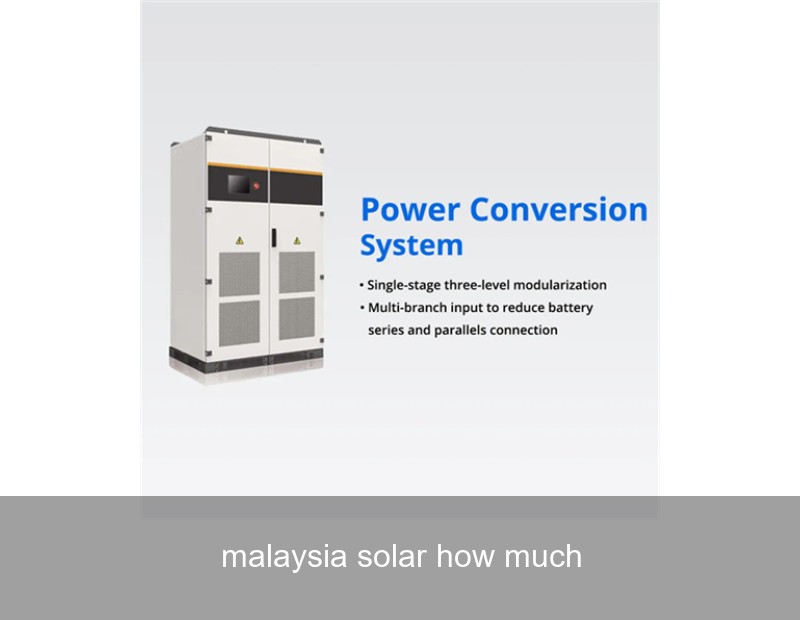
If you're a homeowner or business owner in Malaysia looking at the sun-drenched skies and wondering, "Solar power seems great, but Malaysia solar, how much does it actually involve?" you're asking the right question. The shift towards renewable energy is more than a trend; it's a smart financial and environmental decision. However, the initial price tag can be confusing. This article will demystify the real costs, long-term savings, and key factors for solar adoption in Malaysia, blending global insights with local context. As a leader in advanced energy storage, Highjoule understands that the true value of solar is unlocked when paired with intelligent storage, ensuring every kilowatt-hour you generate is put to optimal use.
Table of Contents
- The Solar Phenomenon: More Than Just Panels
- Breaking Down the "How Much": System Costs in Malaysia
- The Savings Equation: ROI and Payback Period
- Case Study: A Real-World Example from Selangor
- Beyond the Panels: The Critical Role of Energy Storage
- Highjoule's Smart Solutions for Maximizing Solar Investment
- Making the Decision: Key Considerations for Your Project
The Solar Phenomenon: More Than Just Panels
Globally, solar energy costs have plummeted by over 80% in the last decade. In sun-rich nations like Malaysia, this presents an unprecedented opportunity. The question isn't just about installation cost per watt; it's about energy independence, protection against rising utility rates, and contributing to a sustainable grid. The initial investment is, in reality, a long-term purchase of stable, clean electricity for the next 25+ years.

For context, Malaysia's average solar irradiance is about 4.21-5.56 kWh/m²/day, making it highly suitable for photovoltaic (PV) generation. This natural advantage is a key data point when calculating potential output and, consequently, financial returns.
Breaking Down the "How Much": System Costs in Malaysia
As of 2024, the cost of a solar photovoltaic (PV) system in Malaysia typically ranges from RM 18,000 to RM 45,000 for a residential setup, and can scale significantly for commercial and industrial projects. Let's break down what influences this range:
- System Size: Measured in kilowatt-peak (kWp). A typical Malaysian home may need a 4kWp to 12kWp system depending on consumption.
- Component Quality: Tier-1 solar panels, reputable inverters (string or micro), and mounting structures.
- Installation Complexity: Roof type, angle, shading, and required electrical upgrades.
- Additional Technologies: The inclusion of a battery energy storage system (BESS) is a game-changer, adding to initial cost but drastically increasing self-consumption and backup capability.
| System Size (kWp) | Estimated Price Range (RM) | Typical Annual Output (kWh)* |
|---|---|---|
| 4 kWp | 18,000 - 28,000 | 5,200 - 5,800 |
| 8 kWp | 32,000 - 45,000 | 10,400 - 11,600 |
| 12 kWp | 45,000 - 65,000 | 15,600 - 17,400 |
*Output depends on location and system efficiency. Data based on 2024 market averages.
The Savings Equation: ROI and Payback Period
The real answer to "Malaysia solar, how much?" is found in savings, not just cost. The primary mechanism is offsetting electricity bought from the grid at a rate of, say, RM 0.40 - RM 0.60 per kWh. With Net Energy Metering (NEM) schemes, you can export excess solar power to the grid for credit.
A well-designed system can achieve a return on investment (ROI) of 8-15% annually, with a payback period typically between 6 to 10 years. Given a system lifespan of 25+ years, you're looking at 15+ years of virtually free electricity post-payback.
Case Study: Light Industrial Factory in Selangor
Let's examine a real-world example. A light manufacturing facility in Selangor with an average monthly consumption of 12,000 kWh installed a 72kWp rooftop solar system in 2023.
- System Cost: RM 280,000 (inclusive of high-efficiency panels and inverters).
- Annual Solar Generation: ~94,000 kWh (based on monitoring data).
- Annual Savings: Approximately RM 45,000 (offsetting grid power at RM 0.48/kWh).
- Simple Payback Period: ~6.2 years.
- Additional Benefit: The system significantly reduced the facility's demand during peak tariff hours, further lowering costs.
This case highlights how commercial entities can treat solar as a capital investment with a clear and attractive financial return, while also meeting sustainability goals.
Beyond the Panels: The Critical Role of Energy Storage
Here's a key insight: solar panels only generate power when the sun shines. Without storage, excess energy goes to the grid (often at a lower credit rate), and you draw power from the grid at night. This is where the equation transforms. Integrating a battery storage system allows you to store daytime surplus for use in the evening, maximizing self-consumption to 70% or higher, and providing invaluable backup power during outages.

For the Malaysian market, where energy security and optimizing under NEM policies are crucial, storage is no longer a luxury—it's the key to a truly resilient and cost-optimal solar investment. The International Energy Agency (IEA) consistently highlights storage as the enabler for high renewable penetration.
Highjoule's Smart Solutions for Maximizing Your Solar Investment
At Highjoule, we provide more than just components; we deliver intelligent, integrated energy systems. For homeowners and businesses in Malaysia and globally, our solutions ensure your solar investment works harder.
Our H-Joule HomeStack and H-Joule GridPro battery storage systems are designed to seamlessly integrate with new or existing solar arrays. They feature:
- Advanced Lithium-Ion Technology: For high density, long cycle life, and safety.
- Intelligent Energy Management Software (EMS): This is the brain of the system. It learns your consumption patterns, weather forecasts, and tariff schedules to autonomously decide when to store, use, or export energy, maximizing your financial return.
- Scalable Design: Start with a base capacity and expand as your needs grow.
- Grid Services Ready: For larger commercial and microgrid applications, our systems can provide grid stabilization services, opening potential revenue streams.
By pairing Highjoule storage with your solar PV, you effectively create a personal microgrid, giving you control, resilience, and significantly better economics on the question of "Malaysia solar, how much it can save you."
Making the Decision: Key Considerations for Your Project
So, how do you move from curiosity to a concrete plan? Consider these steps:
- Audit Your Consumption: Analyze 12 months of electricity bills. Understand your usage patterns and peak demand.
- Get a Professional Site Assessment: A reputable installer will evaluate your roof's condition, orientation, and shading.
- Model with Storage: Insist on a financial model that includes a storage option. Compare the ROI and payback of solar-only vs. solar-plus-storage over a 15-year horizon.
- Choose Quality and Integration: Opt for tier-1 equipment and ensure the inverter and battery management system are designed to work together seamlessly, like Highjoule's integrated ecosystems.
- Understand Policies: Stay informed on the latest SEDA Malaysia and NEM guidelines.
Your Energy Future
The journey to solar is a journey toward energy independence. The initial cost is a stepping stone to decades of predictable, clean, and ultimately cheaper power. With the intelligent addition of storage, you're not just buying a system; you're investing in the resilience and efficiency of your home or business.
What specific energy challenge—be it high monthly bills, frequent outages, or a sustainability target—could a tailored solar-plus-storage solution solve for you in the next year?
 Inquiry
 Online Chat