


Understanding Panel Termodinamico Precio: A Smart Investment in Renewable Heating
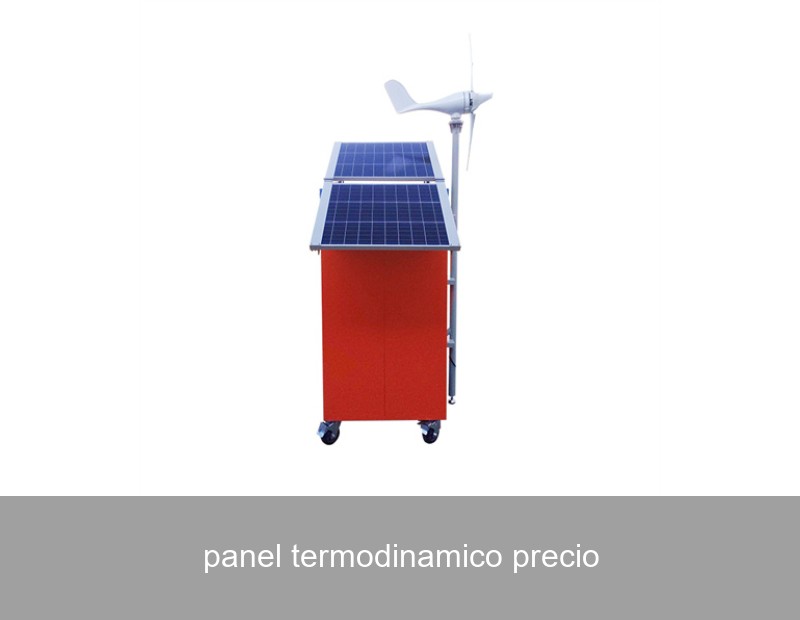
If you're exploring renewable heating solutions for your home or business in Europe or the US, you've likely come across the term "panel termodinamico." And one of the first questions that naturally arises is about the panel termodinamico precio – the cost. But here's a crucial insight: focusing solely on the initial price tag can be misleading. The true value lies in understanding the technology, its remarkable efficiency, and the long-term energy independence it provides. Unlike traditional solar thermal panels that rely solely on direct sunlight, thermodynamic panels absorb ambient heat from the air, rain, or even night-time conditions to heat water, working 24/7, year-round. This article will break down the factors influencing the cost, showcase real-world performance, and explain why this technology is a compelling component of a modern, integrated energy system.
Table of Contents
- What is a Thermodynamic Panel System?
- Key Factors Influencing Panel Termodinamico Precio
- Efficiency & Performance: The Data Behind the Investment
- Real-World Case Study: A Family Home in Bavaria
- Beyond Hot Water: Integration with Full Energy Systems
- Making the Right Decision for Your Needs
What is a Thermodynamic Panel System?
Let's demystify the technology first. A thermodynamic panel system, often called an air-to-water heat pump, is a renewable heating solution primarily for domestic hot water (DHW). Each panel, typically mounted on a roof or wall, contains a refrigerant fluid that circulates and evaporates at very low temperatures (as low as -15°C / 5°F), absorbing ambient thermal energy. This gas is then compressed, which significantly increases its temperature, and the heat is transferred to your water tank via a heat exchanger.
The key advantage? Continuous operation. Whether it's sunny, rainy, or dark, the system extracts heat. This makes it exceptionally reliable compared to solar thermal, which may require a boiler backup on cloudy days. Think of it as a refrigerator working in reverse: instead of expelling heat from an interior to cool it, it captures heat from the outside environment to warm your water.
Key Factors Influencing Panel Termodinamico Precio
The cost of a complete installed system varies significantly. Understanding these components helps you evaluate quotes effectively.
- System Size & Capacity: The number of panels (usually 1-2 for a typical home) and the capacity of the hot water cylinder (e.g., 200L, 300L) directly impact cost. A larger family needs a larger system.
- Installation Complexity: Roof type, accessibility, distance between panels and the indoor unit (the heat pump and tank), and existing plumbing/electrical work all affect labor costs. A retrofit might be more complex than a new-build installation.
- Component Quality: The compressor's efficiency (COP - Coefficient of Performance), the corrosion resistance of panels, and the insulation quality of the tank are critical. Higher-quality components command a higher initial price but offer better longevity and performance.
- Regional Incentives: In many European countries and U.S. states, substantial grants, tax credits, or rebates exist for renewable heating installations. For instance, the EU Renewable Energy Directive drives national incentives, while the U.S. offers federal tax credits. These can effectively reduce the net panel termodinamico precio by 30% or more.

Image Source: Unsplash - Thermodynamic panels on a residential roof.
Efficiency & Performance: The Data Behind the Investment
This is where the story gets compelling. The initial investment is offset by dramatic reductions in energy bills. A standard electric immersion heater might have a coefficient of performance (COP) of 1.0 (1 unit of electricity gives 1 unit of heat). A high-efficiency thermodynamic system can achieve an annual average COP of 3.0 to 4.0. This means for every 1 kW of electricity used to run the compressor, you gain 3-4 kW of thermal energy for your water.
Let's put that in a table for clarity:
| Heating Method | Average COP/Sfficiency | Annual Cost to Heat Water* (Example) | Carbon Footprint |
|---|---|---|---|
| Standard Electric Boiler | ~1.0 | $850 - $1,000 | Very High |
| Natural Gas Boiler | ~0.85-0.9 | $400 - $600 | High |
| Thermodynamic Panel System | ~3.5 | $200 - $300 | Low (and falling with greener grid) |
*Estimates based on average EU household, 150L/day at 55°C. Costs vary by region and energy prices.
The data speaks volumes. The system pays for itself over time, and its payback period shortens as conventional energy prices rise. Furthermore, its operation is clean, quiet, and requires minimal maintenance.
Real-World Case Study: A Family Home in Bavaria, Germany
Let's look at concrete data from a 2022 installation in a detached family home in Bavaria. The household of four replaced an aging electric water heater.
- System: 2 thermodynamic panels, 300L stainless steel tank, 1.8 kW heat pump unit.
- Total Installed Cost (pre-incentive): €5,800.
- German Federal Incentive (BEG): €1,800.
- Net Cost after Incentive: €4,000.
- Previous Annual Electric Cost for DHW: €920.
- New Annual Electric Cost for DHW: €260 (running the compressor).
- Annual Savings: €660.
- Simple Payback Period: Just over 6 years (€4,000 / €660).
Beyond the numbers, the family reported consistent hot water supply even during cold, cloudy winter periods and reduced their household CO2 emissions by an estimated 1.8 tonnes annually. This case perfectly illustrates why the panel termodinamico precio is an investment, not just an expense.
Beyond Hot Water: Integration with Full Energy Systems
While superb for hot water, the ultimate modern energy strategy involves integration. This is where a holistic approach from a company like Highjoule becomes invaluable. Imagine your thermodynamic panel providing efficient hot water, while a photovoltaic (PV) solar system on another part of your roof generates cheap electricity to power the panel's compressor and your home.
But the synergy goes further. The excess solar energy you don't use immediately can be stored in a Highjoule residential battery storage system. This stored energy can then power your thermodynamic panel at night, making your hot water virtually free and 100% renewable. For larger commercial or industrial applications, Highjoule's advanced battery energy storage systems (BESS) and microgrid solutions can integrate renewable generation (solar PV, wind), manage peak loads, and ensure resilience, with efficient thermal systems like thermodynamics playing a key role in reducing overall site energy demand.
Highjoule's expertise lies in designing and deploying these intelligent, integrated systems. We don't just look at one component; we analyze your entire energy profile to create a solution that maximizes savings, sustainability, and security. Our smart energy management software can optimize when your thermodynamic system runs, prioritizing the use of self-generated solar power to maximize your return on investment across all technologies.

Image Source: Unsplash - Integrated home energy system concept.
Making the Right Decision for Your Needs
So, how should you approach the panel termodinamico precio question? Follow this logical ladder:
- Phenomenon: High and volatile energy bills, desire for energy independence, and reducing carbon footprint.
- Data: Analyze your current hot water energy consumption and costs. Get site-specific quotes that detail all equipment and labor.
- Case: Research local case studies (like the Bavarian example) and ask installers for references. Investigate available incentives in your area (check DSIRE USA for the U.S. or your national energy agency in Europe).
- Insight: View the system not in isolation but as a potential cornerstone of a broader energy ecosystem. The optimal solution might combine thermodynamics with PV and battery storage for ultimate efficiency.
Ready to Explore Your Personalized Energy Solution?
The journey to lower bills and a sustainable energy footprint starts with a clear understanding of your options. While the thermodynamic panel offers a fantastic, efficient solution for hot water, its value multiplies when intelligently combined with other technologies. At Highjoule, we specialize in creating these tailored, future-proof energy systems for homes, businesses, and communities. What would your ideal resilient and renewable energy setup look like, and how can we help you build it?
 Inquiry
 Online Chat