


Unlocking Solar Potential: How Malaysia's Solar Panel Incentive Can Inform Your Energy Strategy
Across the globe, from sunny California to industrial Germany, businesses and homeowners are looking to the sun for power. The motivation is clear: energy independence, cost savings, and a tangible contribution to sustainability. But the journey from sunlight to reliable electricity isn't just about installing panels. It's about smart policy, smart technology, and smart financial planning. Look at Malaysia's solar panel incentive programs, for instance. They offer a fascinating case study in how governments can catalyze renewable adoption, and more importantly, they highlight a universal truth: to truly harness solar power, you need to think about storage. This is where the conversation gets exciting for energy users everywhere.
The Malaysia Solar Panel Incentive Model: A Blueprint for Growth
Malaysia, blessed with high solar irradiance, has implemented a series of proactive policies to boost its renewable energy mix. The key mechanism has been the Feed-in Tariff (FiT), which later evolved into more market-driven schemes like the Net Energy Metering (NEM) program. The NEM program allows solar system owners to offset their electricity bills by exporting surplus solar energy to the national grid. The latest iteration, NEM 3.0, aims to accelerate adoption further.
But what does this mean in practice? Let's break it down:
- Financial Leverage: Incentives lower the upfront capital expenditure (CAPEX) hurdle, improving the return on investment (ROI) for solar projects.
- Reduced Operational Costs: By generating their own power and selling excess back, commercial and industrial users see a direct reduction in their utility bills.
- Energy Security: It's a step towards decoupling from grid price volatility and fossil fuel dependence.
However, as early adopters in markets like Germany and California have learned, simply exporting surplus solar has limitations. The grid can only absorb so much, and the value of exported power may fluctuate. This is the pivotal moment in any solar journey—realizing that generation is only half the equation.

Image Source: Unsplash - A commercial solar installation, similar to those boosted by incentive programs globally.
The Data Driving the Shift
According to the International Renewable Energy Agency (IRENA), Malaysia saw its solar PV capacity grow from 286 MW in 2015 to over 1,800 MW by the end of 2022, largely driven by supportive policies. This pattern mirrors the early growth curves in Europe and the U.S., where incentives sparked initial adoption. The lesson is clear: effective policy creates markets. But sustainable energy independence requires the next piece of the puzzle.
Beyond Panels: The Critical Role of Energy Storage
This is the core insight for any business or community evaluating solar: generation without control is an opportunity lost. Solar panels produce power when the sun shines, which often doesn't align perfectly with when your facility needs it most. Without storage, you're forced to buy expensive power from the grid at night or during peak hours, while potentially receiving less value for your midday surplus.
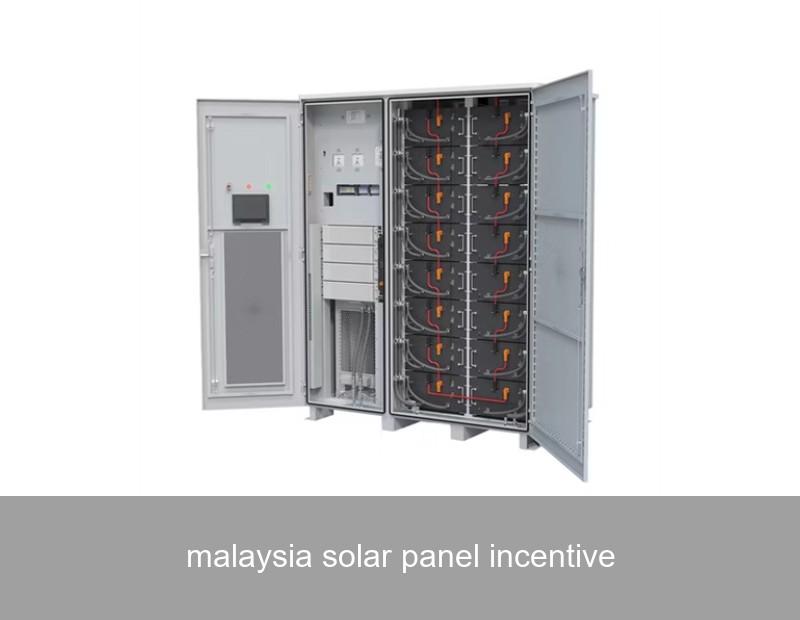
An advanced Battery Energy Storage System (BESS) transforms a solar installation from a simple generator into a smart, resilient energy asset. It allows you to:
- Store Excess Solar: Capture surplus daytime energy for use in the evening, maximizing self-consumption.
- Peak Shaving: Avoid demand charges by discharging stored energy during periods of high grid usage.
- Backup Power: Provide critical uptime during grid outages, ensuring operational continuity.
How Advanced Storage Solutions Maximize Incentive Benefits
This is where Highjoule's expertise becomes pivotal. As a global leader in advanced energy storage since 2005, we design systems that don't just store energy—they optimize it. For a business leveraging a Malaysia solar panel incentive or similar schemes in Europe or the U.S., integrating a Highjoule BESS is the strategic upgrade.
Our Intelligent Energy Platform (IEP) acts as the brain of the system. It doesn't just react; it forecasts. Using weather data and consumption patterns, it autonomously decides when to charge, store, or discharge energy to achieve the lowest possible cost and highest reliability.
| Solar-Only System | Solar + Highjoule BESS |
|---|---|
| Exports surplus, reliant on grid buy-back rates | Stores surplus for later use, maximizing self-reliance |
| Vulnerable to evening/peak grid prices | Actively avoids peak charges through "peak shaving" |
| No power during grid outages | Provides seamless backup power for critical loads |
| Limited financial optimization | IEP software maximizes ROI through intelligent energy arbitrage |
For commercial and industrial applications, our containerized Megapack BESS solutions offer utility-scale storage in a modular, scalable format. For larger residential and small commercial sites, our Powerwall-integrated systems provide robust, all-in-one solutions. We see storage not as an add-on, but as the essential component that unlocks the full economic and operational promise of solar incentives.
Real-World Impact: A Malaysian Industrial Case Study
Let's make this concrete with a real example. A major automotive component manufacturing plant in Selangor, Malaysia, took advantage of the NEM 3.0 scheme to install a 1.2 MW rooftop solar array. Their goal was to cut operating costs. However, their energy team, advised by forward-thinking integrators, recognized the limitation of solar-only export.
They partnered with Highjoule to integrate a 500 kWh / 1 MWh battery storage system alongside their new solar PV. The results over the first year of operation were compelling:
- Self-Consumption of Solar increased from ~40% to over 85%.
- Demand Charges from the grid were reduced by an average of 22% month-over-month.
- Overall Energy Cost Savings exceeded initial projections by 35%, dramatically accelerating the payback period on the combined solar+storage investment.
- The system also provided ride-through capability during several brief grid disturbances, preventing costly production halts.
This case, documented in part by the Sustainable Energy Development Authority (SEDA) Malaysia, exemplifies the multiplier effect of pairing incentives with intelligent storage. The plant didn't just use the incentive to buy panels; they used it to build a smarter, more resilient energy infrastructure.

Image Source: Unsplash - An engineer performing maintenance on a containerized BESS unit.
The Future Outlook for Solar and Storage
The global trend is unmistakable. As noted by the International Energy Agency (IEA), solar PV is set to become the largest source of installed power capacity globally, but grid integration and flexibility are key challenges. Markets that started with simple feed-in tariffs are now evolving to value flexibility, demand response, and grid services—all functions enabled by sophisticated storage like Highjoule's systems. The lesson from Malaysia's progressive incentives is a preview of what's to come worldwide: the future belongs to integrated, intelligent solar-plus-storage solutions.
Your Energy Transition: What's the Next Step?
Whether you're in Frankfurt, Texas, or Kuala Lumpur, the principles are the same. Government incentives are a powerful catalyst, but they are the beginning of the journey, not the end. The real value is captured when you pair generation with intelligent storage and control. As you explore the solar incentives available in your region, ask yourself: Is your goal merely to install panels, or is it to build a truly resilient, cost-optimized, and sustainable energy foundation for the future? How much more could you save—and secure—by designing your system around storage from the start?
 Inquiry
 Online Chat