


Choosing the Right Microinverter Suppliers: A Guide to Smarter Solar Energy
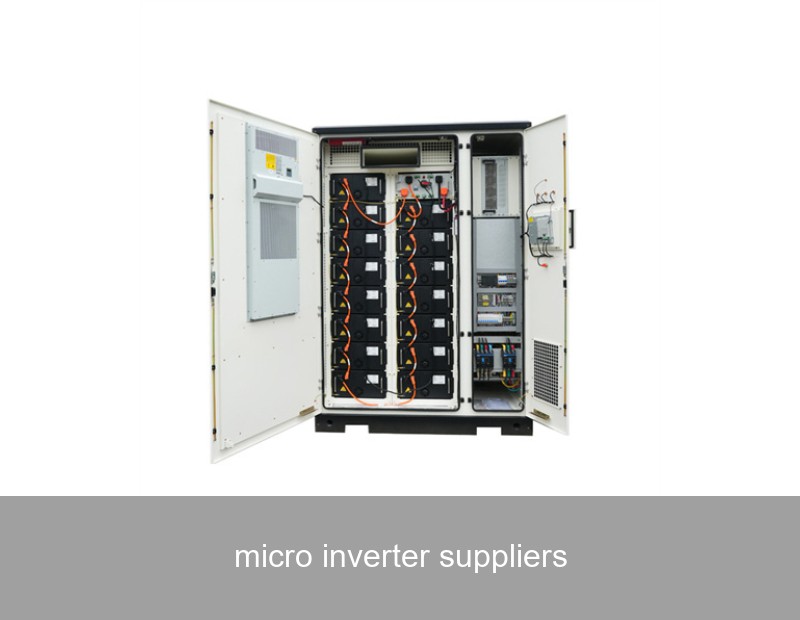
Have you ever wondered why some rooftop solar systems seem to generate more power, even on cloudy days or when a panel is shaded? The secret often lies not just in the panels themselves, but in a small, powerful device called a microinverter. As homes and businesses across Europe and the U.S. seek greater energy independence and efficiency, the choice of microinverter suppliers has become a critical decision. Unlike traditional string inverters, microinverters optimize each solar panel individually, turning your entire array into a team of high performers rather than a chain limited by its weakest link.
Table of Contents
What Are Microinverters and Why Do They Matter?
Let's break it down simply. A solar panel produces direct current (DC) electricity. Your home and the grid use alternating current (AC). An inverter's job is to convert DC to AC. A traditional 'string' inverter connects a series of panels together, which means the output of the entire string is capped by the panel performing the worst due to shade, dirt, or mismatch. Microinverters, however, are installed on each individual panel. This modular approach offers significant advantages:
- Enhanced Energy Harvest: Panel-level optimization can lead to 5-25% more energy production over a system's lifetime, especially on roofs with complex shading or multiple orientations.
- Increased Safety: They convert DC to AC right at the panel, eliminating dangerous high-voltage DC wiring on your roof.
- Superior Monitoring: You can track the performance of every single panel in real-time, pinpointing issues instantly.
- Design Flexibility & Scalability: Systems are easier to design and expand, as you're not constrained by string sizing rules.
Given these benefits, partnering with the right microinverter suppliers is not just about buying a component; it's about securing the brain of your solar energy system.
Key Criteria for Evaluating Microinverter Suppliers
Not all suppliers are created equal. When assessing microinverter suppliers, you should look beyond the price tag and consider the entire ecosystem they provide.
| Criteria | What to Look For | Why It Matters |
|---|---|---|
| Product Performance & Warranty | High conversion efficiency (e.g., >96%), long warranty (25 years is industry-leading), proven reliability in local climates. | Directly impacts your long-term energy yield and total cost of ownership. A 25-year warranty aligns with panel life. |
| Monitoring & Software | Intuitive, detailed platform offering panel-level insights, alerts, and energy reporting. | Transforms your system from a passive generator into an active energy management tool. |
| Technical Support & Certification | Local or responsive support, installer training programs, UL/IEC certifications for your market. | Ensures safe, compliant installation and quick resolution of any issues. |
| System Integration | Compatibility with a wide range of panels and, crucially, with leading energy storage systems. | Future-proofs your investment, allowing you to easily add batteries for backup and self-consumption. |
This is where a holistic approach pays off. At Highjoule, we understand that the inverter is the heart of a modern energy system. That’s why our smart storage solutions are designed for seamless integration with top-tier microinverter suppliers. We ensure that whether you're generating solar power or storing it in our Highjoule battery systems, the entire ecosystem works in perfect harmony to maximize your energy independence.
Case Study: Maximizing Output in a Challenging Climate
Let's look at a real-world example from Hamburg, Germany. A mid-sized commercial bakery wanted to reduce its carbon footprint and energy costs. Their flat roof had intermittent shading from nearby structures and vent stacks. A string inverter design was projected to suffer significant losses.
The Solution: A 50kW solar array was installed using a leading microinverter brand, paired with a Highjoule HI-Stack commercial battery system. The microinverters ensured each panel operated at peak efficiency despite the shading.
- Annual Energy Harvest: The system produced 12% more energy in its first year compared to a simulated string inverter model, as verified by independent monitoring software.
- Self-Consumption Rate: By intelligently storing excess solar energy in the Highjoule battery, the bakery increased its on-site solar consumption from ~30% to over 70%, drastically cutting grid imports during peak rate periods.
- ROI: The combined efficiency gain and peak-shaving capability shortened the projected payback period by nearly 18 months.

Image Source: Unsplash (Representative image of a commercial solar installation)
This case highlights that the choice of microinverter suppliers, when combined with intelligent storage, directly translates into measurable financial and operational benefits.
Beyond Hardware: The Value of a Complete System Provider
While component suppliers are vital, the future of energy lies in integrated, intelligent systems. This is the core philosophy at Highjoule. We go beyond being just another component vendor. As a global leader in advanced energy storage since 2005, we provide complete, smart power solutions for residential, commercial, and microgrid applications.
For homeowners and businesses evaluating microinverter suppliers, the end goal is rarely just the inverter—it's reliable, clean, and affordable power. Our role is to bridge that gap. Our battery systems, like the residential Highjoule HI-PowerWall and the scalable commercial HI-Stack, are engineered to communicate flawlessly with leading microinverter technologies. This creates a unified platform where:
- Solar production is optimized at the panel level.
- Excess energy is stored with industry-leading round-trip efficiency.
- Smart software manages energy flow based on weather, usage patterns, and tariff rates, a concept explored in depth by resources like the National Renewable Energy Laboratory's reports on grid integration.
By choosing partners who understand this integrated approach, you're not just installing equipment; you're building a resilient energy asset.
Future-Proofing Your Investment: Trends to Watch
The energy landscape is evolving rapidly. Here are two key trends that underscore the importance of choosing forward-thinking microinverter suppliers and system partners:
1. The Rise of Vehicle-to-Grid (V2G) and Home (V2H)
Your electric vehicle will soon be a mobile battery. Future-ready microinverter and storage systems will need to manage bi-directional power flows, not just from solar and stationary batteries, but from EVs as well. Interoperability standards will be key.
2. Grid Services and Virtual Power Plants (VPPs)
Utilities are increasingly incentivizing distributed energy resources to act as a grid resource. An advanced system with intelligent inverters and storage, like those Highjoule specializes in, can participate in these programs, generating revenue by providing grid stability services. You can learn more about this evolving market from authorities like the U.S. Department of Energy.

Image Source: Unsplash (Representative image of an energy management system)
So, as you research microinverter suppliers, ask yourself and them: Is this partnership setting me up for the energy system of tomorrow, or just solving today's problem? What does your ideal energy-independent future look like, and how can the right technology partner help you build it, one optimized kilowatt-hour at a time?
 Inquiry
 Online Chat