


Microinversor para Panel Solar: The Smart Heart of Your Modern Solar System
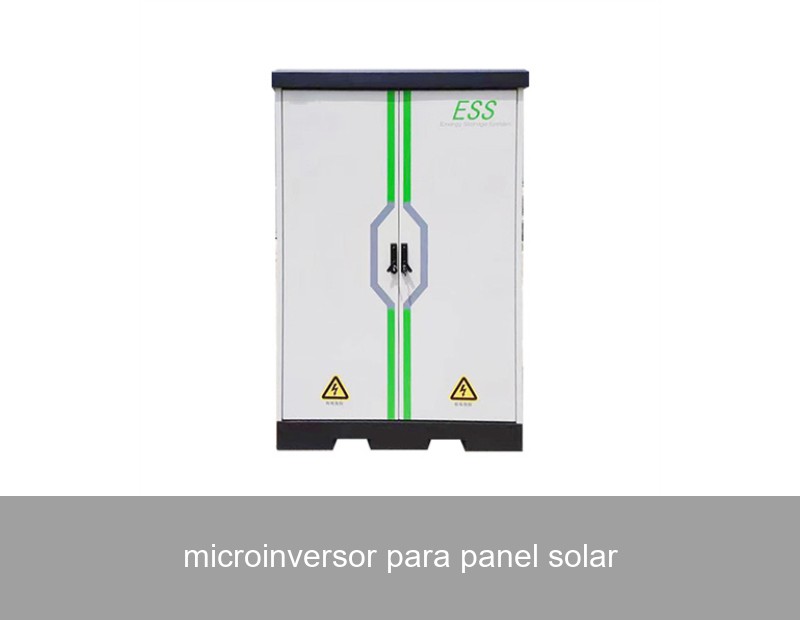
If you're considering solar power for your home or business, you've likely heard about solar panels. But the real magic, the component that truly unlocks their potential, often goes unnoticed: the microinversor para panel solar. Unlike traditional string inverters, a microinverter is a small device attached to each individual solar panel. It's a game-changer for efficiency, safety, and system intelligence. As energy prices remain volatile and the demand for reliable, clean power grows, understanding this key technology is the first step toward a truly optimized energy future. Let's dive into why the microinverter is becoming the preferred choice for savvy homeowners and businesses across Europe and the US.
What is a Solar Panel Microinverter?
In simple terms, a microinversor para panel solar is a miniaturized power converter. Its primary job is to convert the direct current (DC) electricity generated by a single solar panel into the alternating current (AC) electricity used in your home and fed back to the grid. Think of it as giving each solar panel its own "brain" and converter. This modular approach stands in stark contrast to the older "string inverter" setup, where panels are linked in a series (like old Christmas lights) and send DC power to one central inverter. This fundamental architectural difference is what drives all the advantages of microinverters.

Image Source: Unsplash (Representative image of solar technology)
Microinverter vs. String Inverter: A Clear Comparison
Choosing between technologies can be confusing. This table breaks down the core differences:
| Feature | Microinverter System | Traditional String Inverter |
|---|---|---|
| Power Conversion | At each panel (Distributed) | At a central unit (Centralized) |
| Shade & Panel Mismatch | Minimal impact. One shaded panel doesn't affect others. | Significant impact. One shaded panel reduces output of the entire string. |
| Monitoring | Panel-level performance data. | System-level data only. |
| Expansion | Easy and flexible. Add panels with their own microinverters. | Complex, often limited by central inverter capacity. |
| Single Point of Failure | No. If one microinverter fails, the rest keep working. | Yes. If the central inverter fails, the whole system stops. |
| Installation & Safety | No high-voltage DC wiring on the roof, safer. | High-voltage DC strings run across the roof. |
Key Benefits of a Microinverter System
So, why does this matter for your home or business? The distributed architecture of a microinversor para panel solar system delivers tangible advantages:
- Maximized Energy Harvest: This is the biggest win. In the real world, roofs have chimneys, vents, and occasional shade from trees. With a string inverter, the output of all panels is limited to the output of the weakest panel. Microinverters ensure each panel operates independently at its maximum potential, boosting overall energy production by 5-25% over the system's life, according to industry data.
- Unmatched Monitoring and Diagnostics: Imagine knowing the exact output of every single panel on your phone. With panel-level monitoring, you can instantly spot if a panel underperforms due to dirt, damage, or a technical fault. This turns system maintenance from guesswork into a precise science.
- Enhanced Safety: By converting DC to AC right at the panel, you eliminate dangerous high-voltage DC wiring running across your roof and into your home. This makes the system safer for both installers and firefighters.
- Design Flexibility and Scalability: Have a complex roof with multiple orientations? Want to add panels later? Microinverter systems handle this effortlessly, allowing you to build a solar array that perfectly fits your unique roof and evolving energy needs.
How Highjoule Integrates Advanced Microinverter Technology
At Highjoule, we don't just install components; we engineer integrated energy solutions. Our approach to the microinversor para panel solar is a perfect example. We select and integrate top-tier microinverter technology into our smart energy ecosystems because it aligns perfectly with our core philosophy: maximizing efficiency, reliability, and intelligence for every customer.
For our residential and commercial clients, this means our solar-plus-storage systems are inherently more robust. When paired with a Highjoule home battery system, the AC-coupled nature of microinverters creates a more seamless and resilient energy setup. During a grid outage, our systems can more easily island critical circuits, and when the sun is shining, every ounce of potential solar yield is captured and can be stored in your Highjoule battery for use at night. It's this holistic design—where the solar generation, intelligent storage, and energy management work in perfect harmony—that delivers true energy independence and cost savings.
Real-World Impact: A Case Study from Southern Spain
The theory is solid, but what does it look like on the ground? Let's examine a project in Andalusia, Spain—a region with abundant sun but also specific challenges.
The Challenge: A medium-sized winery with a large, multi-angled roof surface wanted to reduce its operational costs and carbon footprint. The roof faced east-west, meaning panels would receive peak sun at different times. Partial afternoon shade from a historic oak tree also affected one section.
The Solution: A Highjoule-designed 50kW solar system utilizing premium microinverters was installed. This allowed for panels to be placed on both roof planes without performance penalty and mitigated the shading issue entirely.
- Energy Yield: The system outperformed a simulated string-inverter design by 18% annually, a critical gain for the winery's energy-intensive cooling processes.
- Monitoring Insight: In the first month, panel-level data flagged a single underperforming module, which was quickly diagnosed as a manufacturing defect and replaced under warranty—an issue that would have been nearly invisible with a string system.
- ROI: The increased production shortened the calculated payback period by over 1.5 years.
This case underscores that the value of a microinversor para panel solar system isn't just technical; it's financial and operational. For more on the importance of module-level performance, see resources from the National Renewable Energy Laboratory (NREL).

Image Source: Unsplash (Representative image of commercial solar installation)
The Future of Solar: Intelligent, Modular, and Resilient
The trend is clear: the future of solar energy is distributed, intelligent, and integrated. The microinversor para panel solar is the cornerstone of this evolution. As we move towards smarter grids and homes that not only consume but also actively manage and store energy, the ability to control and monitor power at its very point of generation becomes paramount. This technology is a key enabler for virtual power plants and peer-to-peer energy trading models being piloted in places like California and the EU.
Furthermore, the rise of electric vehicles (EVs) as mobile storage units will demand even more from our home energy systems. An AC-coupled ecosystem with microinverters and a compatible battery system, like those offered by Highjoule, is ideally positioned to integrate EV bidirectional charging, creating a truly comprehensive and resilient personal energy network. For a deeper look at grid integration, the U.S. Department of Energy provides valuable context.
Taking the Next Step with Highjoule
Choosing the right solar technology is a significant decision. It's about more than just price per watt; it's about long-term performance, safety, and the flexibility to adapt to your future energy lifestyle. At Highjoule, with nearly two decades of experience, we provide end-to-end solutions—from expert consultation and system design using technologies like advanced microinverters, to the installation of our cutting-edge battery storage and intelligent energy management software.
We believe in empowering our customers with not just technology, but with the knowledge to make informed choices. So, as you contemplate your shift to solar, we leave you with this question: When evaluating your solar options, how much value do you place on maximizing every possible kilowatt-hour from your roof over the next 25 years, and having the precise data to prove it?
 Inquiry
 Online Chat