


Understanding Micro Solar Battery Price: A Smart Investor's Guide
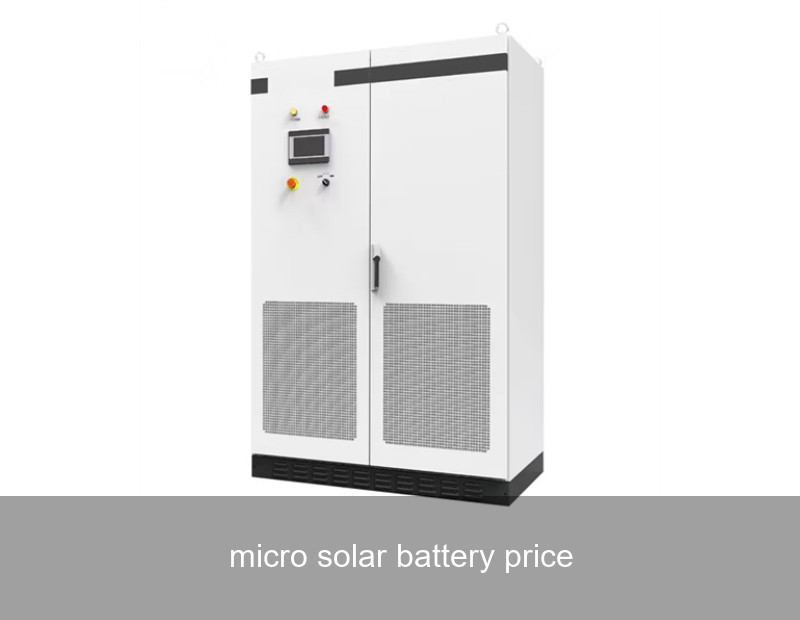
Have you ever looked at your electricity bill, then at your sunny rooftop, and wondered if there's a better way? You're not alone. Across Europe and the U.S., a quiet revolution is taking place in how homes and small businesses manage power. At the heart of this shift is the micro solar battery—a compact system that stores energy from your solar panels for use anytime. But when considering this upgrade, the first question that often comes to mind is: what drives the micro solar battery price, and is it worth the investment? Let's demystify the costs and explore the long-term value of bringing energy independence right to your doorstep.
Table of Contents
- The Price Puzzle: More Than Just a Sticker Shock
- Key Factors Influencing Your Micro Solar Battery Price
- Real-World Value: A Case Study from Bavaria
- Looking Beyond the Price Tag: The Highjoule Advantage
- Making the Decision: Is It Right for You?
The Price Puzzle: More Than Just a Sticker Shock
It's a common scene: a homeowner gets a quote for a solar-plus-storage system and feels a jolt of surprise. The initial micro solar battery price can seem significant. But here's the crucial perspective shift: you're not just buying a battery; you're buying a personal power infrastructure. Think of it like this. A decade ago, the price of a large-screen TV was a major investment. Today, the value it provides in entertainment, connectivity, and even work is undeniable. Similarly, a micro battery system is an investment in resilience, savings, and sustainability. The price encompasses the battery cells, sophisticated battery management software, a compatible inverter, professional installation, and decades of future energy security. The question isn't just "what does it cost?" but "what does it save and secure for me over its 15+ year lifespan?"
Key Factors Influencing Your Micro Solar Battery Price
To understand the quotation you receive, let's break down the core components that shape the final cost. It's a blend of hardware, software, and service.
1. Battery Capacity & Chemistry: The Heart of the System
Capacity, measured in kilowatt-hours (kWh), is the most straightforward factor. A larger battery that can power your home through a longer outage will cost more. However, the type of battery chemistry is equally important. Most modern systems, including those from Highjoule, utilize Lithium Iron Phosphate (LFP) chemistry. Why? LFP batteries offer a superior combination of safety, longevity (often over 6,000 cycles), and stable performance, which provides better long-term value compared to older technologies.
2. System Integration & Intelligence
A battery alone is inert. Its true value is unlocked by the power conversion system (inverter) and the energy management software. An advanced, integrated system like the Highjoule HES Series for homes and small businesses doesn't just store energy; it intelligently decides when to charge from solar, when to discharge to power your home, and when to potentially sell excess back to the grid based on time-of-use rates. This "brain" is a significant part of the value proposition, optimizing every kilowatt-hour to maximize your return.
3. Installation Complexity & Local Incentives
Is your electrical panel modern? Is the installation site easily accessible? These logistical details affect labor costs. More importantly, government incentives can dramatically alter your net price. In the U.S., the federal Investment Tax Credit (ITC) currently covers 30% of the installed cost of a solar battery system. In parts of Europe, grants and favorable feed-in tariffs are common. Always factor these into your final calculation.
| System Size | Use Case | Estimated Price Range (USD/EUR) | Key Consideration |
|---|---|---|---|
| 5 - 10 kWh | Essential loads backup, basic self-consumption | $8,000 - $15,000 | Covers refrigeration, lights, and critical circuits for hours. |
| 10 - 15 kWh | Whole-home backup for shorter outages, high self-consumption | $14,000 - $22,000 | Can power most homes for a full day, maximizing solar use. |
| 15+ kWh | Full energy independence, off-grid capability, EV charging | $20,000+ | For large homes, electric vehicles, or complete grid detachment. |
Real-World Value: A Case Study from Bavaria
Let's move from theory to practice. Consider the Müller family in southern Germany. In 2022, they installed a 9.8 kWp solar array with a 13.5 kWh Highjoule HES battery at their home. The gross micro solar battery price for the storage component was approximately €11,500.
Now, let's look at the data from their first full year of operation:
- Solar Self-Consumption Rate Increased from 35% to 92%: Before the battery, most of their daytime solar energy was sold to the grid at a low rate. Now, they use it directly at night.
- Annual Grid Electricity Purchases Reduced by 85%: They now buy only minimal power during prolonged cloudy periods in winter.
- Bill Savings & Earnings: Between avoided electricity purchases (at a high per-kWh price) and optimized feed-in of true excess, the system generates approximately €1,800 in annual savings/revenue.
- Peace of Mind: During three separate grid outages in their village, their home had uninterrupted power.
With a simple payback period on the battery component of under 7 years (factoring in the German BAFA storage subsidy), and a warranty of 10 years with an expected lifespan of 15-20 years, the long-term financial and resilience benefits are clear. The price transformed from a cost into a high-yield investment.

Image: A modern home energy setup featuring solar panels and an exterior battery storage unit. Source: Unsplash (Photographer: Andreas Gücklhorn)
Looking Beyond the Price Tag: The Highjoule Advantage
As a global leader since 2005, Highjoule understands that the true measure of a system isn't its sticker price, but its total cost of ownership. This is where our expertise in intelligent, efficient, and sustainable power solutions directly impacts your investment's value.
Our HES (Home Energy Stack) series, designed for the European and North American markets, is built with LFP chemistry for safety and longevity. Its modular design allows you to start with a base capacity and expand later, providing flexibility as your needs evolve. More importantly, our proprietary EnergyOS™ software platform turns the system into an active asset. It learns your consumption patterns, integrates with dynamic utility tariffs (like the UK's Octopus Agile or time-of-use rates in California), and automatically chooses the most economical strategy—charging from excess solar, discharging during peak rates, or providing grid services.
This intelligence means your system pays back faster. When you evaluate the micro solar battery price, ask not just about the hardware, but about the software that makes it smart and the service that keeps it running for decades. Highjoule provides a comprehensive warranty and remote monitoring, ensuring your system delivers on its promise year after year.
Making the Decision: Is It Right for You?
So, how do you move from consideration to action? Start by asking these targeted questions:
- What are my primary goals? (Bill savings, backup power during outages, maximizing green energy use, participating in grid programs?)
- What is my current and future electricity consumption? (Do you plan to buy an electric vehicle or switch to a heat pump?)
- What are the specific incentives and net metering policies in my region? (This is critical for an accurate financial model.)
- Am I choosing a provider with proven, integrated technology and local service support?
The journey to energy independence is a significant one, but it begins with a single, informed step. The micro solar battery price is the entry ticket to a future of greater control, resilience, and sustainability. What will your first step be—will you start by auditing your last 12 months of electricity bills to see exactly how a micro battery could reshape your energy landscape?
 Inquiry
 Online Chat