


Microgrid Size: How Much Power Do You Really Need?
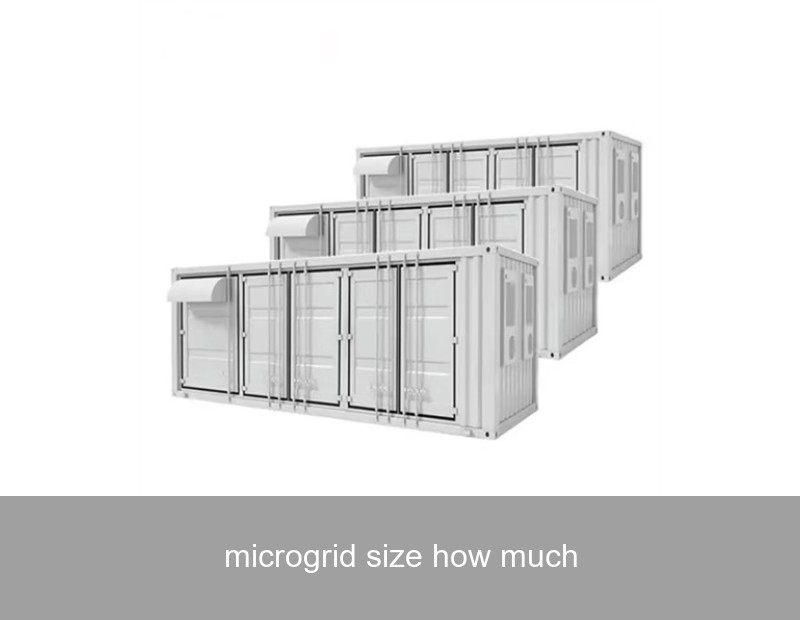
So, you're considering a microgrid. That's a smart move towards energy independence and resilience. But one of the very first—and most crucial—questions that pops up is: microgrid size, how much capacity is right for my facility, community, or project? It's not a one-size-fits-all answer. Sizing a microgrid is a sophisticated balancing act between your power needs, your resilience goals, and your budget. Get it right, and you have a reliable, cost-effective energy asset for decades. Get it wrong, and you could face unnecessary upfront costs or, worse, a system that can't keep the lights on when you need it most. Let's demystify the process.
Key Factors Determining Your Microgrid Size
Think of sizing a microgrid like planning the engine and fuel tank for a custom vehicle. The "engine" (your power generators) needs to handle the steepest hill (peak demand), while the "fuel tank" (your energy storage) needs enough capacity for the journey (duration of an outage or sunless period). Four primary pillars define this:
- Load Profile: This is your energy fingerprint. How much power (kW) do you use every hour of the day, every season of the year? A hospital has a flat, 24/7 critical load. A factory might have massive spikes when heavy machinery starts. Sizing starts with deeply understanding these patterns.
- Resilience Objectives: What are you protecting against? Is the goal to survive a 2-hour grid blip, a 24-hour storm, or achieve near-total energy independence? The required duration of backup directly scales your energy storage (MWh) needs.
- Resource Availability: How much sun does your roof get? Is there space for wind turbines? The size and output of your renewable generation (solar PV, wind) determine how much "free fuel" you have to charge your storage and offset grid purchases.
- Economic & Policy Drivers: Local utility rates (especially demand charges), net metering policies, and incentives for renewables or storage can dramatically shift the optimal economic size. Sometimes, a larger system has a faster payback.
The Critical kW vs. MWh Distinction
This is where many get tripped up. Power (kW) is the *rate* of energy flow—how fast you can pour water from a hose. Energy (MWh) is the total *amount*—the volume of water in the tank. Your generator and inverter size must meet your peak kW demand. Your battery bank size must meet your required MWh of backup energy. Confusing the two leads to a system that can start your large chiller (high kW) but can't run it for more than 10 minutes (insufficient MWh).
The Microgrid Sizing Process: From kW to MWh
A professional sizing exercise isn't guesswork; it's data-driven engineering. Here’s a simplified view of the process:
- Data Collection: Analyzing 12+ months of utility bills, interval meter data (15-min or hourly kW demand), and future load plans (e.g., adding an EV fleet).
- Load Prioritization & Segmentation: Not all loads are critical. Essential loads (lighting, servers, refrigeration) are separated from non-essential (decorative lighting, some HVAC). This "right-sizing" of the critical load can reduce required capacity by 30-40%.
- Modeling & Simulation: Using advanced software (like HOMER Pro, DER-CAM) to simulate thousands of configurations. These models factor in weather data, fuel costs, equipment efficiency curves, and financial parameters to find the lowest-cost, most resilient design.
| Application | Typical Power Range (kW) | Typical Storage Range (MWh) | Primary Drivers |
|---|---|---|---|
| Residential Community | 500 - 2,000 kW | 1 - 4 MWh | Whole-home backup, solar self-consumption |
| Commercial Office | 200 - 1,000 kW | 0.5 - 2 MWh | Demand charge reduction, IT resilience |
| Industrial Plant | 2,000 - 10,000+ kW | 4 - 20+ MWh | Process continuity, peak shaving, renewables integration |
| Remote Microgrid (Island) | 100 - 5,000 kW | 2 - 48+ MWh | Full diesel displacement, 24/7 renewable supply |
Case Study: Sizing a Resilient Microgrid for a Dairy Farm
Let's ground this in reality. Consider a large dairy operation in California's Central Valley, a region prone to Public Safety Power Shutoffs (PSPS) to prevent wildfires. A 4-hour outage isn't just an inconvenience; it risks spoiling millions of dollars worth of milk and harming livestock.
- The Problem: The farm's critical load (milking parlors, cooling tanks, basic ventilation) peaked at 850 kW. They needed a minimum of 6 hours of backup to cover typical PSPS events.
- The Sizing Analysis: Engineers analyzed a year of power data, identifying that while peak was 850 kW, the sustainable critical load could be managed down to 650 kW with sequenced starting of motors. For 6 hours at 650 kW, the energy requirement is 3.9 MWh.
- The Solution & Outcome: The system was sized with a 700 kW/4.2 MWh battery energy storage system (BESS) paired with an existing 500 kW solar carport. The BESS provides the guaranteed 6+ hours of backup. The solar, managed by the microgrid controller, extends backup during daytime outages and drastically reduces monthly energy costs by shaving peak demand charges by over 60%, a savings of roughly $8,000 per month. The system paid for itself in under 7 years, not even counting the value of avoided spoilage. (Data is representative of a composite of real agricultural projects.)

Image Source: Unsplash (Representative image of agrivoltaics)
How Advanced Technology is Simplifying Microgrid Sizing
Gone are the days of pure static, worst-case sizing. Modern intelligent energy management systems (EMS) and AI-driven forecasting allow for more optimized, often smaller, and more cost-effective systems. These systems can predict solar generation 48 hours ahead, learn load patterns, and strategically dispatch the battery to ensure it's fully charged before a predicted grid outage. This means you might size for a 4-hour guaranteed backup, but the smart controls often eke out 6 or 7 hours through superior management. According to a report by the National Renewable Energy Laboratory (NREL), advanced controls can improve the economic value of a microgrid by 10-25% by optimizing dispatch against real-time signals.
The Highjoule Approach: Intelligent Sizing for Optimal Outcomes
At Highjoule, we believe the question "microgrid size, how much" is the starting point for a deeper conversation about value. Since 2005, we've moved beyond selling just hardware to delivering guaranteed performance through our integrated Highjoule HORIZON platform.
Our process begins with our proprietary Energy Pathfinder assessment. We don't just look at your bills; we model your load against 20 years of local weather data, future tariff scenarios, and your specific resilience requirements. This allows us to propose a system where the size is precisely calibrated to your financial and operational goals.
The heart of the solution is the Highjoule HORIZON Core, our containerized, all-in-one BESS. Available in scalable blocks from 250 kW/500 kWh upwards, its modular design means your microgrid can start at an optimal size and grow as your needs evolve. It seamlessly integrates solar, wind, and existing generators. More importantly, it's governed by our HORIZON AI Controller, which continuously learns and optimizes, ensuring every kilowatt-hour of storage delivers maximum value—whether that's avoiding a demand charge, providing backup, or participating in a grid services program.

Image Source: Unsplash (Representative image of a battery energy storage system)
For our commercial and industrial clients, this means we often design a system that is 15-20% smaller in capacity than a conventionally sized one, because our intelligence delivers more usable energy and power from the same footprint. The result is a faster return on investment and a system that is future-proof.
Beyond Size: The Highjoule Service Guarantee
We stand behind our sizing recommendations with performance guarantees. Our PowerSure service agreements ensure your system is available when needed and delivers the projected economic savings. We handle ongoing monitoring, performance optimization, and remote updates, so you can focus on your core business, confident that your microgrid is performing as promised.
So, while the technical question remains "microgrid size, how much?", the real question we help you answer is: What specific energy future do you want to build, and what level of control and resilience is that future worth to you? What's the first load you would need to keep running if the grid went down tomorrow?
 Inquiry
 Online Chat