


Understanding the Key Tipos de Inversores Solares for Your Energy Independence
So, you've decided to harness the sun's power. You're comparing solar panels, calculating potential savings, and then you hit a technical term: tipos de inversores solares (types of solar inverters). Suddenly, you realize this isn't just about panels on the roof. The inverter is the true brain of your solar power system, and choosing the right type is crucial for efficiency, reliability, and maximizing your return on investment. Whether you're a homeowner in California, a business owner in Germany, or managing a community microgrid, understanding the different inverter technologies is the first step toward true energy intelligence. As a global leader in advanced energy storage solutions since 2005, Highjoule has integrated every type of solar inverter into smart, sustainable power systems worldwide. Let's demystify the options and find the perfect match for your energy needs.
Table of Contents
- What is a Solar Inverter and Why Does Its Type Matter?
- A Deep Dive into the Main Tipos de Inversores Solares
- Comparison Table: Key Features of Solar Inverter Types
- Case Study: Optimizing a Commercial Rooftop in Southern Spain
- The Future is Integrated: Inverters and Smart Energy Management
- How to Choose the Right Inverter for Your Project
What is a Solar Inverter and Why Does Its Type Matter?
In simple terms, a solar inverter's primary job is to convert the Direct Current (DC) electricity generated by your photovoltaic (PV) panels into the Alternating Current (AC) electricity that powers your home, business, and the grid. But modern inverters do so much more. They are the central nervous system, performing maximum power point tracking (MPPT) to squeeze every possible watt from your panels, providing system diagnostics, and ensuring grid compliance and safety. The type of solar inverter you choose directly impacts:
- Energy Yield: How much of your potential solar production you actually use.
- System Reliability: How a problem with one panel affects the whole array.
- Design Flexibility: Dealing with shading, multiple roof planes, or future expansion.
- Storage Readiness: Your ability to seamlessly add a battery system later.
Choosing the wrong type can lead to significant energy losses, especially in non-ideal conditions. That's why at Highjoule, we don't just supply inverters; we design integrated systems where the inverter technology is meticulously selected to match the site's specific characteristics and the client's long-term energy goals.
A Deep Dive into the Main Tipos de Inversores Solares
String Inverters: The Cost-Effective Workhorse
Imagine connecting your solar panels in a series, like old Christmas lights, into one or several "strings" that feed into a single, centralized inverter. This is the traditional and most common approach. String inverters are renowned for their reliability, simplicity, and lower cost per watt. They excel in large, unshaded areas where all panels have uniform orientation and tilt.
The Challenge: The "Christmas light effect." If one panel is shaded, dirty, or underperforming, it pulls down the performance of the entire string to its level. This makes them less ideal for complex roofs with chimneys, vent pipes, or partial shading from trees.
Highjoule's Application: We often recommend high-quality string inverters for large-scale commercial and industrial rooftops or solar farms with ideal, consistent conditions. Their proven track record and efficiency (often exceeding 98%) make them a robust cornerstone for utility-focused projects.
Microinverters: The Panel-Level Maximizers
Now, imagine giving each individual solar panel its own tiny inverter, mounted right on the racking behind it. This is the essence of microinverters. Each panel operates independently, completely eliminating the string-level performance issues. If one panel is shaded, the others continue operating at peak output.
The Advantages: Superior performance in shaded or complex roof environments, panel-level monitoring (you can see the output of each panel on your phone), enhanced safety with no high-voltage DC running to the inverter, and easier system expansion.
The Consideration: The initial cost is typically higher than a string inverter system, and having electronics on the roof can pose a longevity question (though most carry 25-year warranties).
Power Optimizer Systems (DC-DC Optimizers)
This technology offers a compelling middle ground. Like microinverters, a power optimizer is attached to each panel. However, it doesn't do the DC-to-AC conversion. Instead, it "conditions" the DC electricity, performing MPPT at the panel level and stabilizing the voltage before sending it down to a centralized string inverter. This combines panel-level optimization with the simplicity of a central inverter.
Why Choose This? You get most of the shade tolerance and panel-level monitoring benefits of microinverters, often at a slightly lower cost. It's an excellent solution for residential and commercial installations where the roof has a few challenging spots but is otherwise clear. Highjoule's system design often incorporates power optimizers when we encounter multi-facility industrial sites with variable shading patterns, ensuring the overall system yield is maximized.

Image Source: Unsplash - A modern solar installation highlighting the balance of technology and design.
Hybrid or Battery-Ready Inverters: The Gateway to Energy Independence
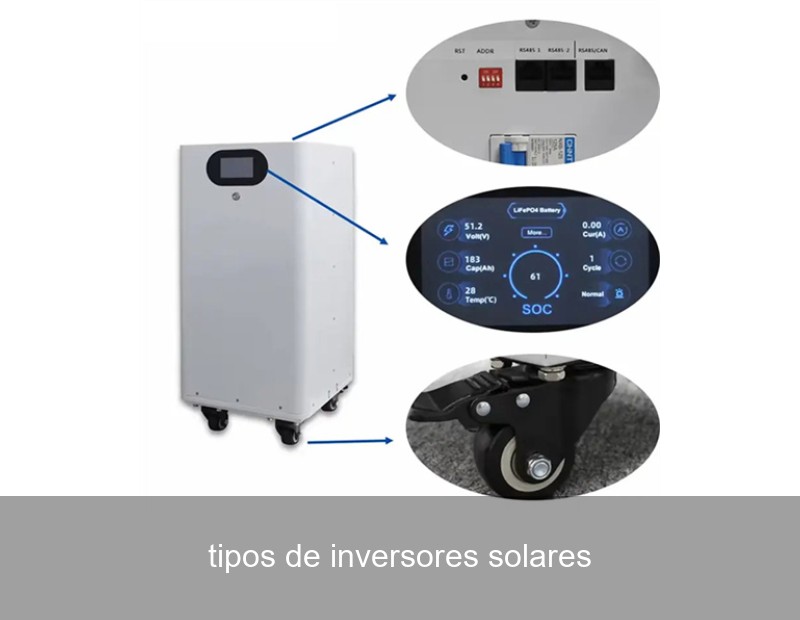
This is where the future of energy management truly begins. A hybrid inverter, sometimes called a multi-mode inverter, is designed from the ground up to work with battery storage. It can manage the bidirectional flow of energy—from the panels, to the battery, to your home, and back to the grid—all from one unit.
The Critical Difference: While you can add a battery to most systems with a separate AC-coupled inverter, a native DC-coupled hybrid system is more efficient. It directs surplus DC power from the panels directly into the battery in DC form, avoiding unnecessary conversion losses. This is a core principle behind Highjoule's integrated energy storage systems. Our solutions often feature advanced hybrid inverters that act as the command center, intelligently deciding when to store, use, or sell energy based on weather forecasts, electricity tariffs, and your consumption patterns.
"For homeowners in regions with time-of-use rates or frequent grid outages, like in parts of California or across Europe, a hybrid inverter paired with a Highjoule battery isn't just an upgrade; it's a transformation into a resilient, self-optimizing power station," explains a Highjoule technical design lead.
Comparison Table: Key Features of Solar Inverter Types
| Inverter Type | Best For | Shade Tolerance | Panel-Level Monitoring | Storage Integration | Relative Cost |
|---|---|---|---|---|---|
| String Inverter | Large, simple, unshaded roofs | Low | No (system-level only) | Requires additional equipment | $$ |
| Microinverter | Complex, shaded roofs; maximum panel independence | Excellent | Yes | AC-coupled (slightly less efficient) | $$$ |
| Power Optimizer | Roofs with partial shading; a balance of features | Very High | Yes | DC-coupled possible with specific inverters | $$-$$$ |
| Hybrid Inverter | Anyone planning or considering future battery storage | Depends on optimizer pairing | Often Yes | Excellent (native DC-coupling) | $$$ |
Case Study: Optimizing a Commercial Rooftop in Southern Spain
Let's look at a real-world application. A food processing plant in Andalucía, Spain, wanted to reduce its high daytime energy costs and ensure production continuity. The 5,000 sqm rooftop was largely unobstructed, but two large cooling towers cast moving shadows across a significant section for several hours a day.
The Problem: A traditional string inverter design would see the output of entire strings plummet whenever the shadow hit, wasting the potential of hundreds of unshaded panels.
The Highjoule Solution: We designed a system using power optimizers on every panel, paired with robust string inverters. The optimizers ensured each panel, whether in sun or shade, contributed its maximum possible power to the string. The centralized inverters provided high-efficiency conversion for the stabilized DC input.
The Data-Driven Result: Compared to a standard string inverter layout, the optimizer-based system increased the plant's overall annual energy production by 12%. This extra yield, quantified by our monitoring platform, translated to a return on investment period shortened by nearly 18 months. The system now offsets 65% of the facility's daytime load, and the architecture allows for a future Highjoule battery addition to shift even more energy away from peak tariff periods.
The Future is Integrated: Inverters and Smart Energy Management
The evolution of tipos de inversores solares is moving beyond mere conversion. The next generation are grid-forming "smart inverters" with advanced software capabilities. These inverters can provide grid services like frequency regulation, participate in virtual power plants (VPPs), and autonomously manage islanded microgrids. According to a report by the National Renewable Energy Laboratory (NREL), these functionalities are critical for grid stability as renewable penetration grows. Highjoule's R&D is focused on this very intersection, developing systems where the inverter intelligence, battery storage, and cloud-based energy management software work as one cohesive unit to provide not just savings, but also grid resilience and new revenue streams for our clients.
How to Choose the Right Inverter for Your Project
So, how do you navigate this landscape? Ask yourself and your installer these key questions:
- What is my roof's profile? (Shading, multiple angles, future obstructions?)
- What are my primary goals? (Maximize savings now, ensure reliability during outages, future-proof for an EV?)
- What is the local climate and grid policy? (Frequent clouds? Net metering? Time-of-use rates?)
- Do I envision adding battery storage within the system's lifetime?
The most cost-effective choice isn't always the cheapest hardware. It's the technology that will harvest the most energy reliably over 25+ years and adapt to your evolving needs. This is where expert design is irreplaceable. A qualified designer from a company like Highjoule will model your specific site using advanced software, simulating different inverter types against historical weather data to predict performance and financial outcomes before a single panel is installed.
Image Source: Unsplash - Monitoring and analytics are key to modern energy system performance.
Given your energy goals and the specific challenges of your property, which of these inverter technologies do you think would unlock the highest level of performance and control for you?
 Inquiry
 Online Chat