


Mobile Inverter with Lithium Battery: Your Ultimate Guide to Portable Power Freedom
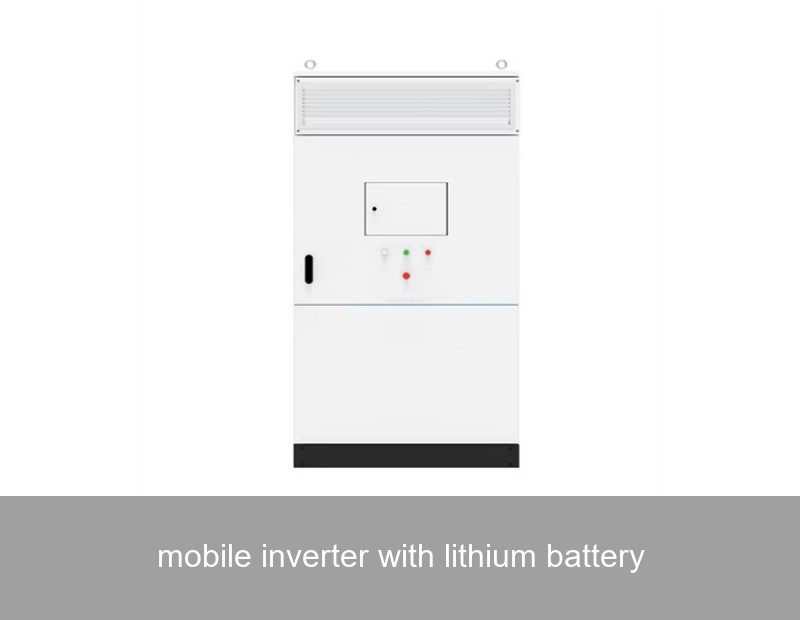
Imagine being able to power your tools, appliances, or even a small event anywhere, completely off the grid. That's the promise of a modern mobile inverter with lithium battery. This isn't just a bulky backup unit; it's a sophisticated, portable energy system that combines a high-capacity lithium battery with a pure sine wave inverter, all in one compact, intelligent package. For contractors, outdoor enthusiasts, event planners, and homeowners seeking flexible power solutions, this technology is revolutionizing how we access and use electricity on the go. In this guide, we'll explore why this combination is so powerful, how it works, and what to look for when choosing your own portable power station.
Table of Contents
- The Power Duo: Why Lithium & Inverter Belong Together
- Key Features of a High-Performance Mobile Power Station
- Real-World Applications: From Job Site to Campsite
- A Case Study: Powering a Sustainable Food Truck in California
- Choosing Your Mobile Inverter System: A Buyer's Checklist
- The Future of Portable Power and Highjoule's Role
The Power Duo: Why Lithium & Inverter Belong Together
Traditional portable generators rely on fossil fuels, creating noise, fumes, and maintenance hassles. A mobile inverter with lithium battery solves these problems elegantly. The core of the system is the lithium iron phosphate (LiFePO4) battery, known for its safety, long life (often 3,000+ cycles), and high energy density. Paired with a smart inverter, this system converts the battery's DC power into clean, stable AC power—safe for sensitive electronics like laptops, medical devices, and professional cameras.
Think of it this way: the lithium battery is the fuel tank, and the inverter is the engine. But unlike a gas engine, it's silent, emits zero local emissions, and can be recharged via a wall outlet, a car socket, or, most importantly, solar panels. This transforms it from a simple backup into a truly renewable, mobile microgrid.

Image Source: Unsplash - Portable power solutions enable energy access anywhere.
The Technical Edge: LiFePO4 Chemistry
Not all lithium batteries are equal. Many premium systems, including Highjoule's portable solutions, utilize LiFePO4 chemistry. Here’s a quick comparison:
| Battery Type | Cycle Life | Thermal Stability | Key Advantage for Mobile Use |
|---|---|---|---|
| Lead-Acid | 300-500 cycles | Moderate | Low Cost |
| NMC Lithium | 500-1500 cycles | Requires management | High Energy Density |
| LiFePO4 (LFP) | 3,000+ cycles | Excellent (Safer) | Longevity & Safety |
This inherent safety and durability make LiFePO4 the ideal choice for equipment that might be jostled in a van or exposed to variable temperatures in the field.
Key Features of a High-Performance Mobile Power Station
When evaluating a mobile inverter with lithium battery, look beyond just wattage. Here’s what truly matters:
- Pure Sine Wave Inverter: Essential for running sensitive electronics without risk of damage. It replicates grid-quality power.
- Expandable Capacity: Can you add extra battery modules? Systems like Highjoule's Nomad Pro Series offer modular expansion, letting you scale from 2kWh to 10kWh as your needs grow.
- Multi-Input Charging: Look for units that support AC, DC (car), and simultaneous solar charging. MPPT solar charge controllers maximize panel efficiency.
- Smart Battery Management System (BMS): The brain of the system. A robust BMS protects against overcharge, deep discharge, short circuits, and temperature extremes, ensuring years of reliable service.
- Output Versatility: Multiple AC outlets, USB-C PD ports, 12V DC sockets, and even RV-style outlets provide incredible flexibility.
Real-World Applications: From Job Site to Campsite
The versatility of a portable lithium power station is its greatest asset. Let's explore a few scenarios:
- Construction & Contracting: Powering cordless tool chargers, job site radios, LED work lights, and small saws without the noise and fumes of a generator. This is crucial for indoor renovations or eco-conscious worksites.
- Outdoor Recreation & RVing: Running a mini-fridge, espresso machine, string lights, and charging cameras and drones for a comfortable, connected camping experience.
- Mobile Businesses & Events: Essential for food trucks, market vendors, photographers, and mobile clinics. It provides silent, clean power for cash registers, griddles, lighting, and medical equipment.
- Home Backup & Power Shifting: While not a whole-home solution, a large-capacity mobile unit can keep critical circuits—like refrigeration, networking, and medical devices—running during short outages. It can also be charged with solar during the day to power devices at night.
A Case Study: Powering a Sustainable Food Truck in California
Let's look at real data. "The Solar Bite," a gourmet food truck in San Diego, California, wanted to eliminate its diesel generator to reduce noise, fuel costs, and its carbon footprint. In 2023, they deployed a Highjoule Nomad Pro 5000 system (5kWh LiFePO4 battery, 3000W pure sine wave inverter) paired with 1200W of foldable solar panels.
- Fuel Savings: Eliminated ~$2,800/year in diesel costs.
- Operational Uptime: The system powered a commercial griddle, ventilation hood, water pump, and POS system for full 8-hour service days, with solar input replenishing ~40% of daily usage.
- Customer & Regulatory Appeal: The "fully solar-powered" tag became a unique selling point. The truck also gained permits for venues with strict noise and emission rules.
- ROI: The initial investment was recouped in under 18 months through fuel savings and increased booking opportunities.
This case illustrates how a robust mobile inverter with lithium battery isn't just a convenience—it's a strategic business asset that aligns with sustainability goals and opens new market opportunities. For more on the growth of mobile businesses, see this U.S. Department of Energy resource on solar energy.

Image Source: Unsplash - Mobile businesses are increasingly adopting clean power.
Choosing Your Mobile Inverter System: A Buyer's Checklist
Ready to choose your system? Walk through this checklist:
- List Your Critical Loads: Calculate the total running and startup watts of the devices you need to power simultaneously.
- Prioritize Battery Chemistry: For longevity and safety, insist on LiFePO4 (LFP).
- Plan Your Recharging: Will you have access to grid power between uses? If operating remotely, ensure sufficient solar charging capacity. Highjoule systems feature high-efficiency MPPT controllers for the fastest solar recharge.
- Consider the Ecosystem: Does the manufacturer offer compatible solar panels, expansion batteries, and robust warranties? Highjoule provides a 10-year warranty on its LiFePO4 batteries, reflecting deep confidence in product lifespan.
- Think About the Future: A modular system allows you to invest in a base unit now and expand later, protecting your investment.
The Future of Portable Power and Highjoule's Role
The trend towards electrification and decentralization of power is unstoppable. Mobile inverter with lithium battery systems are becoming more powerful, more efficient, and more integrated with smart home and vehicle-to-load (V2L) technologies. Imagine your electric truck charging your power station, which then powers your home during a peak rate period—a truly flexible energy ecosystem.
At Highjoule, with nearly two decades of expertise in grid-scale and residential storage, we've engineered our portable Nomad Pro Series with the same rigorous standards. We focus on safety through advanced BMS, modularity for flexible investment, and seamless solar integration to create a genuinely sustainable off-grid power solution. Whether you're a professional needing reliable site power or a family preparing for adventures, the goal is to provide intelligent, clean energy that moves with you.
For further independent research on battery technologies, academic resources like those from Joule Journal can provide valuable insights.
Your Next Step
What's the one device or tool that, if you could power it freely anywhere, would most transform your work or leisure? Visualizing that specific use case is the perfect first step towards choosing the right mobile power system. Are you leaning towards a compact unit for weekend trips, or a modular, high-capacity station for business continuity and serious off-grid living?
 Inquiry
 Online Chat