


Mobile Solaranlage mit Speicher für Zuhause: Your Complete Guide to Home Energy Independence
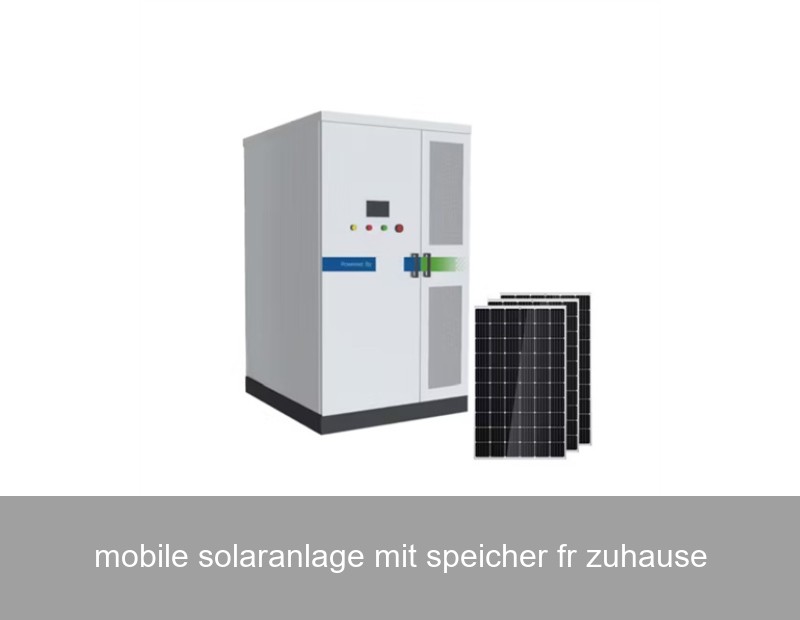
Have you ever looked at your rising electricity bill and wondered if there's a better way? Or felt a pang of concern during a power outage, realizing just how dependent your home is on the grid? You're not alone. Across Europe and the U.S., homeowners are seeking resilient, sustainable, and cost-effective power solutions. This is where the concept of a mobile solaranlage mit speicher für zuhause—a mobile solar power system with storage for home—comes into play. It's more than just a set of panels; it's a transformative step toward energy self-sufficiency. This guide will walk you through everything you need to know, from the core technology to real-life benefits, helping you understand how this innovative solution can power your home, your savings, and your peace of mind.
What is a Mobile Solar System with Storage?
Let's demystify the term. A mobile solaranlage mit speicher is a versatile, often modular, photovoltaic (PV) system paired with a battery storage unit. Unlike traditional, permanently roof-mounted arrays, these systems can be designed for flexibility. "Mobile" doesn't necessarily mean you'll roll it down the street, but rather that the system components—like the panels, battery, and inverter—are often configured for easier installation, potential relocation, or scalability. The heart of the system is the speicher (storage), a high-capacity battery that captures excess solar energy produced during the day for use at night or during cloudy periods. This combination ensures your home can tap into clean solar power around the clock, not just when the sun is shining.

Image: A modern home integrated with solar panels and wall-mounted battery storage. Credit: Unsplash.
Why Consider a Mobile Solar System for Your Home?
The shift towards home energy systems is driven by a powerful convergence of economic, environmental, and practical factors.
- Energy Bill Savings: By generating and storing your own electricity, you dramatically reduce your reliance on the utility grid. The U.S. Department of Energy's Homeowner's Guide to Going Solar notes that solar can provide significant long-term savings, insulating you from volatile energy prices.
- Backup Power & Resilience: With a battery, your home gains a layer of security. During grid outages—whether from storms in the Midwest or grid stress in Europe—your essential appliances can keep running.
- Environmental Impact: You directly reduce your household's carbon footprint by consuming clean, renewable energy.
- Increased Property Value: Studies consistently show homes with solar and storage are more attractive to buyers and often sell at a premium.
- Energy Independence: You become a proactive energy manager, less susceptible to external price shocks and supply issues.
Key Components of a Home Solar & Storage System
Understanding the main players in your system is key. Here’s a breakdown:
| Component | Function | Why It Matters |
|---|---|---|
| Solar Panels (PV Modules) | Convert sunlight into direct current (DC) electricity. | The fuel source. High-efficiency panels generate more power in limited space. |
| Inverter | Converts DC electricity from panels/battery to usable AC for your home. | The brain of power conversion. Modern hybrid inverters manage both solar and battery flow intelligently. |
| Battery Storage System | Stores excess solar energy as chemical energy for later use. | Your energy reservoir. Its capacity (kWh) and power rating (kW) determine how much and how fast you can use stored power. |
| Energy Management System (EMS) | Software that intelligently controls when to charge, discharge, or export energy. | The strategic commander, optimizing for self-consumption, cost savings, or backup readiness. |
| Mounting & Wiring | Physically secures panels and connects all components safely. | Ensures system durability, safety, and performance over decades. |
A Real-World Case: The Schmidt Family in Bavaria
Let's move from theory to practice. The Schmidt family, living in a detached home in southern Germany, installed a 8.2 kWp solar system with a 10 kWh lithium-ion battery in early 2022. Their primary goals were to cut electricity costs and ensure backup for their home office and refrigeration.
- Solar Generation: 8,700 kWh annually (exceeding their 6,500 kWh household consumption).
- Self-Consumption Rate: Increased from 30% (panels only) to 85% with the battery. They now use most of their self-produced solar power.
- Grid Dependency: Reduced by over 75%. Their annual electricity bill dropped from approximately €1,800 to under €400.
- Backup Events: The system automatically provided power during three short grid outages, totaling 5 hours, with no disruption to the family.
This case, echoed by many in regions like Fraunhofer ISE's research, illustrates the tangible benefits: major cost savings, heightened energy autonomy, and reliable backup power.
Choosing the Right System for Your Home
Selecting a system isn't one-size-fits-all. Key considerations include:
- Your Energy Consumption: Analyze your past year's bills (kWh usage) to size your system correctly.
- Roof Space & Orientation: South-facing (in the Northern Hemisphere) with minimal shading is ideal.
- Local Climate & Incentives: Solar yields vary by region, and government incentives (like the U.S. Investment Tax Credit or European subsidies) can significantly impact ROI.
- Battery Capacity Needs: Determine what you want to power during an outage (essentials vs. whole home) to choose the right storage size.
- Future-Proofing: Consider potential future needs like an electric vehicle, which can be integrated as another "battery on wheels."
The Highjoule Approach: Intelligent, Integrated Power
As a global leader in advanced energy storage since 2005, Highjoule understands that a mobile solaranlage mit speicher für zuhause is more than hardware—it's an intelligent ecosystem. Our solutions for residential applications are designed for seamless integration, maximum efficiency, and long-term value.
Our flagship home product, the Highjoule Hive Home Energy System, embodies this philosophy. It features a modular lithium-iron-phosphate (LiFePO4) battery, renowned for its safety and long cycle life, paired with a high-efficiency hybrid inverter. What truly sets it apart is the HiveMind AI Energy Manager. This software doesn't just store and release energy; it learns your household patterns, forecasts weather, and can be configured to optimize for tariff rates (like time-of-use billing in California or dynamic tariffs in Germany), ensuring every kilowatt-hour saves you the most money possible.
For homeowners seeking a robust, all-in-one solution, Highjoule provides end-to-end support—from initial consultation and custom system design using precise modeling tools, to professional installation by our certified network and ongoing monitoring via a user-friendly app. We build systems that are not only smart but also durable and safe, giving families confidence in their energy independence for years to come.

Image: Monitoring and controlling home energy flow via a smart app. Credit: Unsplash.
Your Home's Energy Future: A Question for You
The technology for home energy independence is here, proven, and more accessible than ever. The journey from being a passive consumer to an active energy producer starts with a single question. What is the primary driver for you to explore a mobile solaranlage mit speicher für zuhause—is it the predictable monthly savings, the security of uninterrupted power for your family, or the desire to build a more sustainable future right from your own rooftop?
 Inquiry
 Online Chat