


Understanding Solar Energy Storage Cabinet Price in Pakistan: A Smart Investment Guide
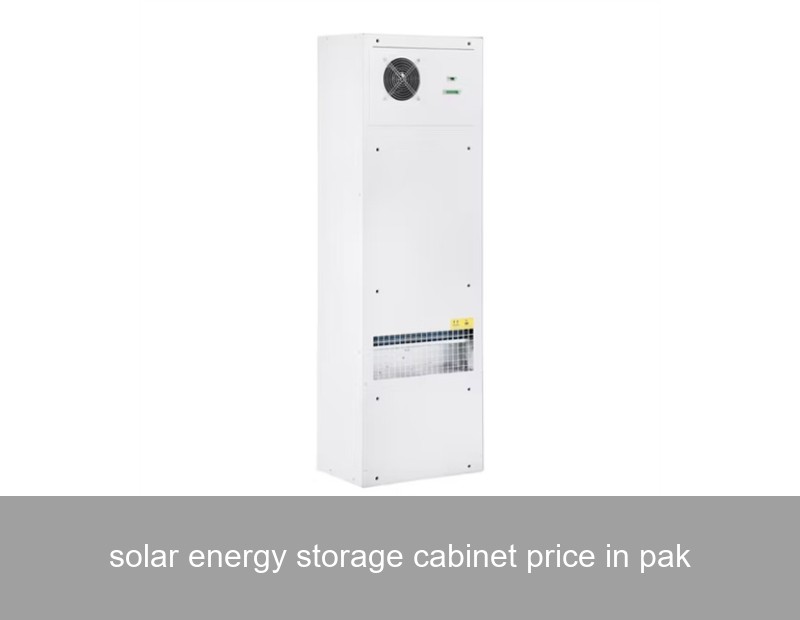
If you're exploring solar solutions in Pakistan, you've likely encountered a wide range of prices for what seems like similar equipment. The solar energy storage cabinet price in Pakistan isn't just a number on a tag; it's a reflection of technology, durability, and long-term value. As energy costs rise and grid reliability remains a concern, more homeowners and businesses are looking beyond the initial panel cost to the heart of a resilient system: the battery storage cabinet. This article will demystify the cost factors and show you how to evaluate this critical investment for your energy independence.
Table of Contents
- The Phenomenon: Why Storage is the New Solar Frontier
- Breaking Down the Cost: What's Inside the Price Tag?
- Case Study: A Lahore Textile Factory's Journey to Savings
- Technology Advancements Impacting Price & Performance
- Highjoule's Tailored Solutions for the Pakistani Market
- Making the Right Decision for Your Needs
The Phenomenon: Why Storage is the New Solar Frontier
Pakistan's solar boom is undeniable. However, the initial focus was primarily on generation. The real challenge? The sun doesn't shine at night, and grid power isn't always available. This mismatch between generation and consumption has propelled energy storage from a luxury to a necessity. A solar energy storage cabinet—essentially the enclosure housing the batteries, management system, and safety components—becomes the cornerstone of a system that provides power 24/7. It's what transforms your solar array from a day-time saver to a full-fledged, off-grid capable power source.
Breaking Down the Cost: What's Inside the Price Tag?
The quoted price for a solar energy storage cabinet in Pakistan is a composite of several critical elements. Understanding these helps you compare apples to apples.
- Battery Cells (The Core): This is the largest cost driver. Lithium Iron Phosphate (LiFePO4) batteries, now the industry standard for safety and cycle life, cost more upfront than older lead-acid types but offer significantly better long-term value. Price varies by brand, cell quality (Grade A vs. others), and rated cycle life (e.g., 6,000 cycles vs. 3,000 cycles).
- Battery Management System (BMS - The Brain): A sophisticated BMS is non-negotiable. It ensures safety, balances cells, optimizes charging/discharging, and prolongs battery life. Cabinets with advanced, proprietary BMS technology, like those from global providers, command a higher price for superior protection and performance.
- Enclosure & Thermal Management (The Body): A robust, weather-resistant cabinet with proper cooling (active or passive) is crucial for Pakistan's extreme temperatures. Poor thermal management can slash battery lifespan.
- Inverter Compatibility & Integration: Is the cabinet a simple battery bank, or is it an integrated "AC-coupled" or "DC-coupled" system? All-in-one systems with hybrid inverters built-in or pre-configured offer easier installation and better optimization, affecting the price.
- Scalability & Power Output: Can you easily add more battery modules later? Cabinets designed for modular expansion offer future-proofing. Similarly, the cabinet's continuous power output (in kW) determines what appliances you can run simultaneously.
- Warranty & Local Support: A longer, comprehensive warranty (e.g., 10 years) and the presence of reliable local technical support are built into the price. This is where established brands like Highjoule provide immense value, ensuring peace of mind over the decade-long lifespan of your system.

Image Source: Unsplash. A professional installation ensures safety and maximizes the performance of your energy storage investment.
Case Study: A Lahore Textile Factory's 35% Operational Cost Reduction
Consider the real-world example of a mid-sized textile factory in Lahore. Facing 8-10 hours of daily grid outages and high commercial tariff rates, they installed a 500kW solar array coupled with a 1000kWh Highjoule Industrial Energy Storage Cabinet (IES-C Series).
| Metric | Before Installation | After Installation |
|---|---|---|
| Monthly Grid Electricity Cost | PKR 4.2 Million | PKR 1.8 Million |
| Diesel Generator Fuel & Maintenance | PKR 1.1 Million | PKR 0 |
| Productivity Loss from Outages | Estimated 15% | 0% |
| Total Monthly Operational Cost Saving | N/A | PKR 3.5 Million (Approx. 35%) |
The system stores excess solar energy generated during the day and discharges it during peak grid tariff hours and outages. The Highjoule IES-C cabinet's intelligent energy management software allowed them to program discharge schedules for maximum financial return. The project's payback period was calculated at under 4 years, making the initial solar energy storage cabinet price a strategic investment, not just an expense. The International Energy Agency emphasizes the role of storage in industrial decarbonization.
Technology Advancements Impacting Price & Performance
The landscape is evolving rapidly. While cutting-edge tech like solid-state batteries is still on the horizon, current advancements are already shaping price and value. The trend is towards higher energy density (more kWh in a smaller footprint), faster charging capability, and enhanced software intelligence for grid interaction. For instance, systems that can participate in virtual power plants or provide grid services could offer additional revenue streams, improving the ROI. When evaluating price, consider if the cabinet's technology platform is software-upgradable to adapt to future utility regulations and opportunities.
Highjoule's Tailored Solutions for the Pakistani Market
As a global leader with nearly two decades of experience, Highjoule understands that markets like Pakistan have unique demands: extreme climates, frequent voltage fluctuations, and a need for utterly reliable off-grid capability. That's why our products are engineered for these challenges.
For residential and small commercial applications, the Highjoule HomePower+ Series offers an integrated AC-coupled storage solution. Its modular design allows customers to start with a 5kWh cabinet and expand up to 30kWh. The built-in Highjoule Smart BMS with active liquid cooling ensures optimal performance through Lahore's summers and Peshawar's winters, directly addressing a key cause of battery degradation.
For larger commercial and industrial (C&I) users, our Industrial Energy Storage (IES) Series provides containerized or cabinetized solutions from 100kWh to multiple MWh. These systems feature advanced cycle life (over 8,000 cycles) and bi-directional power conversion, enabling peak shaving, load shifting, and emergency backup seamlessly. Crucially, Highjoule backs its systems with a 10-year performance warranty and has established local service partnerships across major Pakistani cities to ensure support is never far away.

Image Source: Unsplash. Utility-scale storage solutions, similar to Highjoule's IES series, are key for commercial energy resilience.
Making the Right Decision for Your Needs
So, how do you navigate the solar energy storage cabinet price in Pakistan? Don't just look at the rupee per kWh. Ask these questions:
- What is my primary goal: total blackout protection, maximizing solar self-consumption, or reducing peak demand charges?
- What is the total cost of ownership over 10 years, including expected efficiency degradation? NREL's cost analysis reports provide frameworks for these calculations.
- Does the manufacturer have a proven track record in similar climatic and grid conditions?
- Is the system's software intelligent enough to adapt to my changing usage and future energy policies?
The cheapest option today might mean frequent replacements or poor performance in five years. Investing in a quality system from a technology leader like Highjoule translates to predictable performance, lower risk, and higher savings across the system's lifetime.
Your Energy Future Starts with a Question
Given that the right storage system can transform your energy profile from a cost center to a controlled, strategic asset, what specific operational challenge—be it unpredictable bills, production downtime, or simply the desire for energy independence—are you most motivated to solve in the next quarter?
 Inquiry
 Online Chat