


Modular Energy Storage System: The Future-Proof Solution for a Flexible Grid
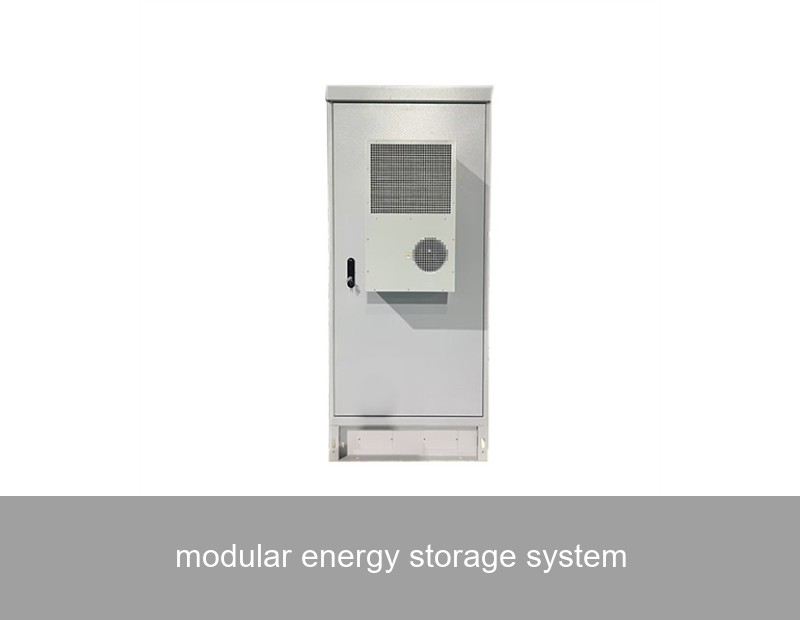
Imagine your energy storage system growing and adapting alongside your needs, just like adding building blocks. This is no longer a futuristic concept but the practical reality offered by a modular energy storage system. For businesses, communities, and grid operators across Europe and the U.S., the static, one-size-fits-all battery bank is becoming a relic of the past. The challenge is clear: how to invest in storage technology that remains relevant and cost-effective amidst fluctuating energy demands, evolving regulations, and rapid technological advancements. The answer lies in modularity—a design philosophy that is revolutionizing how we store and manage electricity.
Table of Contents
- The Inflexibility Problem: Why Traditional Storage Hits a Wall
- Deconstructing Modularity: More Than Just Stackable Units
- The Data Behind the Design: Quantifying Modular Advantages
- Case in Point: A German Industrial Park's Journey to Resilience
- Highjoule's Approach: Intelligent Modular Systems for Real-World Demands
- Making the Modular Choice: Key Considerations for Your Project
The Inflexibility Problem: Why Traditional Storage Hits a Wall
Traditional monolithic battery energy storage systems (BESS) are exactly that: single, large-scale units. You purchase a 2 MWh system, and that's what you're committed to for its lifespan. The initial installation is often complex and costly. But the real pain points emerge later. What happens if your facility's load increases by 30% in two years? With a monolithic system, you face a daunting and expensive forklift upgrade—essentially replacing or massively augmenting the entire system. Conversely, if your needs decrease, you're left with an oversized asset draining capital. This lack of scalability creates significant financial and operational risk. Furthermore, maintenance can be a nightmare; if one component fails, the entire system might need to be taken offline, leading to costly downtime.
Deconstructing Modularity: More Than Just Stackable Units
So, what exactly is a modular energy storage system? At its core, it's a system built from standardized, pre-engineered building blocks or "modules." These typically integrate the battery cells, battery management system (BMS), thermal controls, and power conversion into a single, self-contained unit. Think of it as a high-tech, energy-storing LEGO brick. But true modularity extends far beyond physical stacking.
- Capacity Scalability: Need more storage? Simply add more battery modules within the existing rack or framework. This can often be done with minimal new construction or electrical work.
- Power Scalability: Separate power conversion modules (inverters) can be added or upgraded independently to increase the rate at which you can charge or discharge energy.
- Technology Agnosticism: Advanced systems are designed with interoperability in mind. As battery chemistry improves (e.g., from current LFP to future solid-state), you may be able to slot in new technology modules without replacing the entire system's infrastructure.
- Enhanced Reliability: A fault in one module can be isolated. The rest of the system continues to operate, and the faulty module can be swapped out quickly, often with hot-swap capability, for minimal disruption.

Image Source: Unsplash (Representative image of modular installation)
The Data Behind the Design: Quantifying Modular Advantages
The benefits of modular design aren't just theoretical. They translate into tangible financial metrics. A 2023 report by the National Renewable Energy Laboratory (NREL) highlights that standardized, modular designs can reduce BESS balance-of-system costs by up to 30% through streamlined manufacturing and installation. Let's break down the impact:
| Consideration | Monolithic System | Modular System |
|---|---|---|
| Initial CAPEX | High, all-at-once investment | Can be staged to match budget |
| Expansion Cost | Very High (new system integration) | Low (add pre-engineered modules) |
| Operational Downtime | High (full system shutdown) | Minimal (isolated module service) |
| Technology Risk | High (entire system may become obsolete) | Lower (potential for module upgrades) |
This flexibility is crucial for navigating volatile energy markets. For instance, a commercial user can start with a system sized for peak shaving, then easily expand capacity later to incorporate solar self-consumption or participate in a new grid services program.
Case in Point: A German Industrial Park's Journey to Resilience
Consider the real-world example of a mid-sized automotive supplier park in Bavaria, Germany. Facing rising grid demand charges and seeking to integrate a new rooftop solar array, they needed a storage solution. However, their five-year expansion plan was uncertain. Investing in a large, fixed system was too risky.
Their solution was a phased deployment of a modular energy storage system. In Phase 1 (2022), they installed a 500 kWh / 250 kW system primarily for demand charge management. The modular design allowed for easy integration with their existing solar PV. By 2024, with a new production line coming online, they seamlessly added 300 kWh of additional storage capacity in a single day. The system now delivers:
- A 22% reduction in monthly grid demand charges.
- An increase in solar self-consumption from 35% to over 68%.
- The ability to provide grid frequency containment reserve (FCR), creating a new revenue stream.
"The modular approach was the only logical choice," said the park's facilities manager. "It turned our energy storage from a static cost center into a dynamic, growing asset. We didn't have to predict the future perfectly; we just built for it, one module at a time."
Highjoule's Approach: Intelligent Modular Systems for Real-World Demands
At Highjoule, we've championed a modular philosophy since our inception. We understand that sustainability isn't just about the energy source, but also about the intelligence and longevity of the storage solution itself. Our EnerCore series exemplifies this principle. It's not merely a collection of battery racks; it's an integrated ecosystem where each power and energy module is governed by our proprietary Adaptive Grid OS.
This software is the brain that makes modularity truly powerful. It dynamically manages each module's health, optimizes charge/discharge cycles for maximum lifespan, and seamlessly integrates new capacity as it's added. For our commercial and industrial clients, this means the Highjoule system continuously learns and adapts to usage patterns, weather data, and electricity tariffs—maximizing ROI whether the application is peak shaving, backup power, or renewable firming.

Image Source: Unsplash (Representative image of energy management software)
For microgrid and utility-scale projects, this modular intelligence provides unparalleled grid stability. Individual EnerCore units can be dispatched as a virtual power plant (VPP), responding to grid signals in milliseconds to smooth fluctuations and support the broader integration of renewables—a critical capability as highlighted by the International Renewable Energy Agency (IRENA).
Making the Modular Choice: Key Considerations for Your Project
As you evaluate a modular energy storage system, look beyond the hardware. The most successful implementations are those where the technology, software, and service are perfectly aligned.
- Interoperability Standards: Ensure the system uses open communication protocols (like IEEE 2030.5 or SunSpec) for easy integration with other energy assets.
- Software Intelligence: The BMS and energy management system (EMS) must be capable of managing a heterogeneous, evolving system efficiently.
- Service and Support: Choose a provider with a proven track record in system evolution. Can they support and warranty added modules in 5 or 7 years? Highjoule's lifecycle service plans are designed specifically for this long-term partnership.
- Safety by Design: Modular shouldn't mean compromised safety. Look for systems where each module has its own, robust safety containment and isolation.
The transition to a renewable-powered future is not a straight line. It requires adaptable, resilient infrastructure. A modular storage system provides exactly that—a foundation you can build upon with confidence.
Given that your energy needs five years from now are not fully knowable today, what is the first flexibility constraint you would want your next energy investment to solve?
 Inquiry
 Online Chat