


Finding the Right Supplier of Energy Spurt for Your Renewable Project
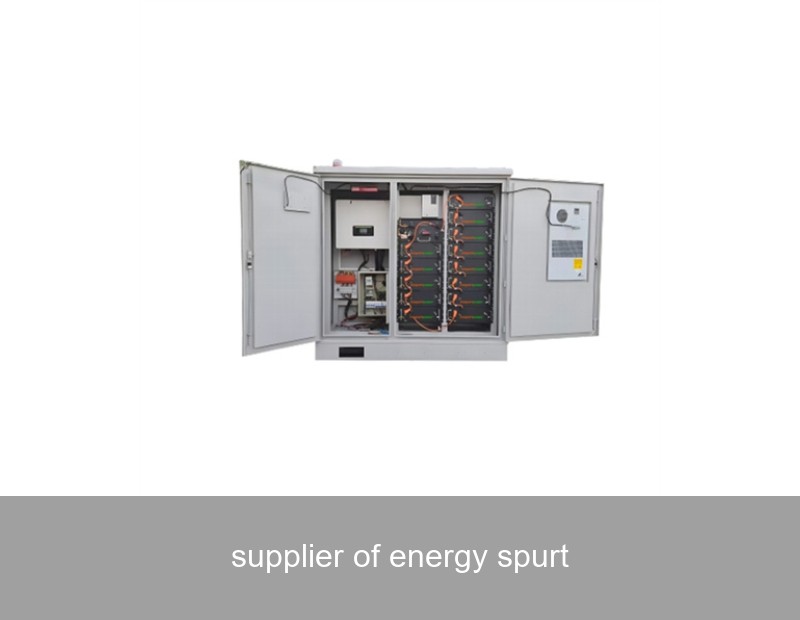
Imagine this: the sun is shining, your solar panels are humming, and suddenly, the grid demand spikes. Your system needs to deliver a massive, instantaneous power boost—an energy spurt—to capitalize on this opportunity or to keep critical operations running. This isn't a future scenario; it's today's reality for businesses and grid operators integrating volatile renewables. The challenge isn't just generating clean energy; it's having it ready to deploy exactly when needed. This is where the strategic choice of a supplier of energy spurt becomes critical. The right partner doesn't just provide hardware; they deliver the intelligence and reliability to turn potential energy into profitable, actionable power on demand.
What is an "Energy Spurt" and Why Does It Matter Now?
An energy spurt refers to a short-duration, high-power discharge of electricity, typically lasting from milliseconds to several minutes. Unlike the long, steady output for base load, a spurt is about immediate, concentrated power. Think of it as the difference between a marathon runner and a sprinter. Both are athletes, but their training and capabilities are tailored for vastly different events.
This capability is no longer a niche requirement. With the rapid growth of intermittent renewable sources like solar and wind, grid stability faces new challenges. The International Energy Agency (IEA) highlights that the global grid-scale battery storage market is set to expand dramatically, with much of this capacity dedicated to providing fast-responding services. Why? Because when the wind suddenly dips or a cloud passes over a solar farm, the grid needs an instantaneous power injection—a spurt—to fill the gap and prevent fluctuations. Similarly, an industrial facility can use spurts to avoid expensive peak demand charges by drawing from storage during short periods of maximum grid cost.
The Data Behind the Demand
The need for precise, high-power energy spurts is quantifiable. In frequency regulation markets, for instance, systems must respond to signals in under a second. A study of the PJM Interconnection market in the US showed that fast-responding storage resources can be up to 5 times more effective in providing regulation services than traditional generators. In Europe, the increasing penetration of renewables is driving similar market mechanisms for ancillary services, where speed and accuracy of response are directly monetized.

Image Source: Unsplash - Visual representation of grid demand spikes.
Beyond the Battery: The Evolving Role of an Energy Spurt Supplier
Choosing a supplier of energy spurt solutions is about far more than procuring battery racks. It's about selecting a partner for energy resilience and revenue optimization. A leading supplier's role encompasses:
- System Integration: Seamlessly combining battery storage, power conversion systems (PCS), and advanced control software into a cohesive unit.
- Intelligent Control: Providing the brain—the Energy Management System (EMS)—that decides in milliseconds when to charge, when to discharge, and at what power level to maximize value.
- Grid Compliance & Market Access: Ensuring the system meets all local grid codes (like UL 9540 in the US or VDE-AR-E 2510-50 in Germany) and can participate in relevant energy markets.
- Long-term Performance & Safety: Offering robust warranties, performance guarantees, and designs prioritizing thermal management and safety from the cell to the system level.
Case Study: Managing Peak Demand at a German Logistics Hub
Let's look at a real-world application in Europe. A major logistics center in North Rhine-Westphalia, Germany, faced a critical challenge: its operations, involving refrigeration and automated sorting systems, led to predictable but sharp 30-minute peaks in power demand every afternoon. These peaks resulted in excessively high "capacity charges" on their grid bill, a cost based on their highest power draw in a given period.
The Solution: The facility partnered with Highjoule to design and install a 1.2 MWh / 2 MW containerized battery energy storage system (BESS). This system was not designed to power the facility all day. Its sole purpose was to deliver a controlled, powerful energy spurt during those 30-minute peak windows.
| Metric | Before Highjoule BESS | After Highjoule BESS |
|---|---|---|
| Peak Demand from Grid | 2.8 MW | 1.6 MW |
| Monthly Capacity Charge | ~€18,000 | ~€8,500 |
| Annual Cost Savings | Baseline | > €110,000 |
| ROI Period | N/A | < 5 years |
The Outcome: The Highjoule system's intelligent controller monitors the facility's total load in real-time. As it approaches the peak threshold, the BESS instantly discharges, supplying the needed spurt of power and "shaving" the peak drawn from the grid. The result? A direct and substantial reduction in capacity charges, with a return on investment well under five years. Furthermore, the system is configured to participate in Germany's primary frequency control market (FCR) during times when peak shaving isn't required, creating an additional revenue stream.
Key Criteria for Choosing Your Energy Spurt Partner
When evaluating a potential supplier of energy spurt technology, consider these essential factors:
- Proven Track Record: Look for documented case studies in your specific application (commercial, industrial, utility).
- Technology Agnosticism: Does the supplier offer the best cell chemistry (e.g., LFP for safety and cycle life) for your use case, or are they locked into one?
- Software Intelligence: The hardware stores energy, but the software creates value. Insist on a demo of the EMS and its control logic.
- Safety Certifications: Demand system-level certifications, not just component-level. This is non-negotiable.
- Service & Support: Can they provide remote monitoring, performance analytics, and local technical support?
The Highjoule Approach: Intelligent Energy Spurts for a Stable Grid
At Highjoule, with nearly two decades of experience since 2005, we've built our reputation on being more than just a supplier of energy spurt hardware. We are architects of resilient and profitable energy systems. Our product suites, like the H-Series Commercial & Industrial (C&I) solutions and the GridMAX utility-scale systems, are engineered from the ground up for high-power, fast-response applications.
Our core differentiator is the JouleMind AI-powered EMS. This platform doesn't just react; it predicts. By analyzing weather patterns, facility load histories, and real-time market prices, JouleMind optimizes every charge and discharge cycle. It determines the most financially advantageous moment to conserve energy for a future spurt or to deliver one immediately. For a microgrid client, this might mean seamlessly bridging a 2-minute gap until a backup generator comes online. For a solar farm, it could mean injecting a precise spurt to meet a grid operator's ramp-rate requirement, as outlined in the U.S. Department of Energy's solar integration studies.

Image Source: Unsplash - Representative image of energy storage system monitoring.
Our Integrated Service Model
We support our technology with a full lifecycle partnership:
- Feasibility & Design: Custom modeling to size your system for optimal spurt performance and ROI.
- Turnkey Installation: Managed by our certified teams, ensuring code compliance and safety.
- Commissioning & Market Registration: We handle the complex process of grid interconnection and market enrollment.
- Ongoing Optimization: Our performance guarantee is backed by 24/7 monitoring and software updates that adapt to new market rules.
The Future Landscape of Energy Management
The electrification of everything—from transportation to heating—will only intensify the need for precise, high-power energy spurts. The grid of the future will be a network of millions of assets, both consuming and providing flexibility. In this world, the ability to reliably and intelligently dispatch stored energy in short, powerful bursts will be a cornerstone of economic and operational strategy. It raises a pivotal question for any organization with significant energy costs or reliability concerns: Is your current infrastructure merely consuming power, or is it actively and intelligently managing it to create value and resilience?
What specific energy challenge—be it peak demand charges, renewable curtailment, or backup power needs—could be reimagined as an opportunity with the right strategic energy spurt capability?
 Inquiry
 Online Chat