


Unlocking Energy Independence: The Power of the MPS Solar Energy Storage Cabinet
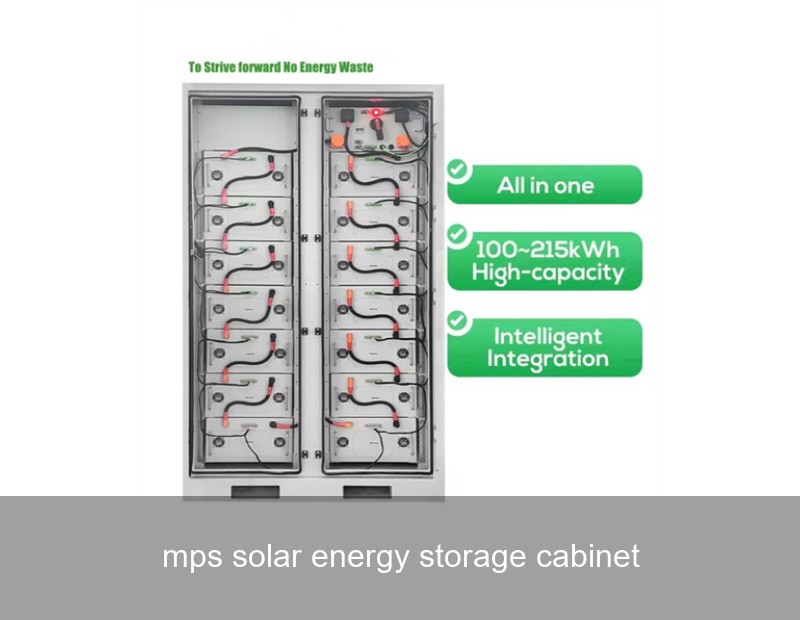
Have you ever watched your solar panels generate a surplus of clean energy on a bright afternoon, only to see it flow back to the grid, knowing you'll have to buy it back at a higher price in the evening? This common frustration is the very challenge that modern energy storage solutions are designed to solve. At the heart of this solution for commercial and industrial applications lies a key technology: the MPS (Modular Power System) solar energy storage cabinet. This isn't just a battery box; it's the intelligent brain and robust heart of a self-sufficient energy system, transforming how businesses consume, manage, and value their solar power.
Table of Contents
- What is an MPS Solar Energy Storage Cabinet?
- The Problem: Solar Intermittency and Rising Costs
- How an MPS Cabinet Works: More Than Just Storage
- The Highjoule Solution: Engineered for Performance and Safety
- Case Study: A European Manufacturing Plant's Success
- Key Considerations When Choosing a System
- The Future Outlook for Commercial Solar Storage
What is an MPS Solar Energy Storage Cabinet?
Let's break down the term. An MPS solar energy storage cabinet is a large-scale, containerized or cabinet-based system that integrates high-capacity lithium-ion battery modules, advanced power conversion systems (PCS), thermal management, and sophisticated control software into a single, scalable unit. The "Modular Power System" design is crucial—it allows capacity to be expanded by adding more battery racks within the cabinet framework, much like adding books to a shelf. This future-proofs your investment against growing energy needs.

For businesses, this means moving from passive solar consumption to active energy management. It's the difference between having a solar array and having a truly resilient, intelligent microgrid at your facility.
The Problem: Solar Intermittency and Rising Energy Costs
The phenomenon is clear: the sun doesn't shine 24/7, but your operations do. Industrial facilities, data centers, agricultural processors, and retail complexes have relatively constant energy demands. Relying solely on grid-tied solar creates a mismatch—you over-produce when demand is low and under-produce when you need power most, typically during expensive peak rate periods set by utilities.
This isn't just an operational hiccup; it's a financial drain. Utilities across Europe and North America are steadily shifting to time-of-use (TOU) rates and demand charges that penalize high consumption during specific windows. Without storage, your beautiful solar installation is missing its most valuable partner.
The Data: Why Storage is No Longer Optional
The numbers speak volumes. According to the U.S. Department of Energy's Solar Futures Study, achieving decarbonization goals will require hundreds of gigawatts of solar paired with storage. Let's look at the direct business impact:
| Challenge | Impact Without Storage | Potential with MPS Storage |
|---|---|---|
| Peak Demand Charges | Can constitute 30-50% of a commercial electricity bill | Discharge battery to "shave" peak load, reducing charges by up to 90% |
| Solar Self-Consumption | Typically 30-50% of solar generation used on-site | Increase to 70-90% or more, maximizing ROI on solar assets |
| Grid Outages | Operational downtime costing thousands per hour | Provide seamless backup power for critical loads |
This data paints a compelling picture: storage is the key to unlocking the full economic and strategic value of your solar investment.
How an MPS Cabinet Works: More Than Just Storage
Think of the MPS cabinet as the conductor of your energy orchestra. Here's the step-by-step process:
- Energy Capture: During peak sunlight, DC electricity from your solar PV array flows to the cabinet.
- Intelligent Charging: The system's Battery Management System (BMS) optimally charges the lithium-ion modules, considering temperature, state of charge, and longevity.
- Power Conversion: The integrated bi-directional inverter converts DC battery power to AC for your facility's use, and vice-versa for charging.
- Smart Dispatch: Advanced energy management software (EMS) decides when to store, when to discharge, and when to sell back to the grid based on pre-set algorithms (e.g., cost minimization, peak shaving, self-consumption maximization).
- Safety & Monitoring: Continuous monitoring of voltage, current, and temperature ensures safe operation, with built-in fire suppression and containment in premium systems.
The Highjoule Solution: Engineered for Performance and Safety
At Highjoule, with nearly two decades of experience since 2005, we've seen the evolution of storage technology firsthand. Our approach to the MPS solar energy storage cabinet is built on three pillars: Intelligence, Integration, and Inherent Safety.
Our flagship product line, the Highjoule H-Cube Commercial Series, embodies this philosophy. It's a fully integrated, all-in-one cabinet solution designed for seamless outdoor or indoor installation.
- Modular & Scalable: Start with a 100 kWh unit and scale up to multi-megawatt-hour installations by linking cabinets, ensuring your system grows with your needs.
- Advanced Lithium Iron Phosphate (LFP) Chemistry: We utilize LFP batteries for their superior safety profile, long cycle life (6,000+ cycles), and thermal stability, which is a non-negotiable for commercial installations.
- Highjoule EnergyOS™: The intelligent brain of the system. This cloud-connected platform uses AI-driven forecasting to optimize energy flows based on weather, utility rates, and consumption patterns, automating savings.
- Utility-Grade Grid Services: For larger installations, our cabinets can be configured to provide grid-support services like frequency regulation, creating an additional revenue stream.

Our services extend beyond hardware. We provide full turnkey solutions—from initial site assessment and financial modeling to grid interconnection support and ongoing performance monitoring—ensuring a smooth journey to energy independence.
Case Study: Boosting Resilience and ROI for a German Automotive Supplier
Let's look at a real-world application. A mid-sized automotive parts manufacturer near Stuttgart, Germany, faced high grid electricity costs and sought to stabilize operations against frequent grid fluctuations. Their 800 kW rooftop solar system was only offsetting about 40% of their daytime load due to production schedules.
The Solution: Highjoule deployed a 500 kWh H-Cube MPS storage cabinet, integrated with their existing solar and controlled by our EnergyOS™ software.
The Results (12-month period):
- Solar Self-Consumption Rate: Increased from 40% to 85%.
- Peak Demand Charge Reduction: Achieved a 72% reduction by strategically discharging the battery during the utility's peak window (17:00-20:00).
- Bill Savings: Total annual electricity costs reduced by approximately €68,000.
- ROI: Projected payback period of under 5 years, not accounting for rising grid prices.
- Resilience: The system now provides 4 hours of backup power for critical assembly lines, preventing costly stoppages.
This case, verified by an independent audit, highlights the multi-faceted value proposition of a well-integrated MPS storage system.
Key Considerations When Choosing a System
Not all storage cabinets are created equal. When evaluating an MPS solution, ask these critical questions:
- Battery Chemistry & Safety: Does it use stable chemistry like LFP? What physical and electronic safety protections (fire suppression, cell-level fusing) are in place?
- Depth of Discharge & Warranty: A 90%+ usable depth of discharge and a 10-year performance warranty are industry benchmarks for quality.
- Software Intelligence: Can the EMS integrate real-time utility rate data and weather forecasts to make optimal decisions automatically?
- Grid Interconnection Support: Does the provider have experience navigating the complex interconnection processes in your region (e.g., UL 1741 SA in the U.S., grid codes in the EU)?
- Service & Support: What is the provider's track record for installation, maintenance, and remote monitoring?
The Future Outlook for Commercial Solar Storage
The trajectory is unmistakable. As noted by industry analysts like BloombergNEF, the levelized cost of storage continues to fall, while grid volatility and carbon reduction mandates rise. The future commercial facility won't be defined by whether it has solar, but by how intelligently it stores and manages that energy. We're moving towards ecosystems where fleets of distributed MPS cabinets can act as virtual power plants, supporting grid stability and unlocking new value streams.

So, as you look at your facility's energy strategy and your existing or planned solar array, the question isn't simply "Can we afford storage?" The more strategic question to ask is: What opportunities are we missing, and what risks are we incurring, by not having an intelligent MPS solar energy storage cabinet managing our most critical resource?
 Inquiry
 Online Chat