


What is Timeshift Energy Storage? The Key to Unlocking Renewable Power
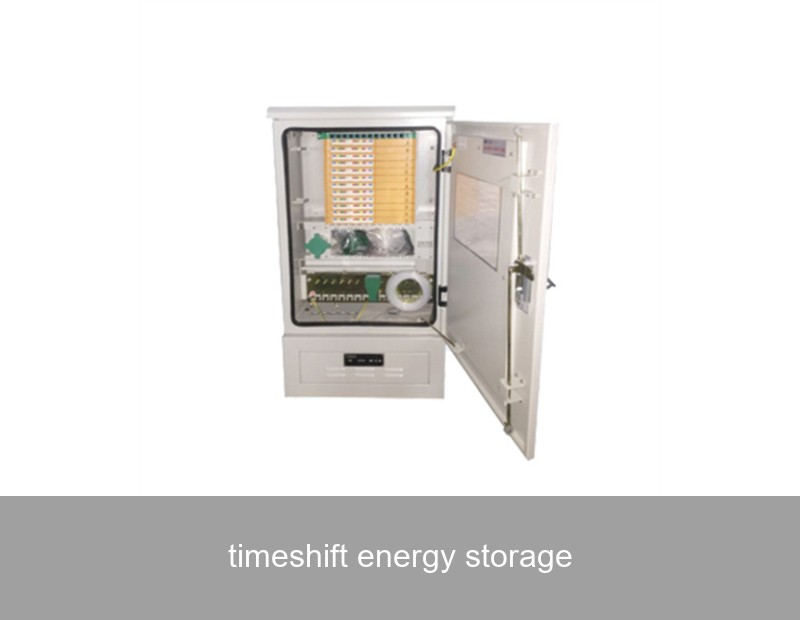
Have you ever wondered how we can use solar power after the sun sets or wind energy on a calm day? This is the fundamental challenge of our renewable energy future. The solution lies in a transformative technology: timeshift energy storage. Simply put, it's the ability to capture energy when it's abundant and inexpensive (like during a sunny afternoon) and store it for use when it's scarce and expensive (like during a peak evening demand period). This "time travel" for electrons is not just a clever concept; it's the critical enabler for reliable, resilient, and cost-effective clean energy grids, especially in markets like Europe and the United States where renewable penetration is rapidly growing.
Table of Contents
- The Grid Challenge: Why Time Matters in Energy
- How Timeshift Energy Storage Works: More Than Just a Battery
- Case Study: A California Winery's Success Story
- Beyond the Basics: Advanced Applications of Timeshifting
- Choosing the Right Timeshift Energy Storage System
- The Future Role of Timeshift in Our Energy System
The Grid Challenge: Why Time Matters in Energy
Our traditional power grid operates on a delicate balance of instant supply meeting instant demand. With the influx of variable renewable energy sources—solar and wind—this balance is under strain. The "duck curve," a phenomenon first named in California, visually represents this issue: net electricity demand plummets during midday solar peaks and then surges rapidly as the sun sets. This creates a costly and technically challenging ramp-up period for traditional power plants.
This is where timeshift energy storage becomes the hero. By charging during the midday solar surplus and discharging during the evening peak, storage systems flatten the duck curve. They mitigate grid congestion, defer the need for expensive infrastructure upgrades, and enhance overall stability. For businesses and homeowners, this time-shifting capability translates directly into significant savings by avoiding high time-of-use electricity rates and participating in grid service programs.
How Timeshift Energy Storage Works: More Than Just a Battery
While lithium-ion battery systems are the most common form of timeshift storage today, the principle applies to various technologies. At its core, a timeshift energy storage system consists of three key components:
- Energy Storage Medium: This is the "bank account" for energy. Lithium-ion batteries are popular for their high efficiency and density. Other technologies like flow batteries or even thermal storage (heating water or molten salt) also serve this purpose.
- Power Conversion System (PCS): This is the translator. It converts the direct current (DC) electricity from batteries or solar panels into the alternating current (AC) used by your buildings and the grid, and vice-versa.
- Energy Management System (EMS): This is the intelligent brain. A sophisticated EMS is what truly enables effective time-shifting. It analyzes electricity prices, weather forecasts, consumption patterns, and grid signals to autonomously decide the optimal times to charge and discharge, maximizing financial return and system performance.

Image Source: Unsplash - A modern Battery Energy Storage System (BESS) unit.
This is where a provider's expertise becomes critical. At Highjoule, we don't just supply hardware. We design integrated timeshift energy storage solutions where our advanced, AI-driven EMS orchestrates the entire system. Our H-Series commercial battery systems are engineered for high-cycle, daily time-shifting applications, ensuring longevity and reliability whether paired with on-site solar or used for standalone arbitrage.
The Data Advantage: Quantifying the Timeshift Benefit
Let's move from theory to numbers. The value of timeshifting is measurable and substantial. According to a 2023 analysis by the National Renewable Energy Laboratory (NREL), adding storage to pair with solar PV can increase the value of solar by up to 40% through timeshifting and other grid services. In the UK, National Grid ESO's flexibility reports consistently highlight the growing monetary pool for demand-shifting and storage services, expected to reach billions of pounds annually.
For a commercial entity, the economics often hinge on the difference between peak and off-peak electricity rates (the "arbitrage spread"). In many parts of Europe and the U.S., this spread can be €0.15/kWh or $0.20/kWh and is widening. A well-sized storage system can cycle through this spread daily, generating clear, recurring revenue. The table below illustrates a simplified annual financial impact for a medium-sized business:
| Metric | Value |
|---|---|
| System Size | 500 kW / 1,000 kWh |
| Average Daily Arbitrage Revenue | €150 / $165 |
| Annual Revenue from Timeshifting | ~€54,750 / ~$60,225 |
| Additional Savings from Demand Charge Reduction | 15-30% (highly site-specific) |
Case Study: A California Winery's Success Story
Let's examine a real-world application. A renowned winery in Sonoma County, California, faced three challenges: high time-of-use rates from their utility, an existing but underutilized solar PV array, and a desire for backup power during Public Safety Power Shutoff (PSPS) events.
Highjoule deployed a turnkey timeshift energy storage solution featuring a 750 kWh battery system integrated with their legacy solar. Our EMS was programmed with the utility's complex rate schedule (including peak periods from 4 PM to 9 PM).
The Results (12-month period):
- Bill Savings: The system reduced the winery's electricity bill by 68% through strategic solar self-consumption and discharging stored energy during peak hours.
- ROI: The project achieved a simple payback period of under 5 years, factoring in available state incentives (like the SGIP).
- Resilience: During planned grid outages, the system provided critical backup power to refrigeration and facility loads for over 8 hours, protecting millions of dollars of inventory.
This case demonstrates that timeshift energy storage is not a one-trick pony. It delivers a multi-layered value proposition: cost savings, revenue generation, and enhanced resilience.
Beyond the Basics: Advanced Applications of Timeshifting
While daily price arbitrage is the cornerstone, advanced storage systems like those from Highjoule unlock further value streams. This is often called "value stacking."
- Frequency Regulation: The grid must maintain a stable frequency (e.g., 50 Hz in Europe, 60 Hz in the US). Storage systems can respond in milliseconds to inject or absorb power to correct tiny frequency deviations, for which grid operators pay a premium.
- Capacity Firming: For microgrids or large solar farms, storage can "firm" the intermittent output, providing a predictable and dispatchable power source, making renewable energy projects more bankable.
- Deferral of Infrastructure Upgrades: A utility or distribution network operator can deploy storage at a substation experiencing peak congestion. The storage performs timeshifting locally, deferring the multi-million euro cost of upgrading transformers and lines for years.

Image Source: Unsplash - Solar farms paired with storage use timeshifting to deliver power after sunset.
Highjoule's GridMax platform is specifically designed for such complex, stacked-value applications. It allows a single storage asset to seamlessly participate in multiple markets, following the most profitable set of instructions every moment while adhering to physical constraints.
Choosing the Right Timeshift Energy Storage System
Not all storage solutions are created equal for dedicated timeshifting. Key considerations include:
- Cycle Life & Degradation: A system designed for daily, deep cycling will have a different battery chemistry and thermal management design than one for occasional backup. Highjoule's products are rated for thousands of full cycles with minimal degradation.
- Round-Trip Efficiency (RTE): This measures how much energy you get out versus what you put in. A higher RTE (e.g., 95% vs. 85%) means more of your cheap, stored energy is usable, directly impacting profitability.
- Integration Capability: Can the system easily integrate with existing solar, building management systems, or grid operator signals? Open-protocol communication is vital.
- Software Intelligence: The EMS is where the real "timeshifting" magic happens. Ensure it has proven forecasting algorithms and flexible control logic.
The Future Role of Timeshift in Our Energy System
As we move towards net-zero goals, the role of timeshift energy storage will only expand. The International Energy Agency (IEA) states that to meet climate targets, the world needs to add over 1,600 GW of energy storage capacity by 2030, a vast majority of which will provide timeshifting services. This will be driven not just by large-scale installations but by the proliferation of behind-the-meter systems in businesses, industrial facilities, and communities.
The conversation is shifting from "if" to "how" and "when." With volatile energy prices now a persistent reality across Europe and North America, the economic case for taking control of your energy timeline is stronger than ever. It's about transforming energy from a variable cost into a managed asset.

Image Source: Unsplash - City evenings represent the peak demand period where timeshifted energy is most valuable.
So, what does your facility's energy consumption curve look like, and how much could you save if you could move your energy use from the red peak hours to the green off-peak hours? The power to make that shift is now at your fingertips.
 Inquiry
 Online Chat