


Unlocking Energy Resilience: A Deep Dive into the Murri Hybrid Energy Storage Cabinet
a manufacturing facility is humming along at peak production. Suddenly, a grid disturbance causes a voltage dip. Machines stutter, a production line halts, and thousands of dollars in potential revenue and spoiled materials are lost in seconds. This isn't a hypothetical scenario; it's a daily reality for businesses worldwide grappling with an aging grid and the integration of intermittent renewables. The solution? A paradigm shift from passive consumption to active, intelligent energy management. At the heart of this shift lies a powerful technology: the Murri hybrid energy storage cabinet. This integrated system is more than just a battery; it's the brain and brawn of a modern, resilient energy strategy, seamlessly combining different storage technologies to meet complex commercial and industrial demands.
The Murri Hybrid Energy Storage Cabinet: A Closer Look
So, what exactly is a Murri hybrid energy storage cabinet? Let's break it down. "Hybrid" is the key operative word. Unlike a single-technology system, a hybrid cabinet intelligently integrates two or more types of energy storage within a single, compact enclosure. Typically, this involves pairing high-power and high-energy technologies.
- Lithium-ion Batteries: The workhorse for medium-to-long duration storage. They provide the bulk energy capacity—perfect for shifting solar power from day to night, or for providing backup power during longer outages.
- Supercapacitors or Ultracapacitors: The sprinters. They deliver massive bursts of power almost instantaneously but for very short durations. This makes them ideal for grid stabilization, frequency regulation, and protecting sensitive equipment from micro-outages and voltage sags.
By housing both in a unified Murri cabinet, managed by a sophisticated power conversion system (PCS) and energy management system (EMS), you get a solution that is greater than the sum of its parts. The EMS acts as the conductor, deciding in milliseconds whether to dispatch power from the capacitors for a sudden surge or from the batteries for sustained demand. This synergy dramatically extends battery life by shielding it from stressful, high-power bursts, and ensures critical loads never see even a flicker of disruption.

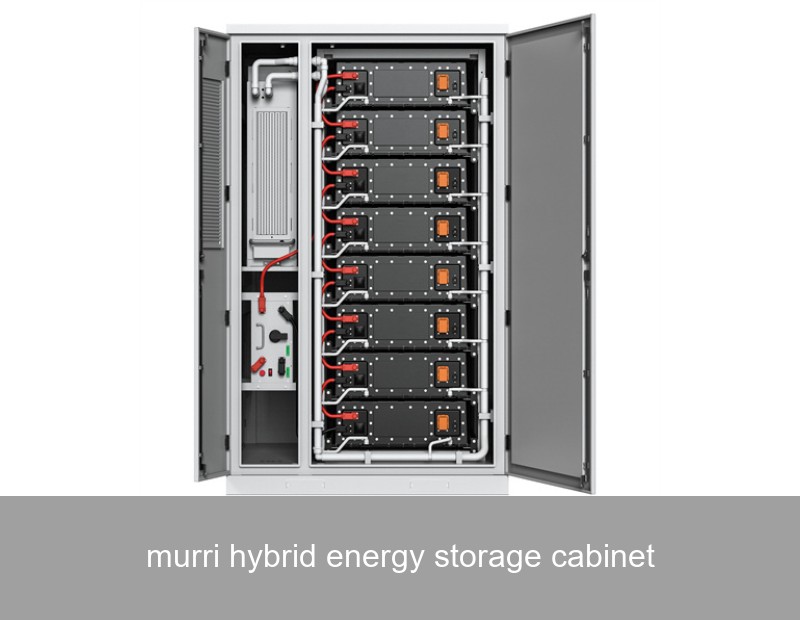
Image: An example of modern, integrated energy storage hardware. (Source: Unsplash, representative image)
Key Technical Benefits at a Glance
| Challenge | How a Murri Hybrid Cabinet Addresses It | Business Outcome |
|---|---|---|
| High Demand Charges | Peak shaving by discharging during short, high-power demand periods. | Reduced monthly utility bills by 20-40%. |
| Grid Instability & Power Quality | Ultra-fast response from supercapacitors corrects voltage and frequency. | Protects sensitive equipment, prevents production downtime. |
| Intermittent Renewable Supply | Battery bank stores excess solar/wind for use during low generation. | Maximizes self-consumption, increases ROI on renewables. |
| Backup Power Needs | Seamless transition to battery power during grid outages. | Ensures business continuity and data integrity. |
Solving Real-World Energy Problems
The theory is compelling, but the true value of a Murri hybrid energy storage cabinet is proven on the factory floor, in the data center, and at the commercial site. The modern energy landscape presents a triple challenge: cost volatility, reliability concerns, and sustainability targets. Facilities are seeing unprecedented spikes in demand charges—fees utilities levy for the highest 15-minute power draw in a month. A hybrid cabinet acts as a "digital peaker plant," discharging precisely during those short windows to flatten the peak, delivering immediate and recurring savings.
Furthermore, as noted by the National Renewable Energy Laboratory (NREL), the increasing penetration of inverter-based resources like solar and wind reduces grid inertia, making frequency stability a growing concern. Hybrid systems, with their sub-second response capabilities, are becoming critical grid citizens, providing essential services that keep the wider network stable for everyone.
Case Study: A German Automotive Parts Manufacturer
Let's look at a concrete example from Southern Germany. A mid-sized automotive supplier, running precision stamping and welding machines, faced two major issues: exorbitant demand charges due to the simultaneous startup of large motors, and frequent, costly production halts caused by voltage dips from the regional grid. Their sustainability goals also mandated an increase in on-site solar generation.
The solution was a turnkey installation featuring Highjoule's Hyserve-200M, a commercial-scale hybrid energy storage cabinet. The system integrated a 500 kWh lithium-ion phosphate (LFP) battery bank with a 250 kW supercapacitor module.
- Results After 12 Months:
- Demand Charge Reduction: Peak power draw from the grid was reduced by 28%, leading to an annual savings of €62,000 on demand charges alone.
- Power Quality: The system logged and mitigated 47 voltage dip events, preventing an estimated €180,000 in production losses and equipment damage.
- Solar Optimization: On-site solar self-consumption increased from 35% to over 80%, slashing energy procurement costs.
- ROI: The project achieved a simple payback period of under 5 years, factoring in incentives for grid services.
This case demonstrates the multifaceted ROI of a well-engineered hybrid system—it's not just backup power; it's an active financial and operational asset.

Image: Technicians performing maintenance on an industrial battery storage system. (Source: Unsplash, representative image)
How Highjoule Delivers Intelligent Energy Solutions
At Highjoule, with nearly two decades of experience since 2005, we don't just sell cabinets; we deliver intelligent, efficient, and sustainable power solutions. Our approach to the Murri hybrid energy storage cabinet concept is rooted in deep system integration and smart software. Our flagship product lines, like the Hyserve series for C&I applications and the GridMax series for utility and microgrid projects, are built on a modular architecture.
This means businesses can start with a core system tailored to their immediate needs—say, peak shaving—and later scale capacity or add different storage technologies as needs evolve. The true intelligence lies in our Adaptive Energy Management Platform (AEMP). This AI-driven software doesn't just react; it predicts. By analyzing historical consumption data, weather forecasts for solar generation, and even real-time electricity market prices (in deregulated markets), the AEMP optimizes every kilowatt-hour for maximum economic and operational benefit. It decides the most cost-effective moment to charge, discharge, or provide grid services, all while ensuring your primary resilience goals are never compromised.
For a facility manager, this translates to a "set-and-forget" system that autonomously saves money and protects operations. Our global service network provides remote monitoring and proactive maintenance, ensuring your investment performs optimally for its entire lifespan.
Highjoule's Integrated Service Stack
- Consultation & Feasibility Analysis: Our experts model your load profile and simulate financial returns.
- Custom System Design: Tailoring the hybrid mix (battery type, capacitor size, PCS rating) to your specific voltage, power, and energy needs.
- Turnkey Installation & Commissioning: Seamless integration with your existing electrical infrastructure and renewables.
- Smart EMS Software & Ongoing Optimization: The brain that continuously maximizes your ROI.
- Global Support & Performance Guarantees: Long-term peace of mind with service level agreements.
The Future of Industrial Energy Management
The trajectory is clear. The future of commercial and industrial power is decentralized, digitalized, and decarbonized. The Murri hybrid energy storage cabinet is a cornerstone of this future. As battery chemistries evolve—with solid-state and flow batteries on the horizon—and as AI optimization becomes even more sophisticated, the capabilities of these systems will only expand. They will become the default "energy router" for any modern facility, dynamically interacting with the grid, on-site generation, electric vehicle fleets, and thermal loads.
We are moving beyond simple backup to creating adaptive energy ecosystems where every watt is managed for optimum value. The question for business leaders is no longer "Can we afford to invest in energy storage?" but rather "Can we afford the rising costs and risks of not having control over our power?"
What specific energy challenge—be it demand charge spikes, unreliable power, or unfulfilled sustainability goals—is currently constraining your organization's growth and resilience, and how might an intelligent, hybrid approach transform that constraint into a competitive advantage?
 Inquiry
 Online Chat